



If you ever want to see what a slow-motion rural collapse looks like, head to Potter Valley this winter—before the comments close on December 1 and before the Federal Energy Regulatory Commission (FERC) stamps the fate of an entire valley into the permanent record.
This past summer, farmers were blindsided by water cuts just as grapes hit peak sugar, hay fields were still in rotation, and fire season was licking at the ridge. Now PG&E has asked the federal government to make those cuts permanent: five cubic feet per second—five—for the entire valley during dry months.
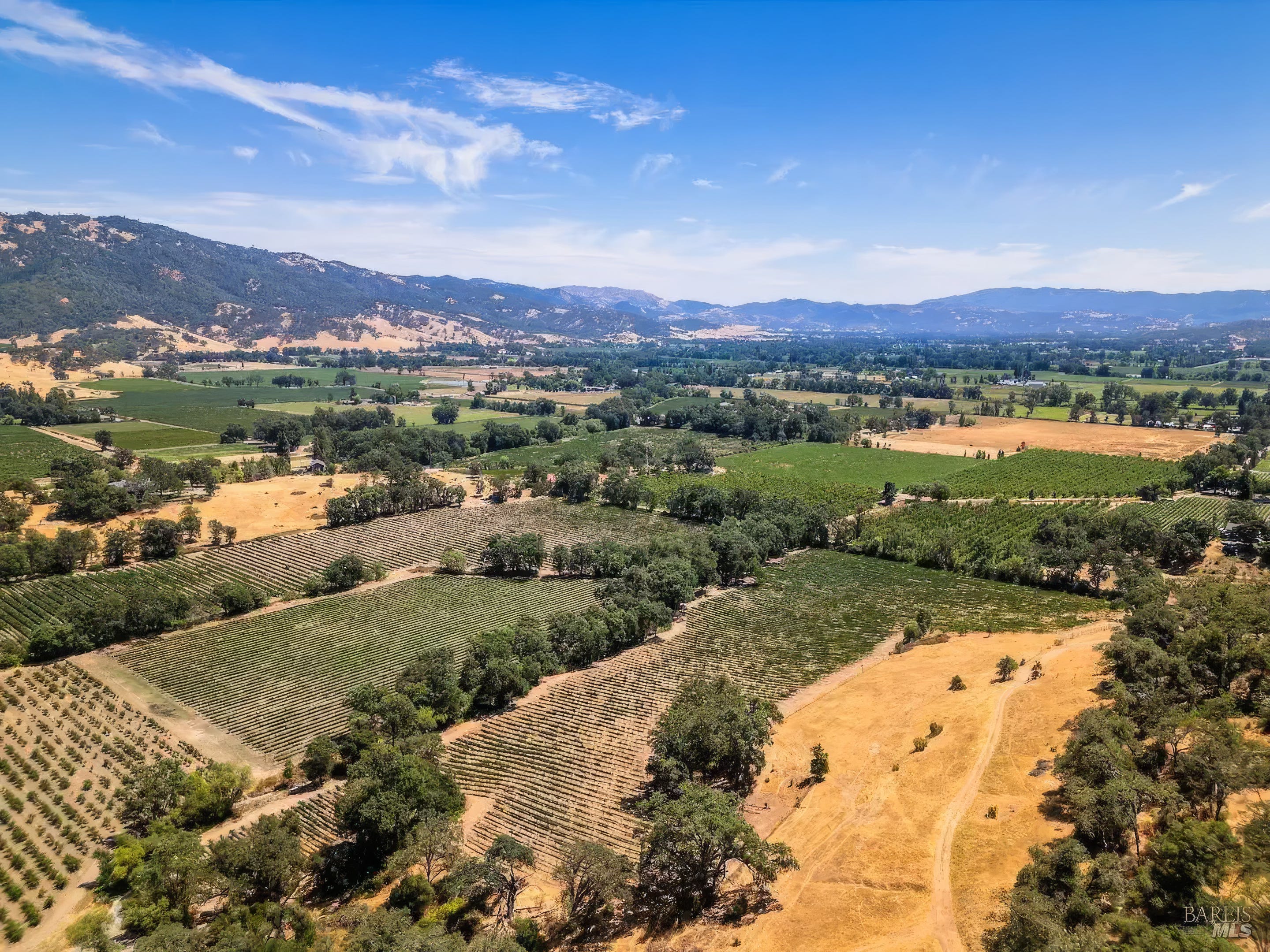
For perspective, that’s roughly one garden hose’ worth of flow per rancher, with everyone expected to take turns.
As one sixth-generation rancher put it at a local meeting:
“It takes about 5 CFS for almost any of my fields… It’s going to limit usage to one rancher at a time.”
Another added quietly:
“Even if we save the dams… with these water cuts we’d be out of business anyway.”
These aren’t suburban Californians arguing over lawn sprinklers. These are working farmers who watched crops die in real time because a regulated monopoly flicked a lever.
And after reviewing the surrender plans, FERC letters, agency memos, and dam-safety reports, the picture is darker than any press release admits.
A Hundred Years of Water—Now on the Auction Block
California likes to market itself as the land of progress, innovation, and environmental stewardship. But if you ask the farmers and ranchers of Potter Valley—a small mountain community northeast of Ukiah—they’ll tell you a different story: the state is quietly waging war on the people who grow its food.
For over a century, the Potter Valley Project (PVP)—anchored by two dams on the Eel River, Scott Dam forming Lake Pillsbury and Cape Horn Dam at Van Arsdale—has diverted water into the Russian River watershed. That diversion has underpinned:
Irrigation for farms and ranches in Potter Valley
Vineyards and orchards across Mendocino and Sonoma
Municipal supplies all the way into Marin County
What started as a hydroelectric scheme in 1908 became the lifeline of a regional economy. In a Mediterranean climate that gets rain from October to April and almost nothing after, Lake Pillsbury stores winter runoff and meters it out through summer—keeping rivers flowing, salmon alive, and pastures green.
In 2025, all of that was put on the chopping block.
The Day the Water Went Off
In late summer, with crops hanging heavy and fire danger high, Potter Valley residents woke up to find something unthinkable: their irrigation water had been turned off.
No warning. No phase-in. No emergency trucks at the ready. Just dry ditches.
PG&E, the private utility that owns the project, had sought and received an emergency flow variance from FERC. On paper, the request was framed as necessary to reduce “seismic risk” at Scott Dam: lower the lake level, cut the diversions, protect downstream residents if an earthquake hit.
On the ground, it meant this:
“Devastation,” farmer Ken Foster wrote in his FERC comment. “We cannot exist without this water.”
Vintner Guinness McFadden had already sold grapes to a winery when his pumps went dry.
“They died on the vine. No water.”
Potter Valley got a real-world preview of what “managed decommissioning” looks like when you live below the line.
It would be bad enough if that emergency cut were a one-off. It isn’t.
PG&E’s Two-Step: Cut the Water, Then Tear Out the Dams
In July 2025, PG&E filed a Final Surrender Application and Decommissioning Plan with FERC, formally asking permission to dismantle Scott Dam and Cape Horn Dam and walk away from power generation. At the same time, it has:
Asked FERC to bless permanently reduced flows as low as 5 CFS in dry months, and
Filed for “Non-Project Use of Project Lands” to clear the way for a successor entity, the Eel-Russian Project Authority (ERPA), to build a smaller “replacement” diversion—the New Eel-Russian Facility (NERF).
On paper, it sounds like a compromise: take out the old dams, restore the Eel River for salmon, and still send some water south through a new structure.
But dig into the details and a different reality emerges:
The replacement facility will not replicate historic diversions, especially in summer.
Proposed operations anticipate long stretches with no diversion at all in dry years.
Under PG&E’s interim regime, flows to the Russian River have already been slashed this season—before any new facility is built.
In other words: the funerals are happening while the replacement is still a sketch on engineering paper.
The Water Cut That Wasn’t Necessary
PG&E’s public line is simple: the project is unsafe and uneconomic.
Scott Dam, we’re told, faces growing seismic risks. Nearby faults and modern safety standards require drawing the lake down, reducing storage, and cutting flows. Keeping the project for water or power, the company says, just doesn’t pencil out.
There’s only one problem.
The California Division of Safety of Dams (DSOD)—the agency that actually inspects Scott Dam—said something very different in its 2023 inspection report:
The dam and its appurtenances are “safe for continued use.”
Internally, DSOD rated Scott Dam suitable for “continued safe and reliable operation” over an approximate 850-yearwindow. When FERC wrote PG&E in 2024 asking for updated seismic analyses and mitigation measures, PG&E responded months later with a shrug: it was “no longer considering” additional analysis or major remedial work.
Not because the dam suddenly got safer.
Because the company no longer wants to own it.
A separate DSOD “restricted dams” list in 2024 does show Scott under a seismic notation—but the explanation is telling: the restriction is tied to PG&E’s surrender application and anticipated removal, not to an imminent collapse that would force the state’s hand.
Lake County officials have been blunt: the seismic flag is being used as a political crowbar, not a response to a new geologic discovery.
Despite all this, FERC approved the emergency shutoff that gutted Potter Valley’s growing season.
Farmers lost crops. Wells dropped. Cattle went on hay months early. Vineyards were stressed going into winter.
All based on a “risk” that state engineers say doesn’t require draining the lake—or cutting off farmers—at all.
Now PG&E wants to make that emergency regime the permanent rulebook.
Follow the Politics: A Regulated Monopoly and a Governor with a Legacy to Build
If this sounds less like engineering and more like politics, that’s because it is.
A few key facts:
PG&E is a state-regulated monopoly. It does not set its rates freely; the California Public Utilities Commission (CPUC)—whose members are appointed by the governor—does.
PG&E is also one of Governor Gavin Newsom’s largest political donors.
After the catastrophic Paradise fire and the passage of AB 1054, a $21-billion wildfire liability bailout, Newsom’s team helped reshape PG&E’s board and finances.
Shortly afterward, PG&E’s posture shifted sharply:
It moved away from legacy hydropower projects like Potter Valley,
It reversed prior signals about keeping the dams,
It sought new public subsidies to extend the life of Diablo Canyon, the state’s last nuclear plant, while
Leaning harder into state-favored renewable projects and grid-expansion spending.
At the same time, Newsom began telling his own story.
In early 2024, he held up the Klamath dam removals as a “world model” and publicly took credit for targeting the Potter Valley dams as part of his “salmon restoration strategy.”
It’s a neat narrative:
tear down dams, free rivers, restore fish, save the planet.
But it runs into a few inconvenient facts.
Stakeholders: Who Got a Seat—and Who Didn’t
Congressman Jared Huffman convened a “Potter Valley stakeholders group” to explore future ownership and operations. In theory, it was a collaborative, science-based process.
In practice, it was carefully stacked.
All new stakeholders required unanimous approval.
Lake County, which expressed interest in joining a consortium to buy the project and keep water and power flowing, was vetoed by California Trout (CalTrout).
Local tribes in the immediate impact zone were left on the sidelines, even as a downstream tribe that stands to receive payments from dam removal was given a voice.
Potter Valley landowners and irrigators were not granted formal stakeholder status.
Who did get a seat?
CalTrout and Trout Unlimited—the NGOs most aggressively lobbying for dam removal.
Both have received a sharp uptick in donations from major financial players with significant stakes in California’s energy markets.
Consider:
Vanguard Charitable, associated with one of PG&E’s largest shareholders, historically gave CalTrout around $80,000–$100,000 in a year.
In 2023, it donated about $253,000.
In 2024, roughly $347,000.
Meanwhile, PG&E itself has sponsored CalTrout and Trout Unlimited galas. Legally, that may be fine. Politically, it looks like this:
The same organizations receiving hundreds of thousands of dollars from entities that benefit from dam removal and new energy investment are the ones hand-picked to steer the process, while counties and communities who depend on the water are told to submit comments online and wait.
Lake County supervisors say they were given 21 business days to respond to a 2,086-page surrender application that will reshape their water, fire, and recreation future for generations.
“We were not heard,” one official told FERC. “The costs are on us. The decisions are elsewhere.”
This is exactly the stakeholders vs. landowners divide Potter Valley’s residents have been warning about: professional advocates at the table; the people who live with the consequences out in the hallway.
What 5 CFS Really Means
On paper, 5 cubic feet per second sounds like something. In a valley built on irrigated agriculture, it’s not.
Historically, under Article 52 of the project license:
Wet-year summer flows to the Eel and Russian systems were 60 CFS or more,
Dry-year flows were 20–40 CFS.
The Eel River headwaters naturally produce only 1–10 CFS in dry summer months. The numbers work today because Lake Pillsbury stores winter runoff and releases cold water on schedule.
Under PG&E’s proposed conditions, Potter Valley would see:
As little as 5 CFS in dry months,
Drastically reduced flows in shoulder seasons,
No guarantee of sustained diversion in drought years, even if the NERF facility is built.
Here’s what that means in practice:
Irrigated pasture becomes marginal or impossible.
One rancher can use 5 CFS on a single field. With dozens of operations in the valley, that water allocation becomes a game of musical chairs where most chairs are missing.Orchards and vineyards become stranded assets.
You can’t “pause” trees and vines for a decade and turn them back on. Lose reliable water and the permanent crops eventually die or get ripped out.Wells begin to fail.
In Potter Valley, surface-water irrigation doesn’t just grow grass; it recharges the aquifer. PVID has warned that reduced flows will lead to catastrophic drops in groundwater, taking out domestic wells as well as agricultural ones.Downstream water rights become paper fiction.
Hundreds of Russian River diverters—from Redwood Valley farmers to suburban water agencies—hold appropriative rights premised on project diversions. If the water isn’t there, those rights are legal decoration.Fire protection gets weaker and more expensive.
Lake Pillsbury has been the primary water source for some of California’s biggest wildfire fights in the region. Two of the largest fires in state history were suppressed with water pulled from that lake. Remove it, and aerial firefighting must fly farther or abandon certain tactics altogether.Land values collapse.
In this part of California, the value of farm and ranch land is directly linked to water. Dryland cattle ground is one thing; irrigated ground with project-backed rights is another. Take away those rights and flows, and you don’t just hurt annual income—you erase generations of built equity.
Add to that one more factor: state-funded farmland “repurposing” programs that pay to take irrigated land out of production or convert it to habitat and “multi-benefit” projects in overdrafted basins.
No one is kicking in doors or seizing deeds. But when:
A state-regulated utility and its favored NGOs move to strip working lands of water and fire protection, and
That same state offers to buy up now-devalued acreage for policy-driven uses,
you don’t need formal expropriation to get a massive transfer of who owns the countryside.
Tule Elk: The Quiet 90% Depopulation Plan
If you think this is just about fish and fields, there’s another piece of the story: Tule elk.
For over 50 years, the state has nurtured a Tule elk herd around Lake Pillsbury. Today, that herd is one of the largest in California.
The California Department of Fish and Wildlife (CDFW) has already acknowledged—in print—that dam decommissioning will destroy that habitat.
In recent hunting regulations, CDFW:
Tripled antlered elk tags,
Doubled antlerless tags, and
Cited dam removal as the reason for accelerated harvest.
In private conversations, one CDFW biologist reportedly put the target at 90% population reduction in the area—essentially liquidating the herd before the landscape can starve it out.
The same state that insists dam removal is about restoring nature is quietly planning the near-erasure of a once-endangered native elk herd that has adapted to the reservoir ecosystem.
You don’t have to be a rancher to see the contradiction.
The Half-Told Story About Fish
Supporters of removal lean hard on salmon and steelhead.
The story goes like this:
dams block migration,
warm up the water,
and reduce habitat;
so remove them and the fish will come back.
But the hydrology, and the record, are more complicated.
As Dr. Rich Brazil and others have pointed out:
Summer flows at the Eel River headwaters are 1–10 CFS,
Yet current licenses require 20–40 CFS in dry years and 60 CFS in wet years to sustain fish downstream,
Those flows aren’t natural—they are released from storage behind Scott Dam.
Take Pillsbury and Scott out, and:
You lose stored cold water,
The river reverts to its trickle in summer,
There is no reservoir to meter out clean flows through increasingly erratic heat waves and droughts.
On top of that:
Federal and state agencies have already cut diversions by about 60–80% over the last 20 years under successive biological opinions.
No one has pointed to a dramatic rebound in fish counts in the filings.
The biggest unaddressed salmon killer is an invasive predator: northern pikeminnow, which nobody seems eager to tackle.
Meanwhile, the plan to drain Lake Pillsbury will flush decades of accumulated sediment—tens of millions of cubic yards—downstream, smothering spawning beds for years.
So we’re told the dams must go:
even though they currently provide cold summer flows that the headwaters alone can’t match,
even though prior diversion cuts haven’t delivered the promised fish recovery, and
even though the state is actively planning to wipe out most of the elk that depend on the reservoir-driven ecosystem.
Call it restoration if you want. But don’t call it simple.
Why PG&E Really Wants Out
PG&E insists the Potter Valley Project is a money loser.
But its own filings and independent analyses suggest otherwise:
Annual operating costs: roughly $578,000
Value of electricity produced at reduced flows: about $1.9–2 million
Potential water value downstream (30,000 acre-feet at $1,000/AF): on the order of $30 million annually
This isn’t a cash black hole. It’s an asset.
So why dismantle it?
Because the utility can make far more money doing other things:
Utility-scale solar and wind projects
Transmission line expansions
State-backed wildfire-hardening upgrades
New “resilience” infrastructure
And collecting renewable energy credits and subsidies along the way
Hydropower dams like Potter Valley offer modest, predictable benefits. New capital projects and rate-funded investments offer bigger returns.
And dam removal itself is a revenue stream:
Decommissioning is expected to cost at least $500+ million,
Those costs will be recouped through ratepayer surcharges, not shareholder charity,
Construction contracts, consulting, mitigation projects, and grid reconfiguration all become billable line items.
Dam removal, in this context, is less an act of environmental repentance and more a publicly funded pivot away from century-old infrastructure that no longer fits the preferred profit model.
What Happens If the Dams Come Down
If PG&E gets what it’s asking for—permanent low flows now, full decommissioning in a few years—the future looks something like this:
For farmers
Irrigated pasture disappears.
Vineyards and orchards die or are bulldozed.
Aquifers drop; domestic wells fail.
Ranchers sell off herds.
Land values collapse.
State “multi-benefit” and habitat-conversion programs move into the vacuum.
For municipalities
600,000–750,000 residents lose a reliable buffer.
Russian River runs dry in summer about half the time in normal years.
Marin County loses roughly 25% of its supply.
Novato loses about 75% of its supply.
Water rationing and emergency trucking become more common and more expensive.
For wildlife
Tule elk herds are intentionally cut by up to 90%.
Waterfowl habitat around the lake disappears.
Salmon lose both cold-water releases and stable summer flows.
Forest ecosystems become more vulnerable to catastrophic fire.
For politics
The governor gets to tout the “longest free-flowing river in the nation.”
PG&E walks away from liability and aging infrastructure.
NGOs claim a restoration victory.
Shareholders get new renewable projects on newly devalued land.
For everyone who eats
You get less food grown in California.
And you pay more for what’s left.
Not an Isolated Story: A War on Farms by a Thousand Cuts
The Potter Valley saga doesn’t exist in a vacuum. It fits a broader pattern:
Klamath dam removals celebrated as “saving fish,” followed by mass salmon die-offs.
The Delta Conveyance Project, which will shunt water under the Delta and away from many small farms.
New per-acre water assessments, hitting producers already on tight margins.
Farmland buyback and “equity” redistribution programs, targeting land that has conveniently lost its water.
Solar developers shopping prime agricultural land for utility-scale projects.
Groundwater adjudications that shut down wells and cap pumping in rural basins.
In each case, the pattern is similar:
Declare a crisis—climate, fish, safety.
Use the crisis to justify stripping water or infrastructure from farms.
Allow land values to fall.
Step in with public money or private capital to “repurpose” what’s left.
As Dr. Rich Brazil put it:
“This is not environmentalism.
It is political engineering.”
What Happens Next
A few key milestones are now on the calendar:
FERC Public Comment Deadline – December 1
Farmers, counties, and residents have until then to plead their case on the surrender and permanent flow changes.Permanent 5 CFS Regime
If FERC signs off on PG&E’s license amendment, the emergency cuts become the new baseline. For many operations, that is the functional end of irrigated agriculture.Dam Removal Timeline (2026–2028)
Under PG&E’s plan and Newsom’s public commitments, physical decommissioning could begin as early as 2026, with major impacts by 2028.Succession Projects and Land Transfers
As farms fail, state agencies and energy interests will not leave that land idle. Solar arrays, mitigation banks, and river-corridor projects are already in discussion.
The Stakes Could Not Be Higher
Reading the FERC docket is like reading a slow obituary for a valley.
The numbers don’t justify the cuts.
The counties don’t support the timetable.
The dam-safety experts don’t support the seismic narrative.
The utility doesn’t want to fix what it can more profitably replace.
The state is cheering from the sidelines.
And the farmers are already bleeding.
This isn’t about fish.
It’s not about seismic safety.
It’s not about restoring some mythic “longest free-flowing river.”
It is about control:
Control over water
Control over land
Control over the food supply
Control over rural communities
Control over the story voters hear
The Potter Valley Project is more than a dam complex.
It is the beating heart of a region—and a century-old promise California once made to its agricultural communities.
Breaking that promise now is not environmentalism.
It is abandonment.
And if California succeeds in Potter Valley, the blueprint spreads.
The 5 CFS proposal is not an emergency measure.
It is a controlled demolition of Potter Valley agriculture.
Unless someone in Washington steps in and says “no,” FERC will bless that demolition as the new normal—and a lot more than one small valley in Northern California will pay the price.