



In the Berkshire town of Lanesborough, a zoning enforcement case against Second Drop Farm has exposed a contradiction increasingly common in small towns across Massachusetts: local governments acknowledge, regulate, and tax short-term rentals — while simultaneously claiming they are not permitted land uses.
The result is a regulatory posture that appears incoherent to property owners and residents alike, but one that zoning law nonetheless allows.
The case
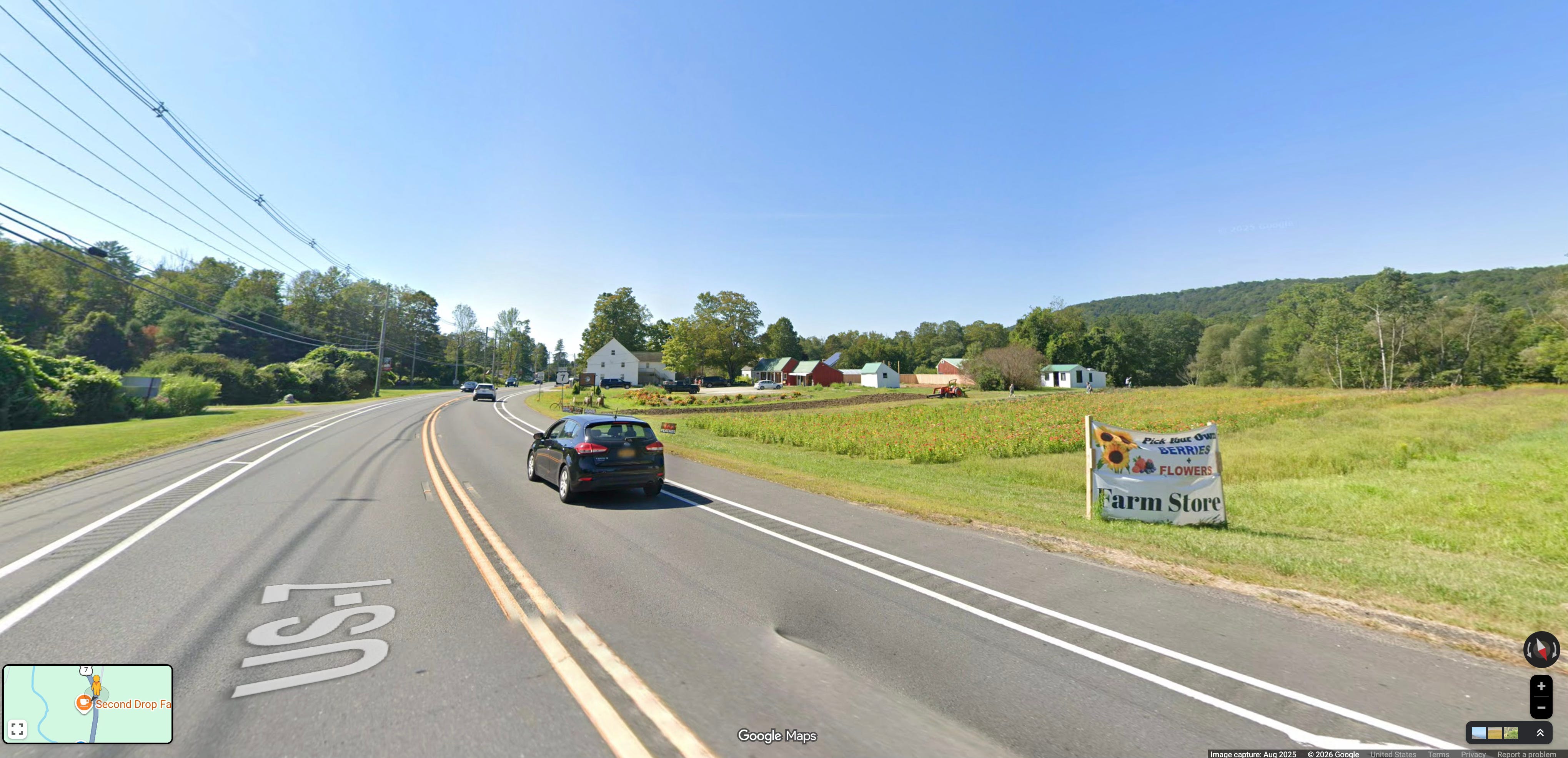
Second Drop Farm, a working, family-run farm operation, was issued a cease-and-desist order by the town’s building inspector for operating short-term rentals (STRs) on the property. The farm appealed. In early February 2026, the Zoning Board of Appeals (ZBA) voted 2–1 to uphold the order, concluding that short-term rentals are not permitted under the town’s zoning bylaw because they are not listed in the Table of Permitted Uses.
That finding came despite a series of facts that, taken together, suggest the town has long treated STRs as legitimate.
What the town explicitly allows — and regulates
Lanesborough voters previously approved local taxation of short-term rentals, adopting the state-authorized local excise and associated fees. The town has collected that revenue.
The zoning bylaw itself goes further. It does not merely allude to STRs; it regulates them. In the off-street parking section, the code specifies parking requirements for “short-term rentals,” mandating one parking space per sleeping room. This language presumes the activity exists and is subject to compliance.
The bylaw also defines and permits bed-and-breakfasts, describing them as owner-occupied residences offering temporary guest lodging, explicitly allowing use of the kitchen to serve guests.
At the same time, Lanesborough’s zoning code permits residential dwellings and residential rentals without imposing any minimum lease length. There is no provision distinguishing a 365-day lease from a 30-day lease, or a 30-day lease from a weekend stay.
In short, the town:
Taxes short-term rentals
Regulates them for parking
Defines guest lodging within residences
Allows residential renting without time limits
Yet none of this proved sufficient to protect Second Drop Farm from enforcement.
Why this still results in a shutdown
The explanation lies in an unwritten but entrenched zoning doctrine.
Massachusetts zoning law does not operate on the principle that what is not prohibited is allowed. It operates on the opposite presumption: only uses explicitly listed as permitted are lawful. Anything not affirmatively authorized — even if referenced elsewhere in the code — may be treated as prohibited.
The ZBA’s decision rested on this point alone. Short-term rentals are not listed as a permitted use in the Table of Permitted Uses. Under zoning practice, that silence becomes dispositive.
Courts have repeatedly upheld this framework. Taxation does not legalize a land use. Regulation does not authorize it. A definition does not permit it. Only inclusion in the use table does.
That is how an activity can be acknowledged in three different sections of a bylaw — and still be shut down.
Why the outcome feels absurd — and legally survives
To a lay reader, the logic appears circular. The town recognizes STRs well enough to tax them and regulate their parking, but claims they are impermissible because they were never formally added to the use table.
Yet zoning boards are not empowered to reconcile contradictions or infer intent. Their role is narrow: determine whether a use is listed as allowed. If it is not, enforcement typically follows.
This is why the vote was close but decisive — and why such cases rarely hinge on fairness at the local level.
Why this case escalates beyond one farm
During the ZBA proceedings, the building inspector stated on the record that additional cease-and-desist orders had already been issued, and that more were prepared and awaiting action, to be handled “case by case.”
Residents also noted that dozens of short-term rentals operate in Lanesborough, raising immediate questions about consistency and scope.
Once a zoning board affirms that STRs are not a permitted use, the logic applies town-wide. Existing operators become vulnerable unless they qualify as lawful nonconforming uses or receive new legislative relief. Participation in bylaw discussions becomes risky, as identifying oneself may trigger enforcement.
The chilling effect is not theoretical; it was openly discussed at the meeting.
Why agritourism law does not shield the farm
Massachusetts does have agritourism-related statutes, but they are narrowly constructed. They primarily address liability for injuries associated with farm activities such as pick-your-own operations or farm tours.
They do not override local zoning authority. They do not automatically legalize lodging. And they do not convert a short-term rental into an agricultural use by default.
As a result, farms pursuing diversified income streams — particularly lodging — remain fully exposed to zoning enforcement unless local bylaws explicitly protect them.
What changes would actually fix this
The Lanesborough case illustrates that resolution does not lie with appeals boards, but with legislative clarity.
Several options were raised or implied during the proceedings and in public discussion:
Explicit STR use language
Adding short-term rentals as a permitted or special-permit use in defined districts would eliminate the contradiction.Agritourism lodging provisions
Carving out farm stays or on-farm lodging tied to active agricultural use would align zoning with state agricultural policy.Moratoriums during bylaw drafting
Temporary enforcement pauses, used in other municipalities, can prevent selective shutdowns while rules are updated.Clear thresholds and definitions
Defining rental duration limits removes ambiguity and retroactive enforcement risk.
Absent such changes, disputes will continue to hinge on silence — and silence, in zoning law, is power.
The broader lesson
Lanesborough did not ban short-term rentals. It did something subtler. It acknowledged them, regulated them, and taxed them — without ever formally permitting them.
That gap is not a drafting error. It is a structural feature of zoning law. And until towns close it deliberately, property owners — including working farms — will continue to learn the rules only when enforcement arrives.