



Across rural America, a new regulatory idea is quietly moving through the food system:
traceability.
Not sanitation rules.
Not inspections.
Data.
Who grew the food.
When it was harvested.
Where it moved.
Who handled it next.
The federal government calls it the Food Traceability Rule, created under the Food Safety Modernization Act and implemented by the U.S. Food and Drug Administration.
Its purpose is straightforward: when a foodborne illness outbreak occurs, investigators should be able to trace contaminated products quickly back to their origin.
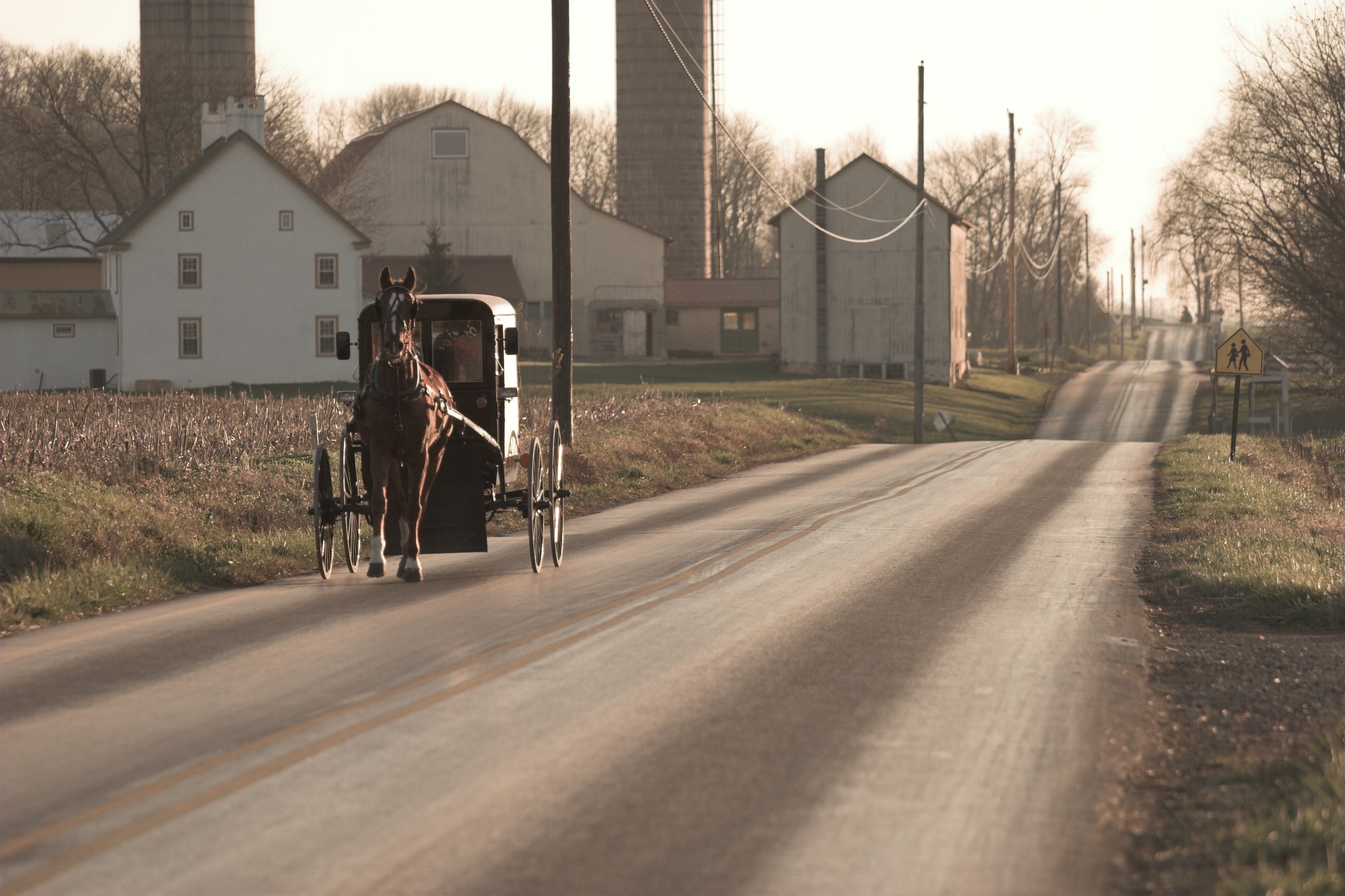
But as the rule begins to reshape how food moves through supply chains, one group of farmers sits at a particularly sensitive intersection of technology, tradition, and regulation.
The Amish.
And while no major lawsuit has yet been filed over the rule, the underlying tensions are becoming increasingly clear.
The Traceability System Being Built
The FDA’s traceability rule — often called FSMA Rule 204 — requires certain foods to be tracked through the supply chain with detailed records.
The regulation applies to foods on what regulators call the Food Traceability List, including products such as:
• leafy greens
• cucumbers and peppers
• fresh herbs
• tomatoes
• certain cheeses
• nut butters
• shell eggs
• some seafood products
For businesses handling those foods, the rule requires maintaining structured records documenting how products move through the food system.
Those records must capture what regulators call Critical Tracking Events and Key Data Elements — essentially a chain-of-custody system for food.
Large food companies already operate similar tracking systems.
But the rule reaches far beyond corporate supply chains.
It extends down to farms, distributors, packers, and other actors moving food through commerce.
Originally scheduled to take effect in 2026, the rule’s compliance deadline has now shifted.
Federal regulators have proposed extending implementation, and Congress has directed that the rule not be enforced before July 20, 2028, giving the food industry additional time to prepare.
That extended timeline has reduced immediate pressure.
But it has not removed the questions surrounding how the system will work in practice.
A Community That Operates Differently
For many farmers, new record-keeping rules simply mean more paperwork.
For Amish communities, the issue can run deeper.
Amish life is organized around religious traditions that intentionally limit the use of certain modern technologies.
The specifics vary between communities, but many Amish farmers avoid or restrict:
• digital record systems
• internet-connected devices
• certain forms of electrical infrastructure
Those practices are part of a broader effort to preserve community independence and cultural continuity.
In agriculture, Amish farms often operate with smaller-scale equipment, local markets, and decentralized production.
In several regions of the country — particularly Pennsylvania, Ohio, Indiana, and Wisconsin — Amish farmers play an important role in dairy production, produce markets, and specialty agriculture.
Their farms form part of the food economy.
But they operate on a different technological foundation than most industrial agriculture.
We're not just making a statement with a hat... We're using it to Defend the Right To Farm. Worn around the world, this is one hat that does more than sit on your head. It funds a movement. Defend The Right to Farm https://yanasatradingco.com/products/defend-the-right-to-farm-leather-patch-hat-pre-order
The Tracking System Question
Traceability rules assume something about the food system:
that every participant can integrate into a modern data network documenting how food moves from farm to consumer.
For most large companies, that assumption holds.
But communities that intentionally avoid digital infrastructure may face difficult choices.
The rule itself does not explicitly require electronic systems at the farm level.
However, modern supply chains increasingly depend on digital tracking tools to manage traceability.
That means the pressure may come less from regulators and more from the marketplace.
A distributor may require traceability documentation before purchasing produce.
A grocery chain may demand lot-level records from suppliers.
Food hubs and wholesalers may begin standardizing traceability expectations across their networks.
When that happens, farms unable or unwilling to adopt the necessary systems may find certain markets harder to access.
A History of Technology Conflicts
This would not be the first time Amish communities have clashed with regulatory systems built around modern technology.
In previous agricultural debates, conflicts have emerged over livestock identification programs, premises registration systems, and other centralized tracking initiatives.
In some documented cases, Amish farmers chose to exit certain markets rather than adopt technologies they believed conflicted with their religious practices.
Those decisions reflect the same principle that shapes many aspects of Amish life: preserving a way of living that prioritizes community and tradition over technological integration.
Traceability rules may create similar pressures, even if unintentionally.
What Has Not Happened — Yet
Despite growing discussion of the issue, one important fact remains clear.
There is no confirmed lawsuit currently challenging the FDA’s traceability rule on behalf of Amish farmers under religious freedom law.
That matters.
In the United States, legal conflicts between religious communities and federal regulations often unfold through the Religious Freedom Restoration Act (RFRA).
Under RFRA, if a federal rule substantially burdens religious practice, courts may require the government to demonstrate that the rule serves a compelling interest and uses the least restrictive means available.
But for that process to begin, someone must first file a case.
So far, that has not happened with FSMA 204.
Why the Story Still Matters
Even without a lawsuit, the traceability debate highlights a larger question about the evolving structure of the food system.
Over the past several decades, food distribution has become increasingly centralized and technologically integrated.
Traceability systems represent the next step in that evolution.
They promise faster outbreak investigations and more transparent supply chains.
But they also assume that every participant in the system operates within a shared technological framework.
For communities that intentionally live outside that framework, the fit may not be seamless.
A Fault Line to Watch
For now, the traceability rule remains several years away from enforcement.
The compliance date of July 20, 2028 gives regulators, industry groups, and farmers time to adapt.
But the conversation is already beginning.
As buyers prepare for new requirements and supply chains evolve, farms across the country will be deciding how to respond.
Some will adopt new systems.
Others may shift toward direct-to-consumer markets.
And communities with distinct technological traditions may face decisions that reach beyond economics into questions of faith and identity.
The traceability era has not fully arrived yet.
But as it approaches, one of the most interesting questions in American agriculture may not be about food safety alone.
It may be about whether a modern, data-driven food system can still leave room for farmers who choose to live outside it.