



If you’ve lived in America for more than five minutes, you’ve seen the Campbell’s Soup can.
It’s more iconic than the Macy’s Parade balloons… and probably has a longer shelf life.
Campbell’s is woven into the fabric of our holiday season — especially Thanksgiving, where cream of mushroom soupis the silent, glue-like hero binding together your green bean casserole… the same casserole we all pretend is “healthy” because it contains a vegetable and some crunchy onions.
For decades, Campbell’s has sat proudly on pantry shelves next to pumpkin purée, cranberry sauce, and that one can of yams nobody ever uses. It’s part of the American tradition.
But this year, Campbell’s found itself on the holiday table for a different reason entirely — not in a casserole dish, but in a scandal.
Meet Robert Garza — The Whistleblower Who Hit ‘Record’
Robert Garza wasn’t a household name until now.
A cybersecurity analyst at Campbell’s, he did what tech guys are famous for: he pressed a button.
Unfortunately for Campbell’s, that button was record.
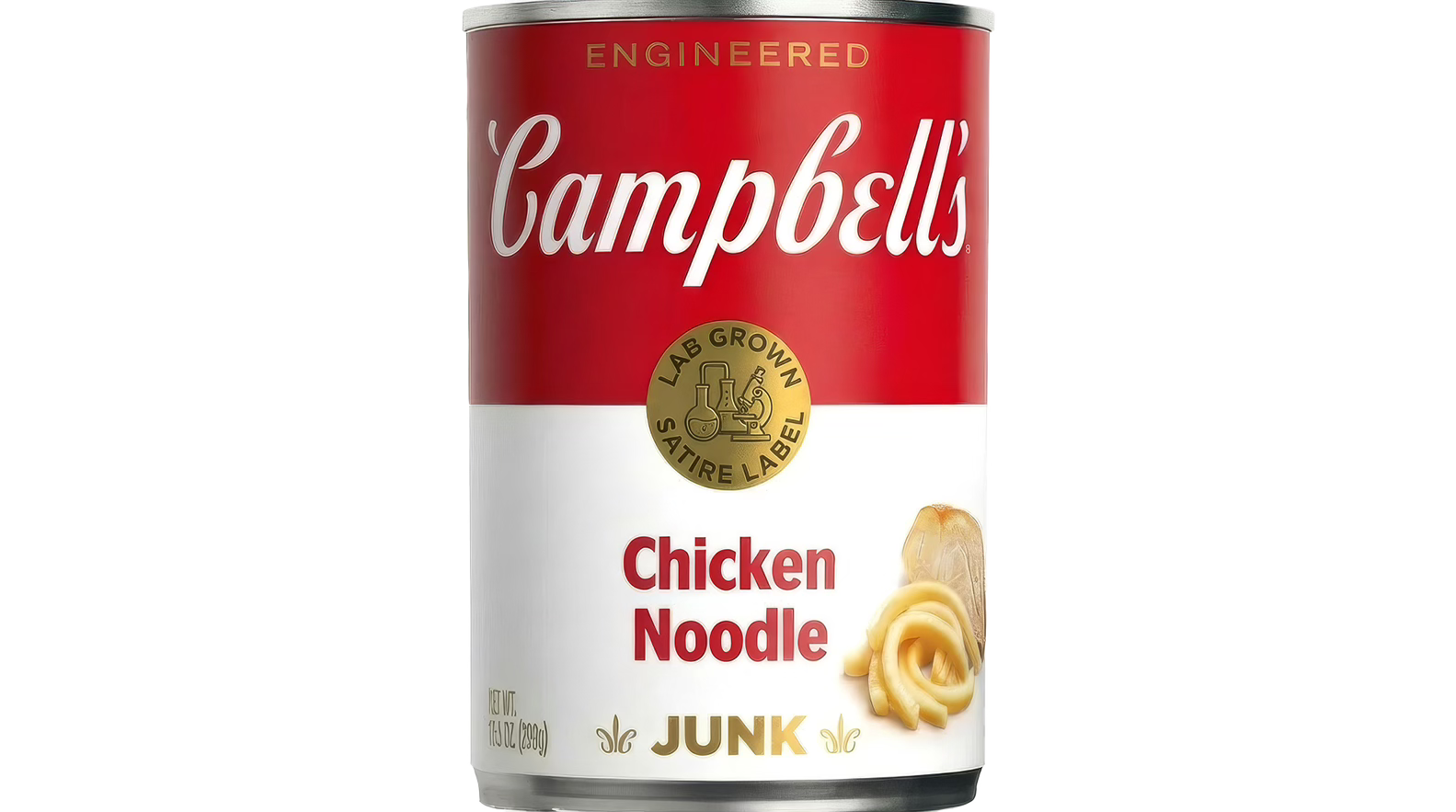
In the now-infamous audio clip, Garza captured a senior Campbell’s IT executive — Martin Bally — allegedly delivering a profanity-laced monologue that would make Gordon Ramsay blush.
According to the lawsuit, Bally didn’t hold back:
He mocked Campbell’s customers as “poor people.”
He disparaged Indian employees with crude stereotypes.
He even called Campbell’s own soups “processed junk” and referenced “bioengineered meat” — a phrase that sent the internet straight into conspiracy mode.
The allegations were ugly, distasteful, and frankly, shocking from a multibillion-dollar brand whose entire persona is “comfort food.”
Campbell’s responded quickly, placing Bally on leave and assuring the world that they absolutely do not serve 3D-printed chickens or lab-grown mystery goo.
(Good to know we can cross Campbell’s Cyberpunk Edition off the menu.)
So What’s Actually in Campbell’s Soup?
Let’s take a deep dive into the truth.
Here’s the thing: Campbell’s is right.
They are not pumping lab-grown cyberchickens into your soup.
But also… your grandma didn’t make soup this way.
Nowhere in Grandma’s pantry will you find:
modified cornstarch
yeast extract
“natural flavoring” (the most mysterious phrase in food manufacturing)
soy protein isolate
beta carotene for color
disodium guanylate (a flavor booster so strong it practically screams in your mouth)
Campbell’s soups are built like a modern car: part real, part engineered, part “we added this so it always tastes the same.”
Real food… heavily processed
The chicken is real.
The tomatoes are real.
The carrots are real.
But by the time they’re done with it?
They’ve been paste-ified, powdered, standardized, fortified, stabilized, flavored, thickened, preserved, and parked on a shelf for two years.
This isn’t fresh food.
This is industrial cuisine.
And if your Thanksgiving green bean casserole is sporting a can of Campbell’s Cream of Mushroom?
Congratulations — it contains:
real mushrooms
real cream
AND an entire supporting cast of starches, dairy isolates, MSG, emulsifiers, and natural flavor agents designed to bring that “classic” taste your great-grandmother would not recognize.
How Over-Processed Is Campbell’s “Plant-Based Chick’n”?
Let’s talk about that plant-based “chick’n” line, since Bally’s rant made it sound like Campbell’s was 3D-printing cyber-poultry.
Reality check:
It is not lab-grown.
It is not printed.
It is not engineered by a mad scientist in the basement of Campbell’s HQ.
Instead, it’s the same kind of plant-based protein chunk used across the industry: a highly extruded, soy/pea/wheat protein matrix molded into something that resembles chicken in texture… if you squint.
Is it meat? No.
Is it natural? Eh… that depends on your definition.
Is it over-processed?
Yes. Absolutely. Without hesitation.
“So is it artificial lab goo?”
Not exactly — but it’s close enough that you won’t find the recipe in any church cookbook from 1952.
The Big Picture: It’s Not Grandma’s Canning Pantry
Campbell’s soups are not “fake food,” but they are highly processed foods.
Think of it like this:
“Campbell’s isn’t 3D-printing chickens in the basement — they’re canning highly processed versions of real food.”
It’s food… after it’s been marched through an industrial obstacle course and then finished with a chemistry set.
They do it for:
consistency
safety
long shelf life
low cost
But freshness is not part of the equation.
Grandma made soup by simmering a chicken for hours.
Campbell’s makes soup by turning ingredients into components, stabilizing them, and assembling a final product in a factory line.
Same destination, very different journey.
Meanwhile… How Many Vaccines, Antibiotics & Hormones Are in Butterball Turkeys?
Oh, you thought we were only picking on Campbell’s today?
Here’s a fun Thanksgiving fact:
Your average supermarket turkey has lived a life that reads like a pharmaceutical pamphlet:
vaccines? ✔
antibiotics (at some point in its life)? ✔
growth promoters & feed additives? ✔
genetics that produce a bird so large it can’t naturally reproduce? ✔ (yes… the turkeys you eat are artificially inseminated)
So while you’re stirring canned soup into your casserole, your turkey is basically the livestock equivalent of a Marvel superhero — engineered, enhanced, and definitely not “natural.”
Enjoy Your Thanksgiving — But Maybe Revisit Grandma’s Cookbooks
Look, eat your green bean casserole.
Enjoy your mashed potatoes.
Slice up that turkey.
We’re not here to ruin your holiday — only to inform it.
But maybe this year, consider:
buying a local pasture-raised bird
swapping one canned ingredient for a fresh one
visiting your farmers market
dusting off grandma’s old recipe card box
learning how to make a real roux instead of cracking open a can
Tradition doesn’t have to come from a factory.
And who knows — you might just discover that real food, made the old-fashioned way, tastes a whole lot better than something “paste-ified, powdered, stabilized, flavored, thickened, and parked on a shelf for two years.”
Happy Thanksgiving from Yanasa TV News.
And hey… try not to microwave the soup. Use a pot. It deserves at least that much.