



When a grazing lease on state trust land becomes the subject of environmental enforcement, and that same land later appears in a state transfer program, the public deserves clarity on process.
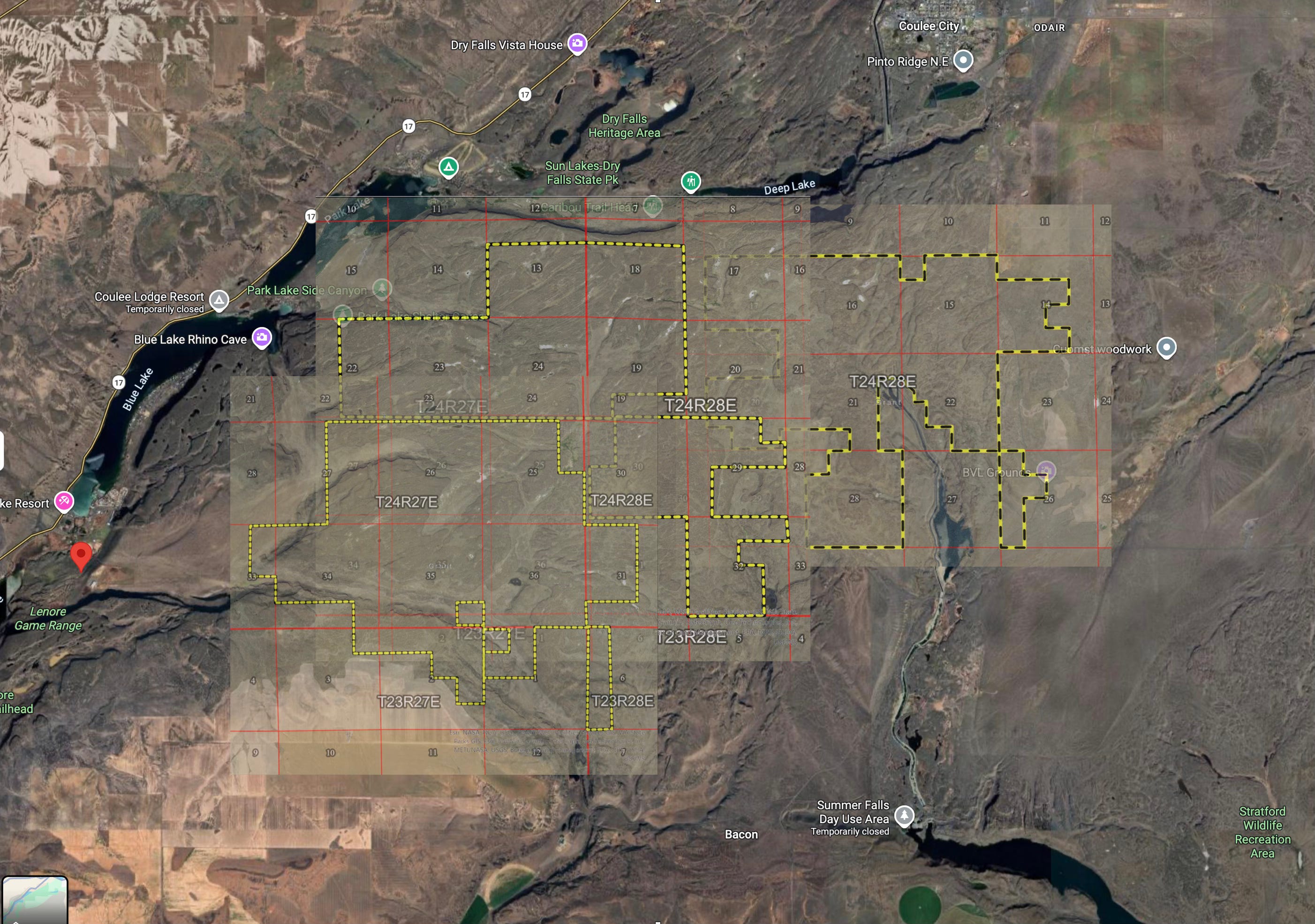
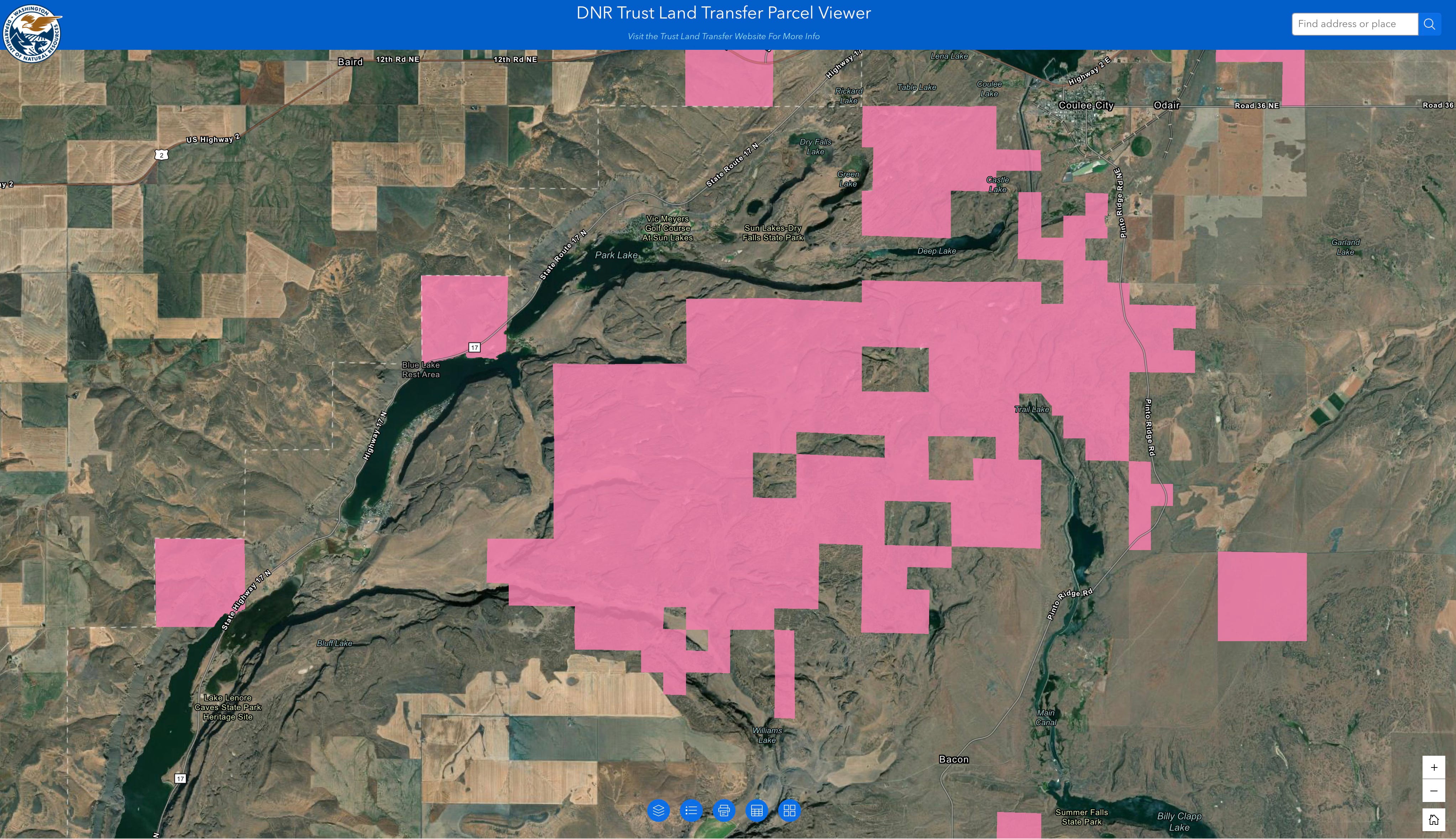
The Park Lake A, B, and C parcels — approximately 12,800 acres of shrub-steppe rangeland in Grant County — are now proposed for transfer through Washington’s Trust Land Transfer (TLT) program.
But these are not anonymous parcels.
They sit within the footprint of the long-running King Ranch grazing operation — land that became the center of a high-profile enforcement action and legal fight beginning in 2021.
This report lays out what is documented, what is disputed, and what remains unanswered.
The Clean Chronology
February 2021
A complaint is reported to have been made to Washington Department of Fish & Wildlife regarding activity on or near state trust lands in the Park Lake area. Media reporting at the time described the referral chain moving from WDFW to DNR and then to Ecology.
According to The Spokesman Review this complaint came from a member of the Confederated Tribes of the Colville Reservation.
The Department of Ecology learned of the illegal wetland excavation thanks to a tipster.
A member of the Confederated Tribes of the Colville Reservation, who was hiking the area in February 2021, alerted the Washington Department of Fish and Wildlife after seeing equipment on federal land.
The Department of Fish and Wildlife in November 2021 told the Department of Natural Resources about the suspicious activity. After visiting the site and seeing the damage, DNR in December 2021 told the Department of Ecology, the agency that enforces Washington’s environmental laws.
February 2023
The Washington Department of Ecology announces penalties related to alleged disturbance of alkali wetlands.
~February 2023
State grazing leases associated with the King Ranch are treated as terminated by the state.
However, the lease status remains the subject of litigation. Individuals familiar with the matter say the underlying agreements extend through 2029 and are subject to temporary injunction posture. That position is disputed in court.
September 30, 2025
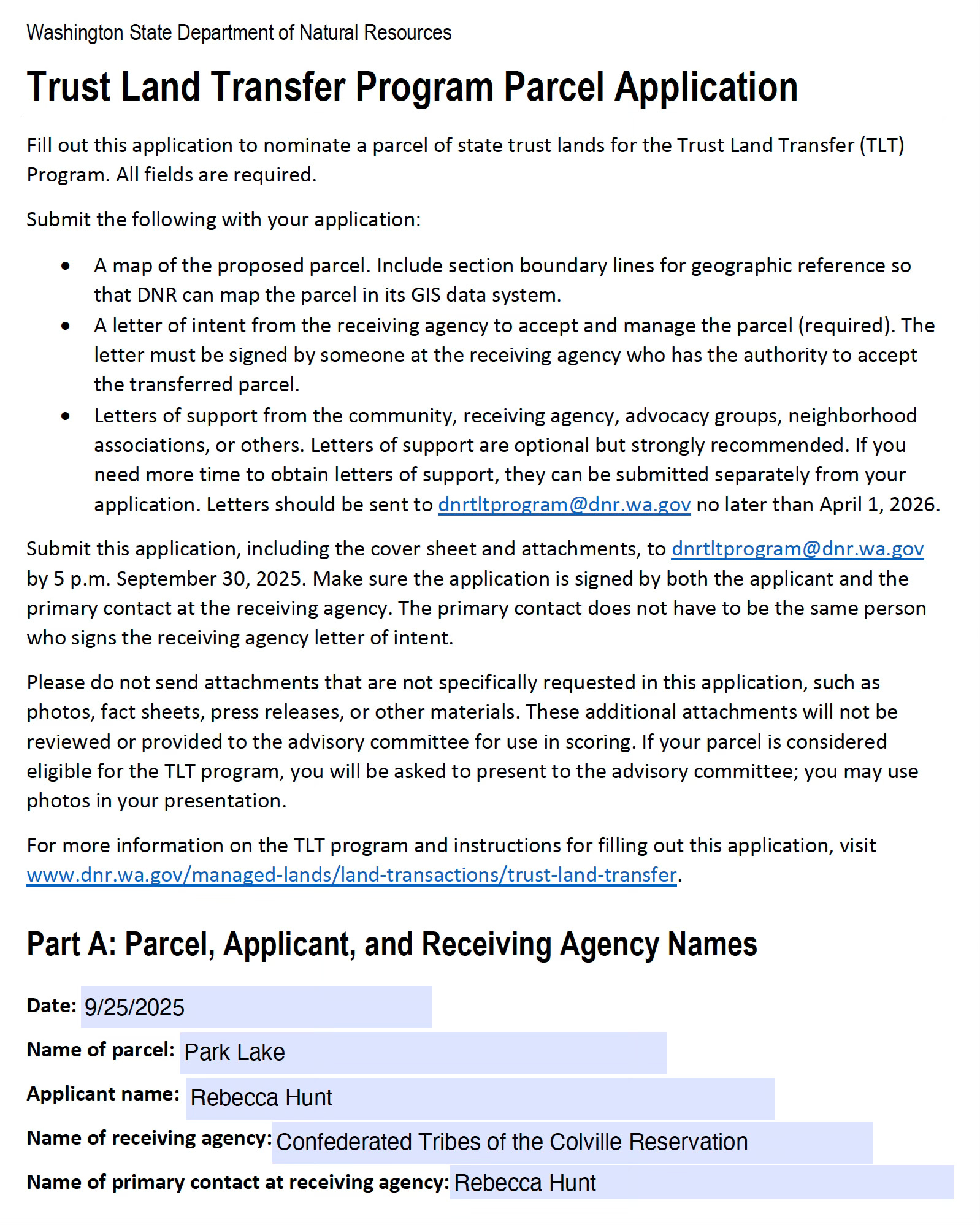
Applications for Park Lake A, B, and C are submitted for consideration in the 2027–29 Trust Land Transfer cycle by the Confederated Tribes of the Colville Reservation.
December 18, 2025
DNR completes “Best Interests of the Trust” (BIT) analyses for the parcels. The forms describe the parcels as having no current leases and no lease revenue.
January 15, 2026
Management review concurrence is recorded.
January 2026
Applications are publicly posted for comment.
What the TLT Documents Actually Say
The Park Lake parcels are:
Classified as 100% non-forested shrub-steppe
Identified as having ecological constraints (wetlands, habitat, cultural resources)
Described as adjacent to Sun Lakes–Dry Falls State Park and other conservation lands
Listed as having no current leases at the time of BIT analysis
Identified for transfer to the Confederated Tribes of the Colville Reservation
The receiving agency’s (Confederated Tribes of the Colville Reservation) application states an intention, if possible, to convert the property to federal trust status and to utilize Bureau of Indian Affairs funding for management.
“The Colville Tribes does not have a planning document associated with acquiring properties off of the current Colville reservation, but it has been a strategic priority of the Colville Business Council, and has been for some time. Reacquiring properties in our traditional territories ensures we have management control, allowing us to prioritize actions that benefit the hunting, fishing, gathering, and cultural rights the Tribe’s retain in that area.”
”It is the Tribes’ intention to convert the property to trust, if possible, which will allow us to utilize the Bureau of Indian Affairs (BIA) funding to achieve the management goals on the property. We will also leverage other state and federal funding sources to supplement the BIA appropriations we receive.”
That language does not alter statehood. It reflects a potential jurisdictional shift consistent with federal Indian land law if fee-to-trust were approved.
With the King Ranch grazing leases now terminated, DNR’s own Best-Interests-of-the-Trust analyses for the Park Lake A/B/C tracts characterize the parcels as “unleased” with no lease revenue, and argue they are unlikely to be leased in the future—framing the tracts as low-revenue trust assets constrained by cultural resources and listed-species habitat and therefore appropriate for transfer out of trust status.
This parcel is unleased, lacks irrigation water rights, and contains cultural resources and critical habitat for multiple listed species. Its ability to generate revenue for DNR’s trust beneficiaries is limited, both in the short-term and long-term, and it is unlikely to be leased in the future. The Confederated Colville Tribes have the ability to manage and maintain the shrub-steppe habitat present there. Therefore, this proposal would be in the best interest of the Common School Trust and would be appropriate for disposal via the Trust Land Transfer program.
The Funding Structure
Under Washington law, Trust Land Transfers are funded through legislative appropriation.
The receiving agency (Confederated Tribes of the Colville Reservation) does not purchase the land directly.
Instead:
The Legislature appropriates funds.
The parcel is appraised.
Replacement value is deposited into trust accounts.
DNR acquires replacement lands to maintain revenue for trust beneficiaries (such as public schools).
This is the statutory design of TLT.
The question is not whether the program exists. It does.
The question is whether this sequence raises governance concerns.
The Acreage Question
Each Park Lake parcel falls just under 4,500 acres:
Park Lake A – 4,164 acres
Park Lake B – 4,384 acres
Park Lake C – 4,315 acres
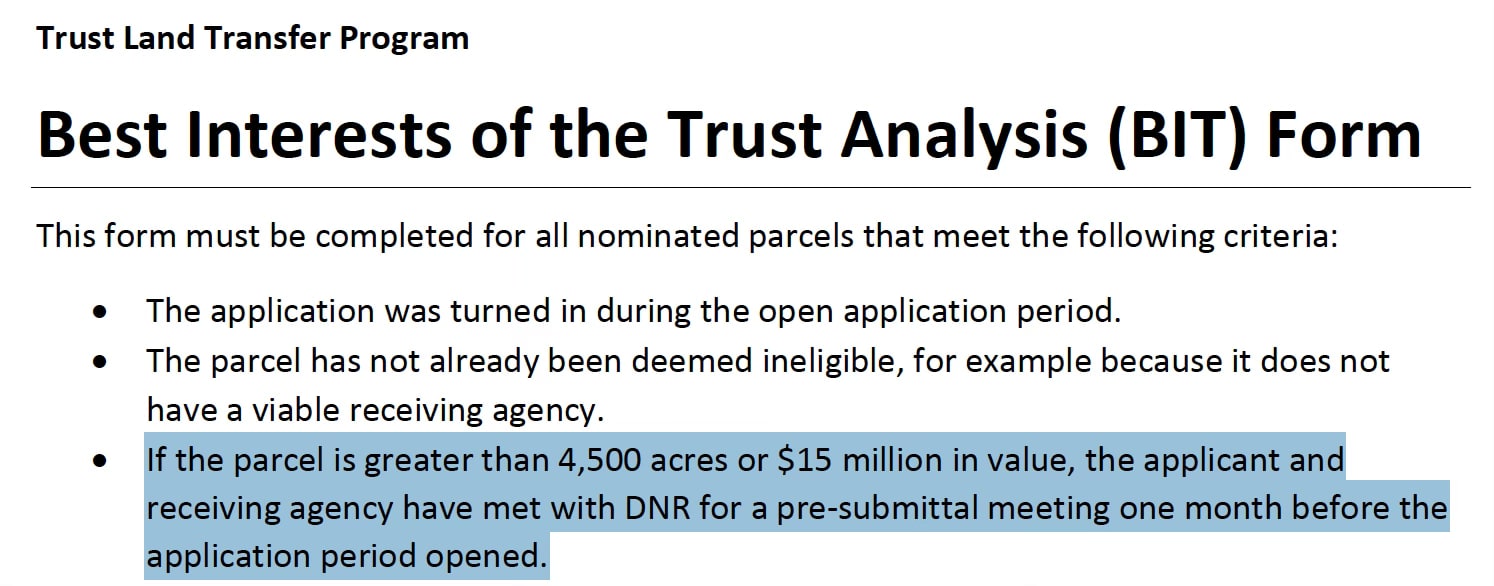
TLT guidance indicates that parcels above 4,500 acres trigger additional pre-application meeting requirements.
Whether the segmentation into A, B, and C was purely administrative or strategically structured is not clear from public documents.
That is a process question, not an accusation.
The Lease Dispute
DNR’s BIT forms state there are no current leases and no lease revenue.
However, individuals close to the litigation say the lease status remains under judicial review and that the underlying agreements extend through 2029.
That dispute matters because:
If a lease remains legally operative under injunction,
then characterizing land as “unleased” during a pending dispute raises timing questions.
If the termination was final and uncontested at the time of BIT analysis,
then the classification aligns with internal records.
The courts will ultimately determine that posture.
The Structural Question
When:
A complaint reportedly originates from a member of the receiving sovereign,
Enforcement escalates,
Leases are treated as terminated,
Parcels are later classified as unleased and low-revenue,
The same parcels are nominated for transfer to that sovereign,
What internal safeguards exist to ensure the land transfer process is insulated from enforcement optics?
That is not a claim of coordination.
It is a very basic governance question.
What “Might” Settle It
The key document is the date the Park Lake parcels first entered DNR’s internal TLT screening queue.
If TLT consideration predates enforcement and lease termination,
then the narrative changes.
If nomination followed lease termination,
then sequencing becomes part of the public discussion.
That document has not yet been produced publicly.
Maybe Department of Natural Resources is simply trying to offload the property after the lease potentially stopped. We don’t have the answers, yet.
The Access Issue
Another unresolved concern:
King Ranch owns deeded land within or adjacent to the transfer footprint.
If transfer proceeds, and especially if fee-to-trust conversion is pursued,
what happens to access routes for deeded inholdings?
That question remains unanswered in the public materials.
The Bottom Line
The Trust Land Transfer program is lawful.
The enforcement process is lawful.
Fee-to-trust conversion is lawful.
The issue here is not legality.
It is optics, sequencing, and transparency.
Public trust land is held for beneficiaries — primarily public schools.
When land moves from active grazing lease to ecological enforcement to proposed sovereign transfer within a short sequence of years, transparency matters.
The public does not need conclusions.
It needs documentation.
And one internal date may tell the entire story.