



Update: Photo credits have been added at the request of High Country News. Images by Roberto “Bear” Guerra are used under fair use for purposes of critique and commentary.
Yanasa TV frequently analyzes, critiques, and reports on public-interest issues involving agriculture, land use, policy, and rural communities. To accurately represent the subject matter, this publication may reproduce limited copyrighted material—such as screenshots, images, quotations, or data visualizations—under the Fair Use Doctrine (17 U.S.C. §107).
Such materials are used solely for transformative purposes including:
commentary and criticism
comparative analysis
public-interest journalism
education and research
All rights to original images, photographs, and textual excerpts remain with their respective copyright holders. We provide photographer credits, publication sources, and attribution wherever applicable. If any rights holder has concerns about attribution or presentation, please contact us for prompt adjustment.
Today we’re digging into a recent High Country News article titled: “How ranchers accused of breaking the rules dodge oversight.” By Mark Olalde and Jimmy Tobias Public Domain .
Catchy title. But let’s be honest—this isn’t an investigation so much as a Rorschach test. If you already think public-lands ranchers are scofflaws with political sugar daddies, the article confirms it. If you actually know how the West works… you can practically hear the narrator leaving out 70+% of the facts.
So let’s break down what they got right—and what they conveniently left on the editing-room floor.
Misread Landscapes: When a Photo Becomes a Weapon Instead of Evidence
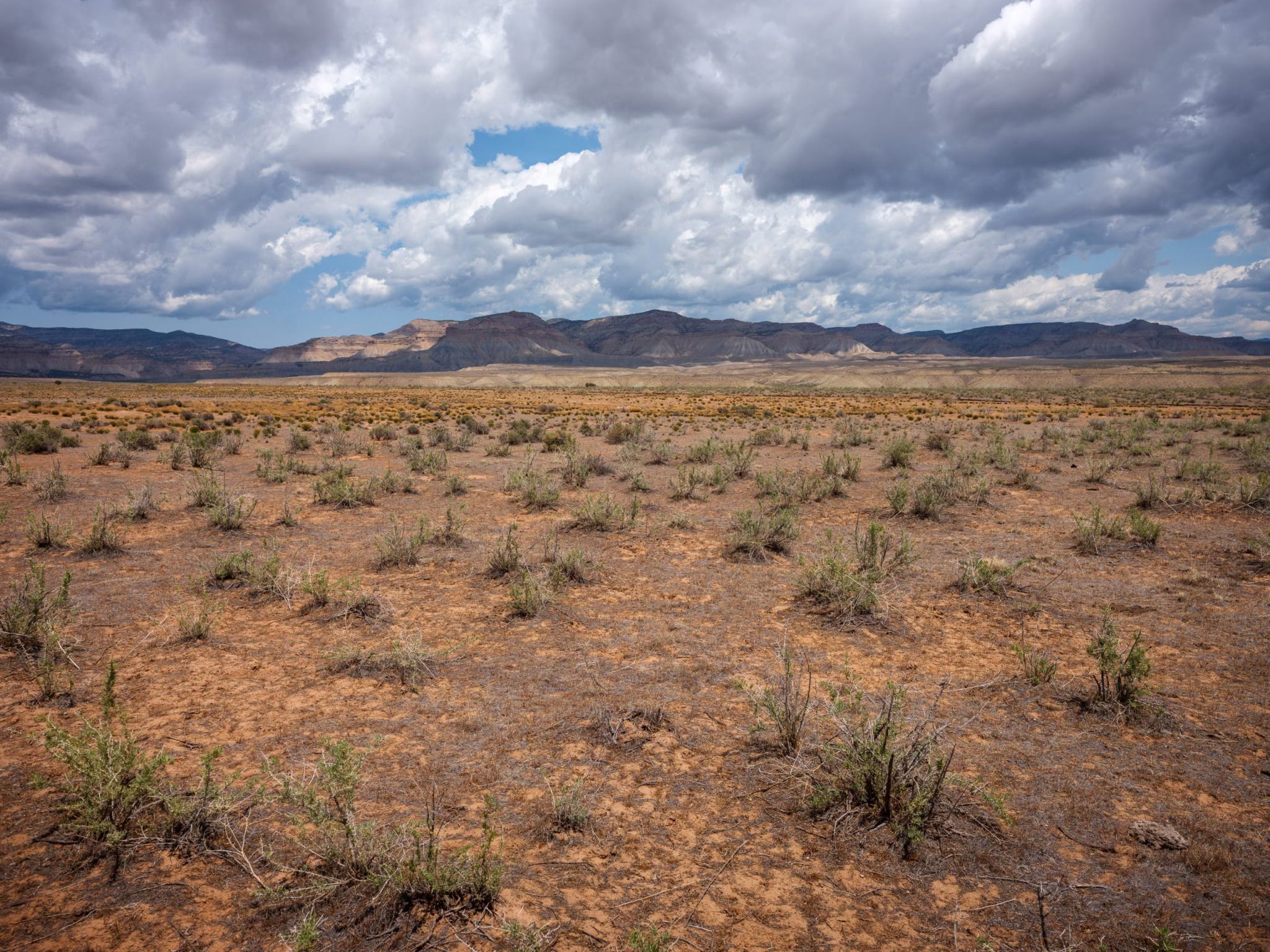
Environmental reporting loves a dramatic landscape shot, and this one has all the ingredients: cracked soil, scattered shrubs, a horizon of baked mountains under a bruised sky. To the untrained eye, it looks like the aftermath of a grazing apocalypse—“proof,” some say, that ranchers have chewed the West down to its bones.
But here’s the truth: this is what millions of acres of the American West look like on a perfectly normal day.
Sparse vegetation, wide patches of bare ground, and low woody shrubs aren’t symptoms of abuse—they’re the signature of arid and semi-arid ecosystems that evolved under extreme temperature swings, poor soils, and erratic rainfall long before the first cow ever set hoof here.
A single photograph cannot diagnose overgrazing any more than a single cough can diagnose pneumonia. Without multi-year monitoring data, precipitation records, soil assessments, and seasonal context, the image tells us nothing about whythe land looks this way. It could be drought. It could be natural desert shrubland. It could be recovering from wildfire. It could simply be summer on an upland range where grasses naturally die back.
Yet photos like this are routinely held up as smoking guns—visual shorthand for a narrative that ranchers are destroying public lands. It’s a convenient framing. It’s also scientifically flimsy.
Real overgrazing leaves signatures: heavy erosion, pedestaled plants, invasive species takeover, uniform cropping, and degraded riparian zones. None of that is evident here. What we see instead is the West being the West—harsh, dry, stingy with growth, slow to regenerate, and breathtakingly misunderstood by people who view rangelands through a suburban or temperate-forest lens.
Using images like this without context doesn’t educate the public; it manipulates them. And it erases the reality that many ranchers work with the constraints of these landscapes, not against them, adapting stocking rates and rotation schedules to patterns that haven’t changed in millennia.
If we’re going to have an honest conversation about land health, we need more than a camera.
We need data, history, and humility. Because the West has always looked tough—and it will always fool anyone who mistakes arid ecology for abuse.
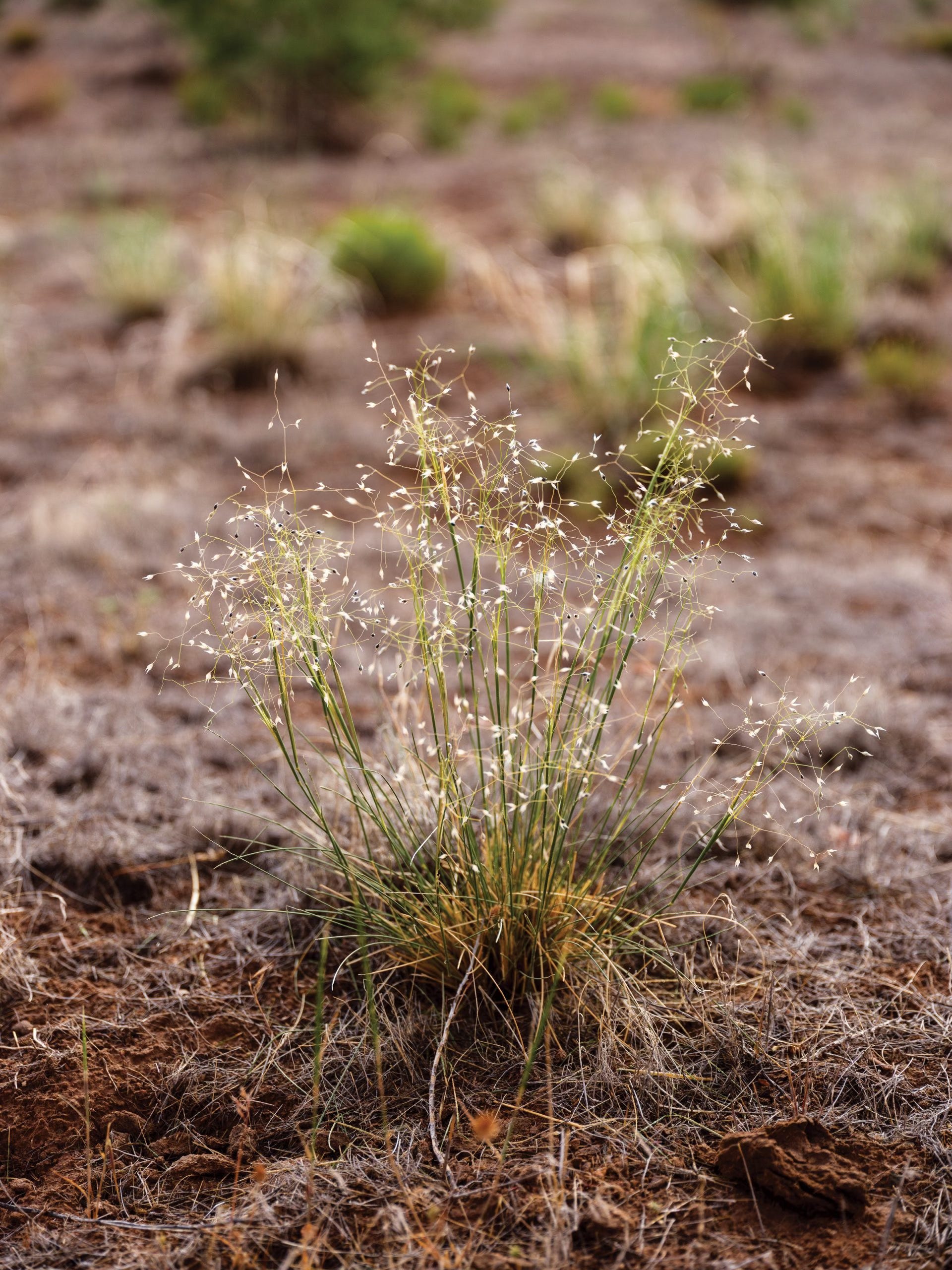
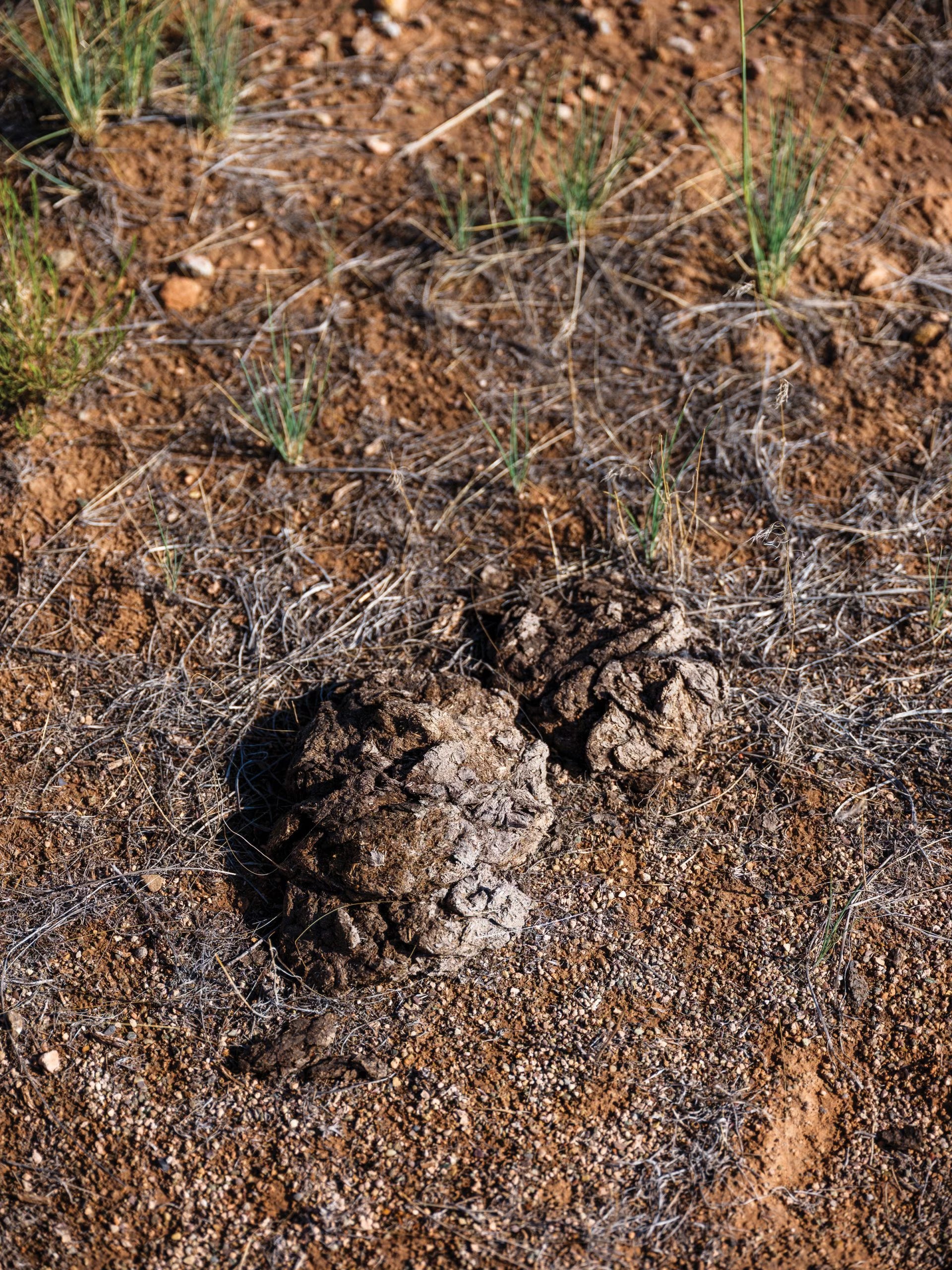
Can you guess the caption of these photos? “A BLM grazing allotment in Colorado shows some signs of a healthy environment, such as native Indian ricegrass (above), as well as areas degraded by cattle (below)”
Yes, the first photo shows Indian ricegrass, a native bunchgrass valued for soil stability, wildlife habitat, and forage. It is absolutely a good sign.
But here’s the key:
Indian ricegrass is common across healthy AND moderately grazed Western rangelands.
Its mere presence says the land is capable of supporting native grasses, not that it is untouched or “pristine.”
This is the classic trick:
show something normal and pretend it proves exceptional ecological health.
The second photo literally shows:
Two normal, dry cattle dung pats
A few sprouting grasses around them
Dry-season or drought-season ground
This is not “degradation.”
This is a cow pie on arid rangeland, which:
Provides nutrients
Creates moisture-retaining micro-sites
Does not prevent grass regrowth
Does not indicate overgrazing
Is found on every grazed AND wildlife-used landscape on earth
If the presence of manure equals “degradation,” then every bison range in North America would be considered ecologically ruined — and it’s obviously not.
Cherry-picking the loudest bad actors doesn’t define the industry
The piece spotlights the most inflammatory cases in the West:
A Montana dispute,
A Colorado allotment fight,
A Bundy reference for extra spice,
And a rancher making threats that absolutely should be condemned.
Are those stories real? Sure.
Are they representative of the 18,000+ public-lands grazing permittees who quietly run cows, follow the rules, and deal with mile-thick federal paperwork? Absolutely not.
That’s like profiling all restaurant owners by interviewing the one guy who deep-fried his inspection report.
If you only interview the outliers, your story stops being journalism and becomes mythology.
“Political pressure” is bad… unless it comes from the other team
The article frames it like this:
Ranchers call their congressman → Agencies ease up → Democracy collapses.
But somehow, lawsuits from major national environmental groups—whose budgets dwarf most family ranches—get one passing mention as merely “litigious organizations.”
Excuse me? Environmental litigation practically shapes land management. Agencies have entire offices dedicated to complying with court orders. Whole grazing allotments shut down not because cattle damaged anything—but because a lawsuit needed a notch on a belt.
Let’s be consistent:
If calling your senator is “dodging oversight,” then suing the agency until they cry uncle is also “political pressure.”
Funny how that nuance evaporated.
Ranchers aren’t fighting oversight—they’re fighting inconsistency
Here’s what public-lands ranchers actually deal with:
Standards that change with every new district ranger
Baseline monitoring from 1980 compared to drought conditions in 2025
Allotment plans that take 10 years to update
Wildfire, invasive species, elk pressure, and shifting agency science
Staff turnover so high that sometimes the cows know the range specialist better than the range specialist does
And yet, when ranchers push back on decisions that affect their livelihoods, it’s framed as sinister political maneuvering.
No, it’s called due process.
Try running a business where one inconsistent agency memo can bankrupt you, and tell me you wouldn’t call your elected representatives.
Oversight goes both ways.
“Vacant allotments” and “deteriorated rangelands” have complicated histories
This article treats every vacant allotment like it was vacated because cattle destroyed it. Reality is… more nuanced:
Some were abandoned after wildfires destroyed water infrastructure.
For example, in Arizona’s Tonto National Forest, the Bush and Telegraph fires torched wells, tanks and miles of fence. Until BAER money trickled in, some pastures simply sat idle because there was no functioning water system to run cattle on.Some sit in no-man’s land where agencies never finished NEPA work.
The Forest Service itself lists thousands of allotments in a NEPA backlog. Some pastures are in a kind of bureaucratic purgatory—no one wants to invest in infrastructure or stocking plans until the paperwork catches up. Look no further: https://www.fs.usda.gov/rangeland-management/documents/rescission/NationalAllotmentNEPASchedule2017-2028.pdfSome were retired after environmental groups bought the permits.
Across Oregon, Nevada, Idaho and the Mojave, tens of thousands of AUMs have been removed from the books not because ranchers are ‘dodging oversight,’ but because permits were bought out or donated and the allotments permanently retired.
Here are a couple examples:
Hart Mountain / Sheldon National Wildlife Refuge buyouts
Upper Deschutes, Oregon – ONDA buyouts
Legislated donations & permanent retirementsSome lack fencing the agency was supposed to maintain in the first place.
BLM and the Forest Service routinely admit they don’t have enough range-betterment money to keep fences and pipelines up to spec. When miles of boundary fence are down, the agency itself will often keep a pasture in non-use or ‘vacant’ because the infrastructure it was supposed to help maintain simply isn’t there.And many are actually in good ecological condition because of rotational grazing.
Federal researchers themselves are running long-term trials in Colorado and the Greater Yellowstone where carefully managed rotation and rest are improving habitat for grassland birds and maintaining plant cover—even though activists still use photos of bare patches to claim public lands ranching can ‘never’ be sustainable.
But the piece uses “vacant allotment” as coded language for “ranchers wrecked this.”
Come on now. This is the West, not a cartoon.
Leaving out rancher success stories is how you turn reporting into rhetoric
Where are these examples?
Ranchers who voluntarily lowered numbers during drought
Argenta Allotment, Nevada – Pete Tomera
In Lander County, rancher Pete Tomera agreed to BLM-requested drought cuts of 8,000 AUMs one year and 11,000 AUMs the next, equivalent to roughly 1,375 cows over an eight-month season, on top of a historic 50% reduction that was already in place. Great Basin SunGreat Divide Basin, Wyoming – Rawlins Field Office
A BLM watershed report for the Great Divide Basin credits “decreased levels of livestock grazing due to voluntary reductions by permittees during periods of drought” for long-term drops in bare ground and improving soil and watershed health on multiple allotments. EplanningLong Creek Allotment, Oregon – USFS permittees
After concerns over riparian impacts, Forest Service documents note that permittees in the Long Creek Allotment voluntarily cut their herd from 967 to 520 cow–calf pairs from 2019–2022 to help the pasture recover. NOAA Institutional RepositoryPermit holders who restored riparian areas with rotational grazing
On the Rio Oxbow Ranch along six miles of the Rio Grande, the Lisenby and Pizel families used time-controlled, high-intensity, short-duration grazing to move 1,000 cow–calf pairs through riparian pastures in spring and fall. BLM’s own technical reference cites the operation for restoring properly functioning riparian areas, improving fisheries, and stabilizing banks after decades of degradation. Bureau of Land ManagementCollaborative grazing/wildlife projects with USFWS and state agencies
Deseret Land & Livestock shifted from season-long use to a high-intensity, short-duration system across its rangeland. BLM’s case study reports better ground cover, improved riparian vegetation, and reduced erosion—all while the ranch sustained higher combined cattle and elk numbers than under the old regime. Bureau of Land ManagementRanchers who won appeals after agencies were proven wrong
The Three Creeks allotment consolidation put 10 federal allotments under a time-controlled rotation through 31 pastures, with annual grazing plans and new range infrastructure. Monitoring shows that rotation increased biomass and stubble height and reduced streambank erosion and E. coli in creeks, especially where pastures had been season-long grazed before. Eplanning
There are hundreds of them.
Not one made it into the article.
If you only ever show failures, guess what picture you paint? A failing industry.
That’s not journalism—that’s narrative curation.
A word about “rule breakers”
The article leans heavily on the phrase “ranchers accused of breaking the rules.”
Accused by whom?
Under what conditions?
With what baseline data?
Under what drought year?
Based on which ranger’s interpretation of a 40-year-old plan?
On public lands, “breaking the rules” often means:
cows wandered onto a closed pasture because a wildlife gate failed,
a storm blew down a fence,
or monitoring showed stubble height two inches lower after a dry year.
None of that excuses genuine violators. But it does show that the West isn’t a comic book with clear heroes and villains. It’s a landscape of constant ecological flux. And the people grazing it must adapt daily—often faster than policy does.
And here’s the part they really dodge:
Ranchers aren’t fighting to escape oversight. They’re fighting to survive it.
Because when agencies get it wrong, ranchers don’t just lose a fine—they lose:
forage,
income,
multi-generation allotments,
and sometimes the entire ranch.
Public-lands ranchers aren’t corporate overlords. They’re small family operations trying to hold onto a tradition that feeds rural communities and maintains landscapes that otherwise become overgrown fuel.
Pretending they’re masterminds manipulating Washington is… adorable. And wildly inaccurate.
So what’s the real story?
Yes—there are problem ranchers.
Yes—there are agencies under political pressure.
Yes—oversight needs to be consistent.
But if you want an honest portrayal, you have to admit:
Agencies make mistakes.
Environmental groups exert huge political force.
By a long shot, most ranchers comply with the rules.
The worst offenders don’t represent the West any more than the worst drivers represent all motorists.
The High Country News article isn’t wrong in what it included.
It’s wrong in what it excluded.
And that exclusion creates a caricature, not a picture.
Final Advice to “High” Country News
If you want to report on public-lands grazing, tell the whole story—not just the version that flatters one side’s worldview.
Because the people who live on that land…
the ones who care for it…
the ones who depend on it…
They deserve better than a narrative built for clicks.
And frankly, so do your readers.