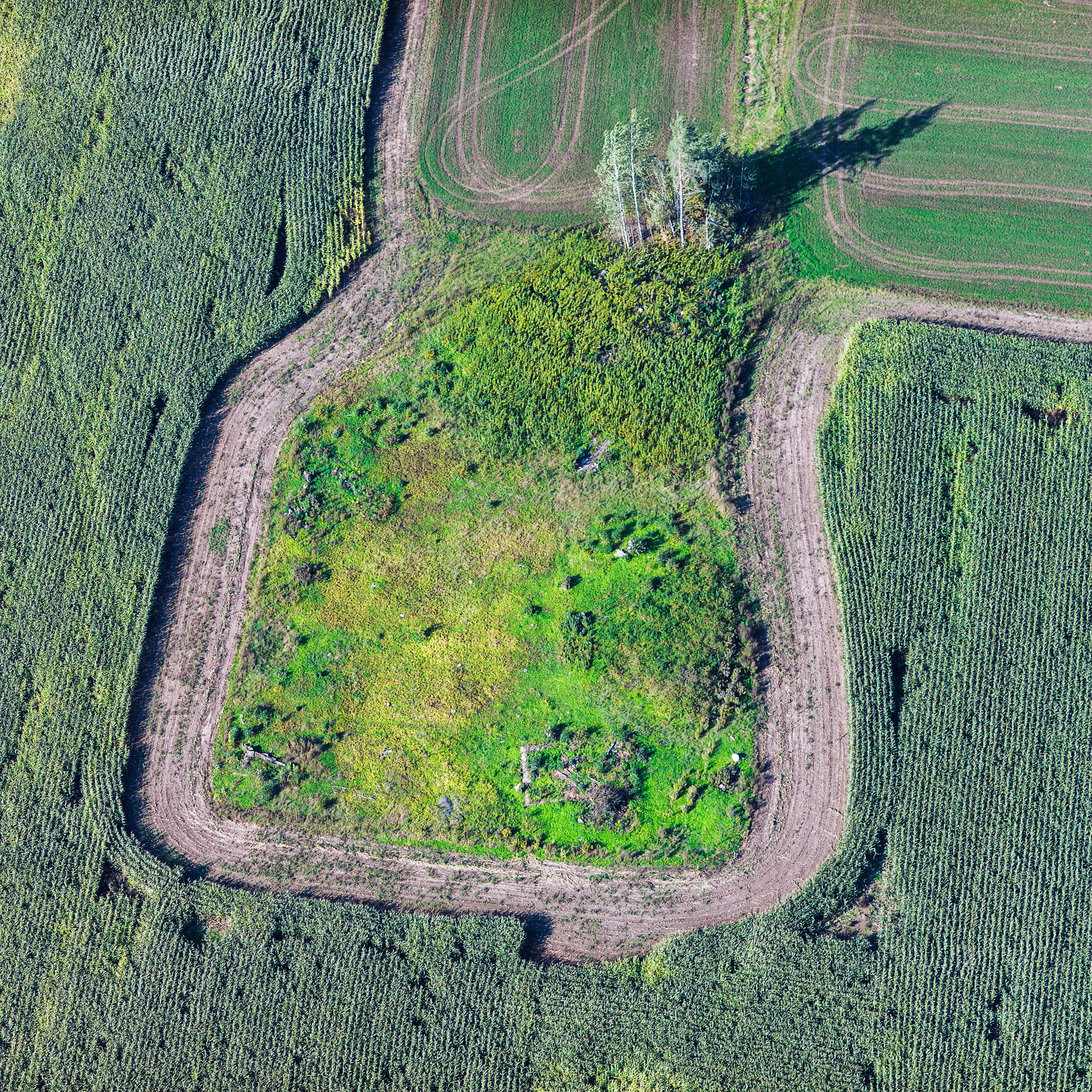


There are two ways to “get” farmland.
One is the old-fashioned way: you buy it, lease it, steward it, and pray the weather doesn’t turn your year into a GoFundMe.
The other way is the modern infrastructure way: you map it, name it a “corridor,” call it “critical,” and then—when the handshake negotiations get inconvenient—you reach for eminent domain like it’s a universal remote.
This is the story of the second way. And it’s not theoretical. It’s happening right now—through CO₂ pipeline networks, giant transmission builds, and “green energy” siting fights where the land that feeds us is treated like empty space.
The current policy landscape that’s feeding the surge
A few policy currents have converged to make rural land the path of least resistance:
1) Carbon markets + federal incentives are pushing CO₂ pipelines into farm country
Carbon capture and storage (CCS) has become the infrastructure backbone for “lower-carbon” ethanol and the emerging sustainable aviation fuel market. That’s not conspiracy; it’s economics and policy. Multi-state CO₂ pipeline proposals are designed to move captured CO₂ from ethanol plants to underground storage sites—often crossing thousands of parcels to do it.
And when a project needs continuous linear right-of-way for hundreds (or thousands) of miles, the pressure to “solve” holdouts with condemnation grows.
2) Grid buildout is accelerating—and the federal government is tightening the screws on siting
The U.S. grid is strained by load growth and generation shifts. Policy-makers want faster transmission construction, and the federal toolbox is getting sharper:
DOE moved forward with potential National Interest Electric Transmission Corridors (NIETCs) in late 2024.
FERC updated its rules for permit applications under Section 216 of the Federal Power Act (the “backstop” federal siting framework tied to NIETCs).
Translation: more projects are being framed as national necessity, and the permitting architecture is being tuned for speed.
3) States are fighting back—because “public use” is getting blurry
In the Upper Midwest, landowners and legislators have increasingly challenged whether private CO₂ pipelines qualify as a “public use” worthy of eminent domain. South Dakota’s 2025 law banning eminent domain for CO₂ pipelines is the clearest example.
This is the new battleground: not just where projects go, but whether the taking is legitimate in the first place.
What’s new right now: the “build first, litigate later” moment
CO₂ pipelines: accelerating before legal clarity exists
In Iowa, the Summit Carbon Solutions fight keeps producing fresh legal drama. In late December 2025, an Iowa judge ordered regulators to take another look at permit requirements—while the broader project remains entangled with the implications of South Dakota’s eminent-domain ban.
This is the pattern farmers recognize immediately: the project clock keeps ticking, while the rules and rights are still being argued over in court.
ransmission: “Clean energy” lines, same old land conflict
The Grain Belt Express saga shows how fast “energy transition” infrastructure can become a property-rights war. The project drew national attention after farmers criticized eminent domain impacts, even as the project pursued major federal financial support—support the DOE later terminated in July 2025.
And it’s not just headlines: Missouri reporting has documented dozens of eminent domain petitions tied to the line’s route.
“Survey access” lawsuits: the quiet first bite
Before the towers or pipes show up, there’s often a more immediate conflict: survey access. In Maryland, the company behind the Maryland Piedmont Reliability Project filed lawsuits against hundreds of landowners seeking access for surveys for a long transmission line project.
That matters because surveys are frequently the moment when families realize: “This isn’t a neighbor negotiating. This is a machine that has a legal lever.”
What this does to farms and ranches (the impacts people gloss over)
Eminent domain debates often get reduced to one question: “Did they pay fairly?”
But farms don’t operate like suburban lots. A “strip” across a property isn’t just acreage—it’s function.
Here’s what gets disrupted in the real world:
1) Operational fragmentation
A pipeline easement or transmission corridor can split fields, limit where you can build, and complicate equipment turns, irrigation layouts, grazing rotations, and access roads. Even when land “can still be farmed,” it’s often farmed differently—and usually less efficiently.
2) Soil damage and drainage risk
Construction can mean compaction, topsoil mixing, altered drainage patterns, and long-term issues around tile systems. Those aren’t one-time problems; they can become permanent yield penalties.
3) Biosecurity and liability ambiguity
On livestock operations, outside crews crossing properties raise biosecurity concerns. And across both crops and livestock, the liability question lingers: if something goes wrong—spill, rupture, fire, livestock injury, impaired access—who is truly holding the bag, and how long does it take to be made whole?
4) Appraisal whiplash and financing headaches
Easements can affect resale value and complicate farm loans or succession planning. Lenders don’t love uncertainty, and neither do heirs trying to decide whether to keep the place.
5) “Just compensation” doesn’t compensate for generational cost
A one-time payment rarely reflects multi-decade constraints, lost flexibility, or the strategic value of undivided land to a working operation.
Case studies that show the spectrum: coercion vs consent
To be fair—and to stay factual—some projects do attempt to earn trust rather than seize it.
A notable contrast is the Tallgrass Trailblazer CO₂ pipeline, which the Associated Press reported began operating in September 2025 after repurposing an existing natural gas line and emphasizing community engagement, including a community investment fund. That approach is often cited as a reason it avoided the scale of conflict seen elsewhere.
That doesn’t settle every debate about carbon pipelines—but it does prove a point farmers have been making for years:
If a project is truly beneficial, it shouldn’t need condemnation as a business model.
Where this is headed: your future operating environment
If current trends hold, farmers and ranchers are looking at a future with:
More corridor stacking
The same counties may face multiple layers: transmission + pipeline + roadway expansion + “renewable” siting. Each one takes a slice; together they can change what a farm is.
Faster approvals, slower trust
Federal efforts to streamline transmission siting through NIETCs and related Section 216 frameworks are built for speed. But speed without legitimacy produces backlash—especially in places where land is both livelihood and identity.
A widening rural political fracture
You’re already seeing it: the “green” label doesn’t automatically grant moral authority in farm country. Opposition is increasingly bipartisan and grounded in property rights and local control—especially when the beneficiary feels distant and the burden feels local.
You don’t have to ban farming.
You don’t have to “ban farming” to shrink it.
You can:
carve it into corridors,
fence it with easements,
bury constraints under “critical infrastructure,”
and tell the public it’s progress because the maps look clean.
But farms aren’t blank canvases. They’re systems. They’re families. They’re food.
And when eminent domain becomes a shortcut—used to force what can’t be earned by consent—the message to producers is clear:
Your land is necessary. Your voice is optional.
That is not a sustainable food policy—no matter how many megawatts or carbon credits it comes with.