



For decades, western Kansas has lived with a quiet truth: the water was finite.
The Ogallala Aquifer—the underground reservoir that turned prairie into one of the most productive agricultural regions in the country—has been declining for years. Everyone knew it. Everyone planned around it. And for a long time, the assumption was that technology, efficiency, and voluntary restraint would stretch the timeline.
That assumption just broke.
In parts of southwest Kansas, farmers are now facing mandatory groundwater reductions of roughly 27 percent under a regulatory framework known as a Local Enhanced Management Area, or LEMA. The policy is being implemented within Groundwater Management District 3, better known as GMD3.
On paper, the policy is described as conservation.
On the ground, it functions as something else entirely.
It is a decision about who survives.
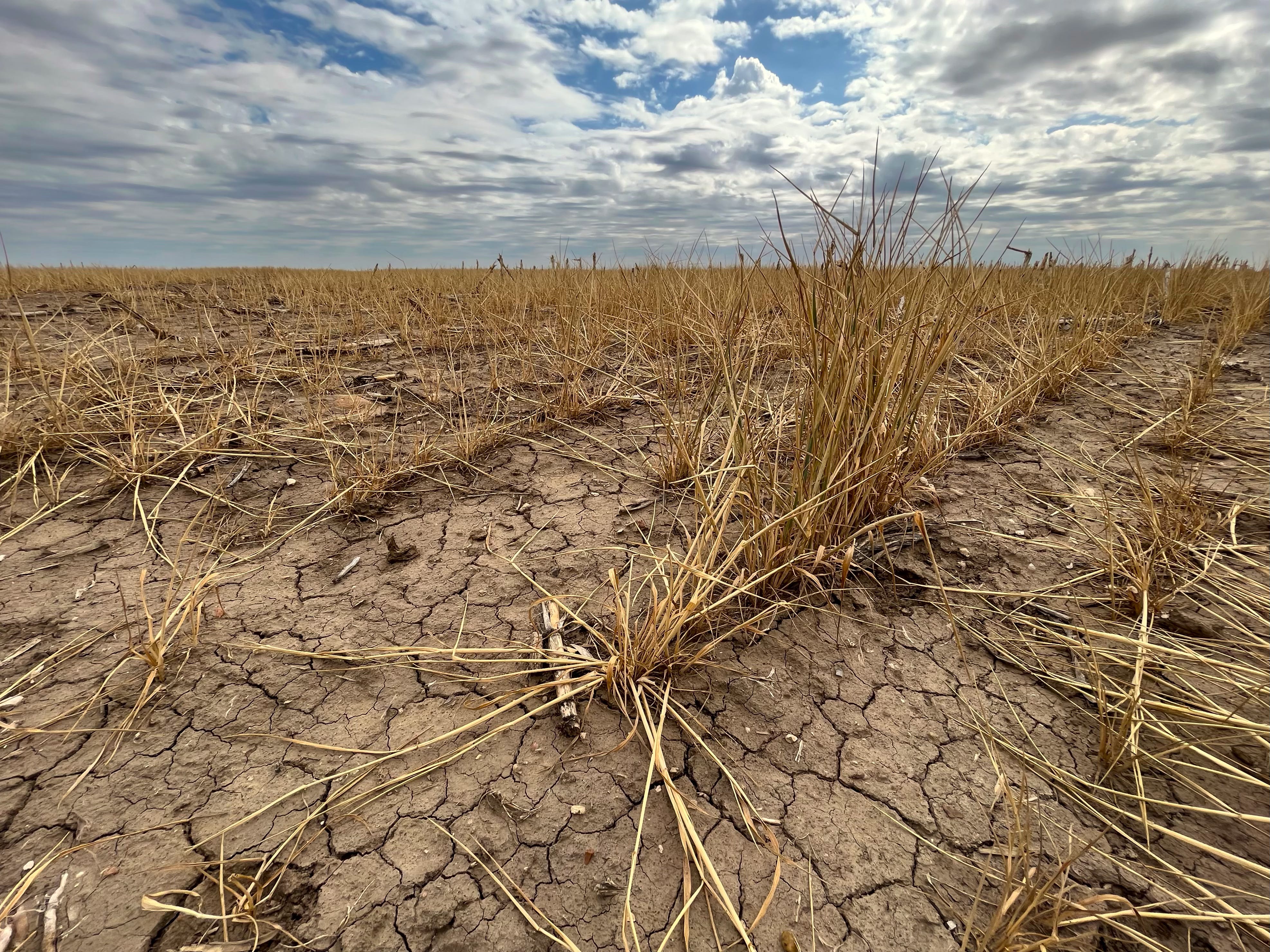
What Changed
Kansas groundwater policy has always rested on the idea of “beneficial use.” If you had a valid water right and used it responsibly, the state largely stayed out of the way. Declining aquifer levels were treated as a shared problem, but one addressed incrementally.
LEMA changes that relationship.
Under the LEMA framework, local districts—working with the Kansas Department of Agriculture—can impose uniform percentage reductions across all irrigators in a defined area. The current reductions in GMD3 amount to roughly a 27 percent cut from historical usage.
The logic sounds neutral: everyone shares the burden.
The reality is anything but.
Why “Equal Cuts” Aren’t Equal
A flat reduction assumes all operations start from the same position. They don’t.
Some farms invested early in high-efficiency pivots, soil moisture monitoring, and crop rotations that reduced water demand. Others expanded acreage when water was still abundant. Some operate on thin margins with little debt flexibility. Others have scale, capital, and diversified revenue streams.
When everyone loses 27 percent, the outcomes diverge fast.
For some producers, the cut is survivable with crop changes and tighter management.
For others, the math simply stops working.
This is the core tension policymakers rarely address: conservation through rationing does not preserve communities—it reshapes them.
The Immediate Consequences
Even before the first full cycle of reductions is complete, the effects are already visible:
Crop choices shrink as high-water crops become uneconomical
Marginal acres go idle, reducing overall production
Livestock feed costs rise, affecting operations far beyond Kansas
Land values shift, favoring larger, capital-heavy operations
Rural tax bases erode, pressuring schools and counties
None of this happens dramatically. There are no protests in the streets. There are no headlines about shutdowns.
Instead, farms quietly sell. Leases quietly change hands. Banks quietly re-rate risk.
And the region consolidates.
Why This Isn’t Just a Kansas Story
The Ogallala doesn’t stop at the Kansas border. It stretches across eight states and supports a massive share of U.S. grain, beef, and dairy production.
Kansas matters because it is proving something crucial to regulators elsewhere:
That large-scale, mandatory reductions can be imposed without immediate revolt.
If this model holds, it will not stay local.
The Question No One Is Asking (Yet)
Publicly, the debate is framed as science versus denial. Water levels versus wishful thinking.
Privately, the real question is more uncomfortable:
Who decides which farms are worth saving?
Because once reductions move from voluntary conservation to enforced rationing, neutrality disappears. Allocation formulas become power. Historical baselines become gatekeepers. And policy quietly determines who exits agriculture first.
🔒 Subscriber-Only Analysis Below
What you’ve read so far explains what is happening.
What follows explains how the system actually works—and who it advantages.
In the subscriber section, we break down:
How LEMA allocation formulas are built—and where they embed bias
Why early “conservation leaders” are not necessarily protected
How uniform cuts accelerate consolidation rather than sustainability
The financial pressure points most people miss (insurance, lending, land valuation)
Why this model is attractive to regulators—and dangerous for family farms
What alternative conservation structures could slow depletion without forcing exits
This isn’t a theory piece. It’s a structural analysis of how water policy quietly redraws the agricultural map.
Continue reading to see who benefits, who disappears, and why Kansas is becoming the national test case.
