



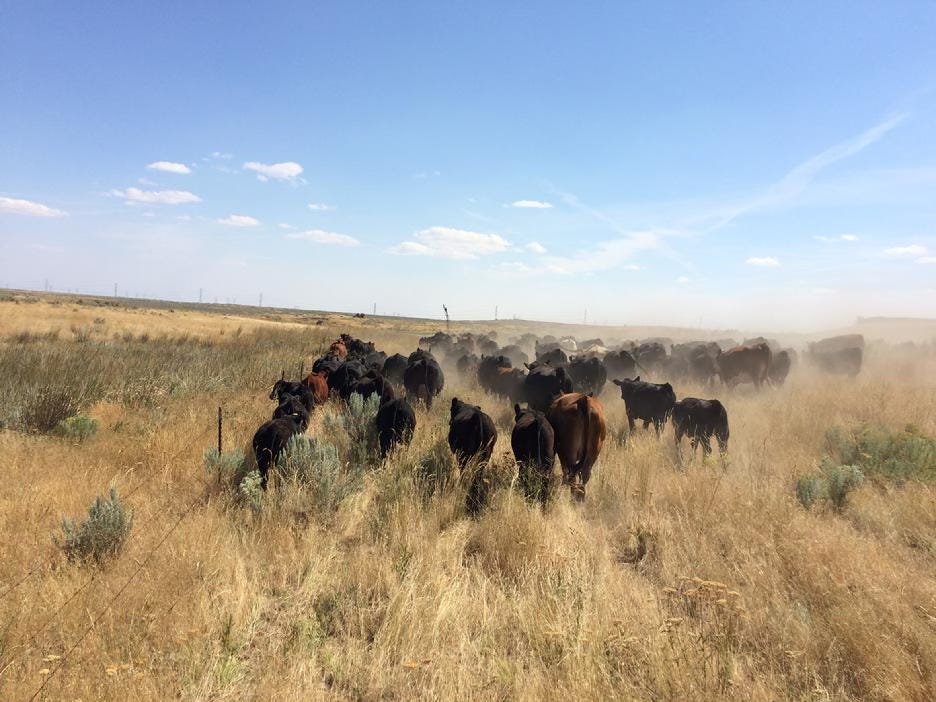
When the State of Washington forcibly removed the King family’s cattle from 37,000 acres of state grazing land in May 2024, most of rural America didn’t hear a word about it. The order was swift, dramatic, and—according to newly filed court documents—based on allegations that were never proven, evidence that was never tested, and a process that silenced the very people accused of wrongdoing.
But this winter, everything changed.
For the first time since the ordeal began in December 2021, Wade and Teresa King are finally allowed to tell their side of the story—and the story emerging from the filings, expert reports, and attorney interviews is far more shocking than the original claims.
WATCH THE FULL INTERVIEW WITH THE KING RANCH ATTORNEYS:
A Case That Began with a Photograph and Became a Prosecution Built on Assumptions
According to the attorneys, the entire chain of events began not with fieldwork, not with science, not with a formal complaint—but with a single aerial photograph viewed by a Department of Ecology employee who admitted he was not qualified to delineate wetlands.
Attorney Toni Meacham explains:
“What we found through public records requests is that Jeremy Sykes… looked at an aerial photograph without having boots on the ground and determined that the Kings had bulldozed and destroyed rare alkali wetlands.”
That photograph triggered a cascading internal reaction. Ecology approached the Department of Natural Resources (DNR), and—as Meacham bluntly put it—initiated the “pursuit of the Kings, and the persecution—not prosecution—of our clients.”
There was no field verification.
No wetland delineation.
No consideration of the ranch’s century-long history.
Instead, assumptions hardened into allegations—and allegations hardened into a legal hammer.
The Land the Kings Are Accused of Damaging Has Been Stockwater Ponds for Over 70 Years
The centerpiece of the state’s accusation is that the Kings “excavated” or “maintained” ponds that the State now claims are natural wetlands. But the historical record directly contradicts this.
Attorney James Grifo, who has litigated numerous land-use cases against DNR, emphasized just how absurd this framing was:
“These alleged wetlands have been stock water ponds on this ranch for over 70 years… probably as long as 200 years.”
“DNR had praised them for being model tenants and stewards… then out of the blue someone at Ecology decided these ponds looked regulated.”
The Kings and their predecessors maintained these ponds long before irrigation reached the Columbia Basin. Newly filed declarations confirm:
The ponds were hand-dug by early homesteaders using Fresno scrapers—a normal practice encouraged by the U.S. government.
These stockwater ponds are recognized under Washington law as a “designated beneficial use” for livestock.
DNR had never once required prior written permission for pond maintenance in 70+ years of leasing statewide.
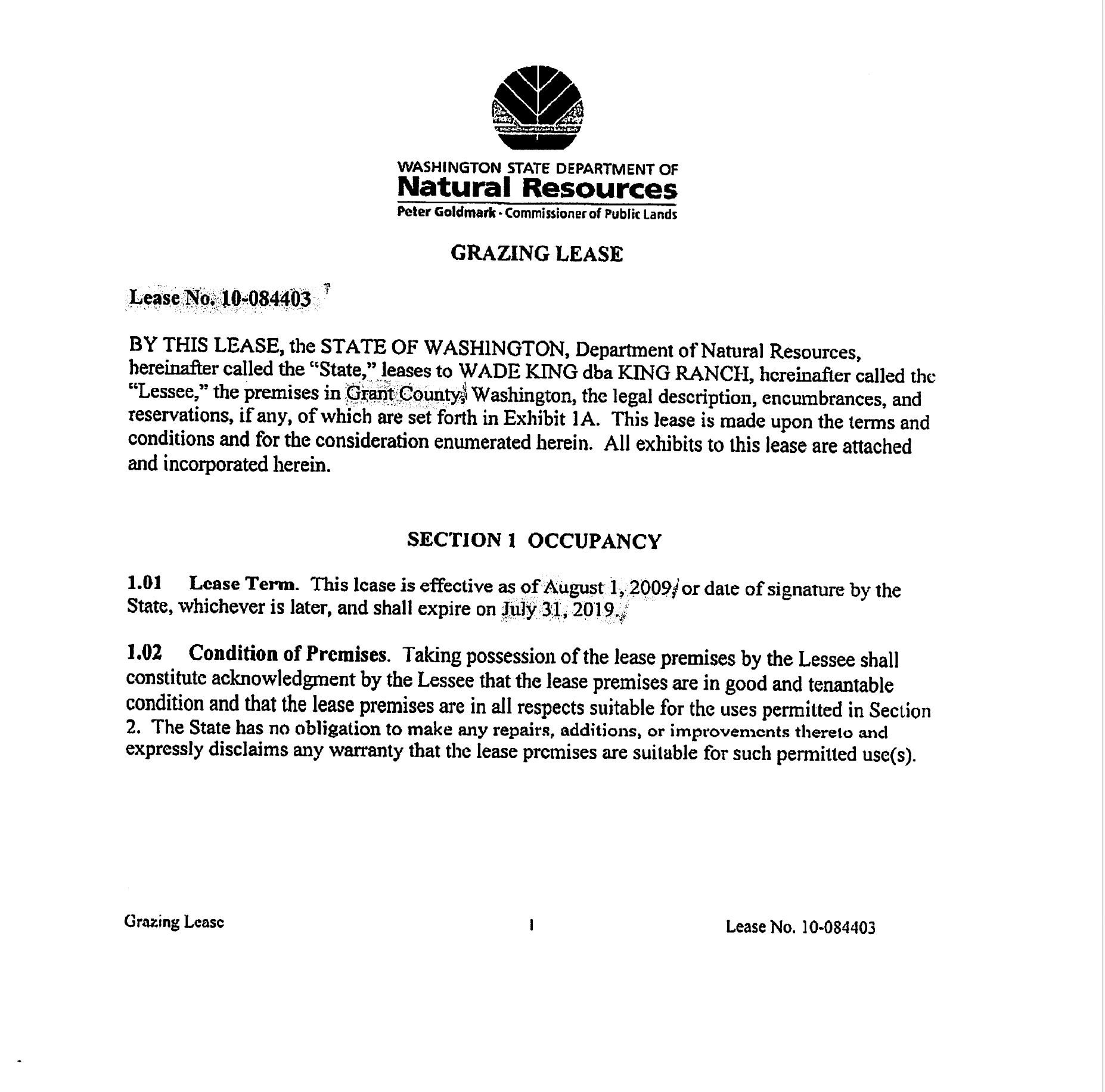
Despite this established legal, historical, and practical context, DNR suddenly reinterpreted the lease terms—after the injunction had already been granted.
The Preliminary Injunction Was Issued Without the Kings Allowed to Defend Themselves
The State secured a preliminary injunction in May 2024 that removed the Kings’ cattle from tens of thousands of acres of land—effectively shutting down their ranching operation overnight.
Why couldn’t the Kings defend themselves?
Because at the time the injunction was sought, the Kings were under threat of criminal prosecution, and the Attorney General’s office refused to state whether charges would be filed.
Grifo explained the impossible position:
“They have never been able to tell their story… The AG refused to give us anything in writing that they would not prosecute the Kings criminally.”
Meacham added:
“We were postponed from pursuing it because of the criminal piece… but we’re not going to sit and wait. The Kings want to pound the table and say, ‘We did nothing wrong.’”
The injunction was issued without evidence being proven and under conditions where the Kings had to remain silent.
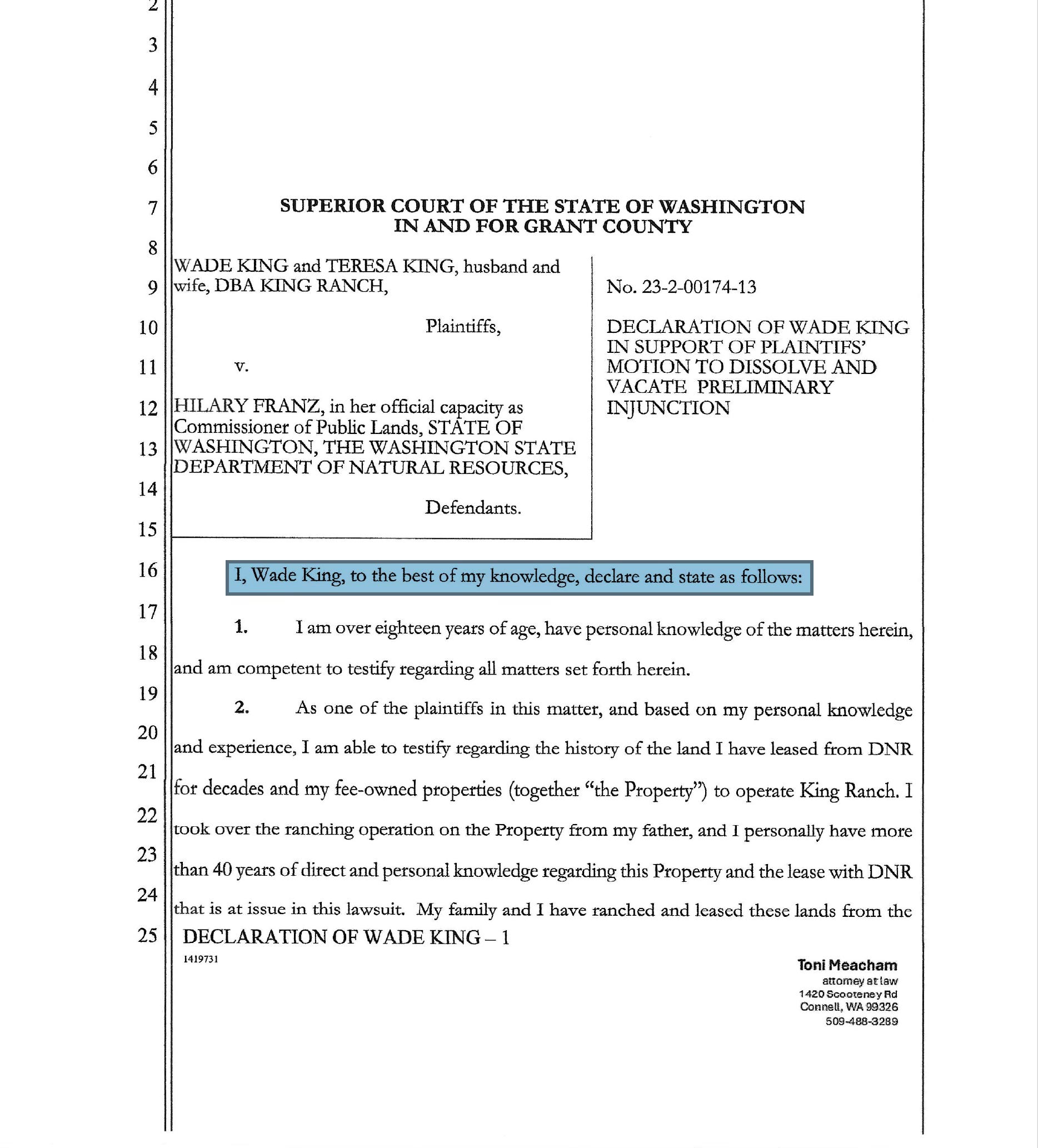
Now, with the statute of limitations likely expired, their attorneys have filed a massive 78-page motion to dissolve the injunction and expose what happened.
New Expert Evidence Obliterates the State’s Claims
The new filings include declarations from:
Archaeologists
Wetland scientists
Soil scientists
Range management agronomists
All conclude that the Kings’ grazing and pond maintenance cause no harm to ecological or cultural resources.
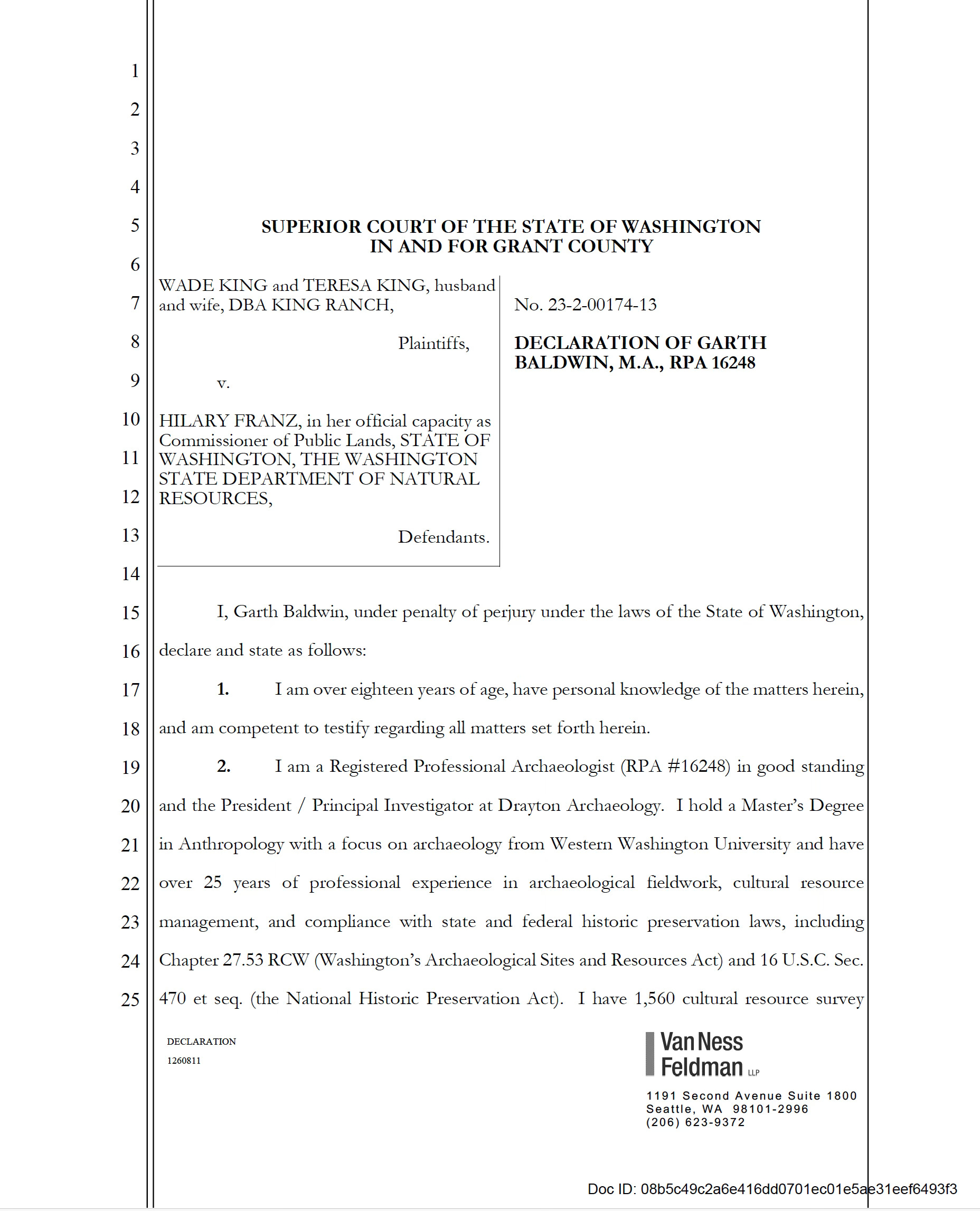
One of the most devastating assessments comes from Dr. Garth Baldwin, the independent archaeologist hired to review DNR’s claims.
Baldwin found that DNR:
Invented a fabricated bias by expanding review areas far beyond actual impact zones
Ignored historic features like the Cariboo Trail, former homestead structures, and century-old ranching artifacts
Applied unscientific terminology like “time immemorial” in place of actual dating—something Baldwin described as:
“tantamount to offering ‘Once Upon a Time’ as scientific evidence.”
Baldwin concluded bluntly:
“The historic use of the area has continued into the present… ranching has formed the character of the people for over a century.”
Far from harming cultural resources, the Kings’ use of the land is part of the historical record.
What the New Motion Reveals About DNR’s Actions
According to the November 24 motion:
The injunction was based on “manifestly erroneous” findings contradicted by new evidence.
The State has shown no actual injury from grazing or pond maintenance.
The injunction is now causing irreparable harm—threatening the ranch’s genetic herd, livelihood, and ability to function.
Most importantly, the filing states:
“DNR’s contrary reinterpretation of the grazing lease is unsupported, unconscionable, and itself constitutes a breach.”
This is a legal way of saying:
The agency broke the rules, not the Kings.
Why This Case Now Has National Implications
The attorneys made clear that this fight isn’t just about one ranch:
“They are doing this for everybody… and financially, we should all share this burden because these cases need to reach the right decision makers.”
The reason is simple:
If a state agency can reinterpret long-standing grazing practices as violations—
If it can secure injunctions without proving harm—
If it can weaponize criminal threats to silence defendants—
Then no rancher, farmer, or leaseholder in America is safe.
This case tests:
The limits of state agency power
The protections of due process
The rights of multi-generational ranches
The stability of agricultural leases
The economic future of rural communities
Grifo warned:
“I’ve never seen facts quite this bad.”
The Public Can Actually Help
For the first time in this multi-year saga, the attorneys have publicly confirmed a support portal:
“We do have a website… SaveKingRanch.com.”
They stressed the financial strain:
“Experts cost hundreds of thousands of dollars… and you’re out of pocket all that money.”
The Kings are one family fighting a multi-agency, multi-year state offensive—
and they’re fighting it not just for themselves, but to set a precedent that protects every rancher in Washington and beyond.
What Comes Next
The attorneys confirmed:
A major filing has been submitted
They expect significant movement soon
The Kings are finally able to challenge the injunction
This will be the first real opportunity for a judge to see the full record
“It will be the first time… that the Kings are getting to tell their story.”
And Yanasa TV will continue to follow every step.
A Test Case for Rural America
The King Ranch case is no longer a quiet local dispute—it is becoming a national bellwether for the rights of rural land stewards, the limits of bureaucratic power, and the future of agriculture in the West.
The question now is simple:
Will Washington State correct course—or will rural America have to fight every inch to preserve the rights it has held for over a century?