



Texas allows the sale of raw milk — but only inside a regulated permit system. Now the Texas Department of State Health Services (DSHS) is asking a Travis County judge to issue a temporary injunction against Like Wildflowers Homestead, a West Texas “micro-dairy” operating under a Private Membership Association (PMA) model.
A temporary injunction is not a warning letter. It is not a fine.
It is an extraordinary remedy — it asks the court to halt conduct immediately before a full trial on the merits.
That signals seriousness.
The question isn’t whether raw milk is controversial.
The question is narrower — and far more important:
What specific conduct is DSHS trying to stop — and why?
And beneath that:
Can the government regulate private, informed transactions between consenting adults the same way it regulates public retail commerce?
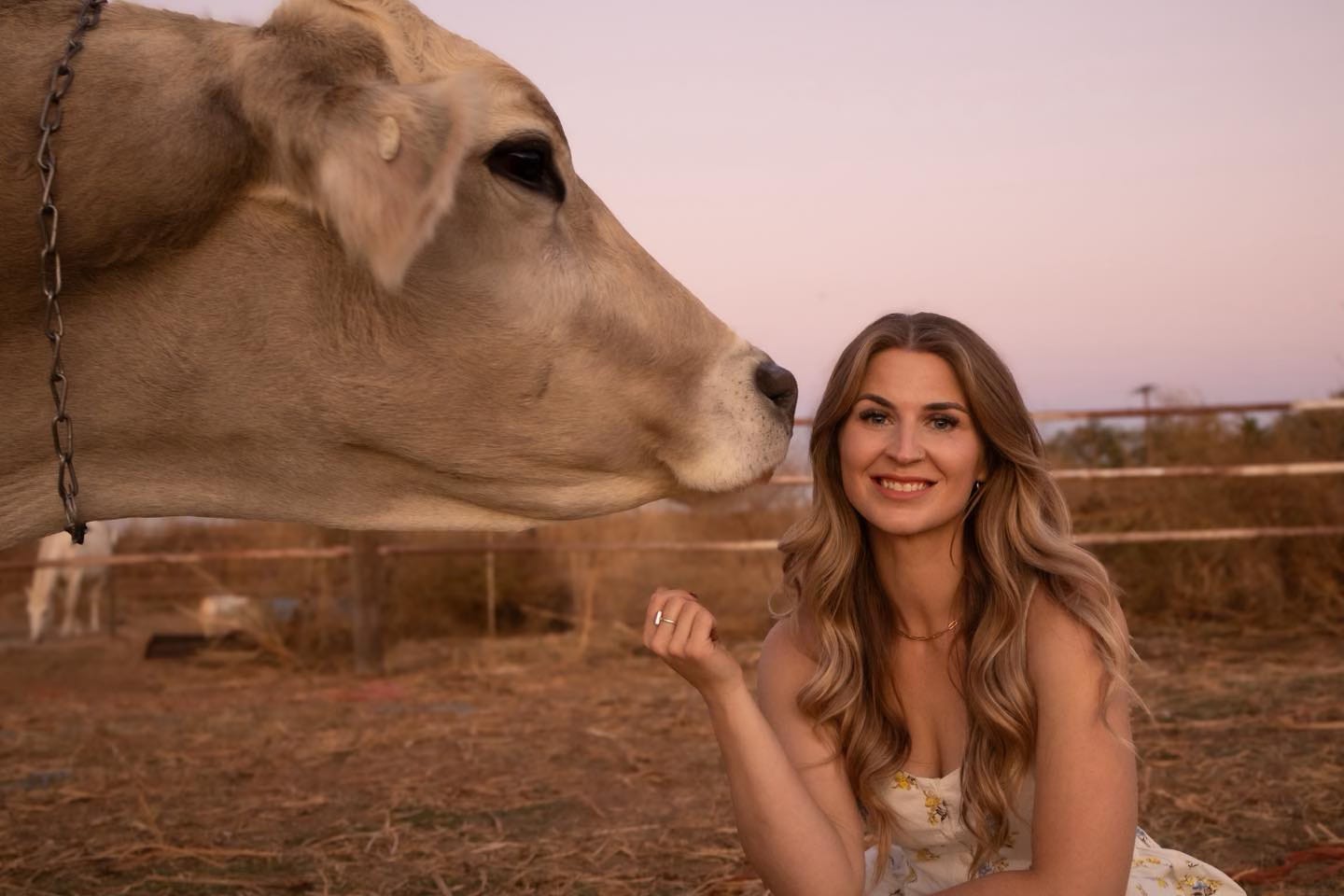
Farm’s GoFundMe
https://www.gofundme.com/f/support-a-west-texas-family-farm-facing-legal-action
Yanasa TV is independent investigative journalism focused on agriculture, land use, food policy, and rural families.
Your donation helps fund public records requests, court document access, travel, and on-the-ground reporting.
If you value transparency and accountability in agriculture — support the work here.
https://www.paypal.com/donate/?hosted_button_id=9AQVEQXEJD4AJ
The Case
Court records show Texas Department of State Health Services vs. Like Wildflowers Homestead, LLC, Cause No. D-1-GN-25-010854, set for a temporary injunction hearing in the 200th District Court in Travis County.
A request for injunctive relief signals urgency. It means the state believes ongoing conduct warrants immediate judicial intervention while litigation proceeds.
But here’s what matters most:
What exactly is the state trying to enjoin?
What We Now Know
Since first publishing, we received a direct response from the farm.
Owner Jacy Vaughn confirmed:
The farm does not hold a Texas dairy permit or state licensing.
DSHS is specifically seeking to enforce the permit and licensing requirement.
The farm states its milk is tested weekly.
The farm is certified and listed by the Raw Milk Institute, a third-party organization focused on raw milk safety protocols.
Letters from DSHS began in June 2025.
Conversations between the farm and the agency reportedly broke down when DSHS equated the PMA structure to something akin to a gym membership.
The court’s order includes the following findings:
The defendant does not have a permit to operate a dairy farm.
The defendant refuses to comply with Texas Human Resources Code Chapters 425 and 431.
That refusal creates what the state characterizes as an “immediate threat to the health and safety of the public.”
That language is strong.
At this stage, it reflects the state’s burden in seeking emergency relief — not a final ruling on constitutional questions. But it makes one thing clear:
This case is fundamentally about licensing.
The state says: no permit means no operation.
The farm says: private association means the permit requirement does not apply.
That is the line being tested.
What Texas Law Says About Raw Milk
Texas is not a raw milk ban state. It allows raw milk for retail sale — but under a specific licensing and inspection framework.
Under Texas regulations:
Raw milk must be produced by a Grade A Raw for Retail permitted dairy.
Dairies must comply with sanitation requirements.
Milk is subject to quarterly pathogen and antibiotic testing.
Delivery is permitted under specific regulatory conditions.
In short: Texas allows raw milk — but only through a state-supervised permit system.
The legal question is whether that system automatically applies inside a private membership association.
The Gym Membership Analogy
According to Vaughn, DSHS equated her PMA to something like a gym membership — suggesting that calling customers “members” does not exempt a business from regulation.
From a regulator’s perspective, the analogy is simple:
A gym may have members, but it still operates in public commerce. It must follow licensing and health laws. Membership status does not override regulation.
That logic is not irrational.
But it may not fully capture what a Private Membership Association claims to be.
A typical gym advertises broadly, operates openly to the general public, and functions as a commercial enterprise with memberships as its sales mechanism.
A PMA, in theory, is structured differently:
Participation is contractual.
Membership defines the relationship.
Transactions occur within that private framework.
Members voluntarily accept disclosed risks.
The tension lies in whether this PMA functions substantively like public retail — or whether it is genuinely a private association.
Courts often look past labels and examine structure and function.
That distinction — not milk — is what ultimately matters.
The Core Legal Tension
This is not simply “raw milk versus safety.”
It is a jurisdiction question.
Does the existence of a private membership structure remove a transaction from the state’s public health retail authority?
The state’s position is straightforward:
Milk for human consumption is a public health matter.
Labeling customers as members does not eliminate regulatory authority.
A uniform permit system is necessary for enforceability.
The farm’s position is equally direct:
Private, informed adult agreements are not public commerce.
The government’s role in protecting “the public” does not extend into voluntary private associations.
That is the philosophical divide.
Where Does “Public Protection” End?
Food freedom advocates argue something foundational:
The state’s police power exists to protect the public from harm in public commerce.
But private association is not public commerce.
If two consenting adults form a private relationship and exchange food under disclosed risk, is that “the public”?
Or does the government’s definition of public health now extend into private contracts simply because the product is consumable?
This is not abstract theory.
If a PMA structure creates no jurisdictional distinction, then:
Any private food club can be regulated as retail.
Any membership-based farm can be treated as a storefront.
The line between public commerce and private association collapses.
And once that line collapses, “private” becomes symbolic — not structural.
Private Means Private
Courts have long distinguished between public commerce and private association. The constitutional protection of association exists precisely to prevent the state from treating every voluntary relationship as a regulated marketplace.
That distinction matters here.
If the state cannot articulate a meaningful legal distinction between public retail commerce and a voluntary private association, then regulatory authority expands by default — not by constitutional design.
Private association does not eliminate responsibility.
It does not negate safety practices.
But it does mean the government must justify its intrusion into voluntary adult relationships with clarity, specificity, and proportionality.
The burden should not be on small farms to prove they deserve private status.
The burden should be on the government to explain why private, informed transactions fall within public police power.
That justification must be narrow.
It must be lawful.
And it must be proven in court.
The Line That Matters
In America, the difference between public commerce and private association has always mattered.
The state’s authority is strongest when regulating public markets.
It is weakest when intruding into voluntary private relationships.
If membership agreements, informed consent, and private contracts no longer create a meaningful legal boundary, then the concept of “private” becomes symbolic — not structural.
This case will not decide the raw milk debate.
But it may clarify something deeper:
Whether the government’s duty to protect “the public” includes the power to redefine private relationships as public commerce — simply because the product is food.
That distinction is not trivial.
It is constitutional.
And it deserves more than administrative convenience.