



For most Americans, cattle identification is invisible. Beef appears neatly wrapped. The supply chain hums along. Disease outbreaks sound distant and abstract.
But out on ranches and sale barns — especially those that still move cattle the old-fashioned way — a quiet legal fight is underway that has nothing to do with global trade deals or export markets, and everything to do with who decides what “official” means in American agriculture.
On November 5, 2024, a revised rule from the U.S. Department of Agriculture, enforced through APHIS, officially took effect. It changed the definition of what qualifies as “official identification” for certain classes of cattle and bison moving across state lines.
From the agency’s perspective, the rule was modest: modernize disease traceability by requiring that new official ear tags be both visually readable and electronically readable — commonly known as RFID or EID tags.
From the perspective of many independent producers, it was something else entirely:
a quiet redefinition of compliance that pushes producers into mandatory digital systems — not because Congress explicitly required it, but because the agency decided it was the next step.
That difference is now at the center of a federal lawsuit.
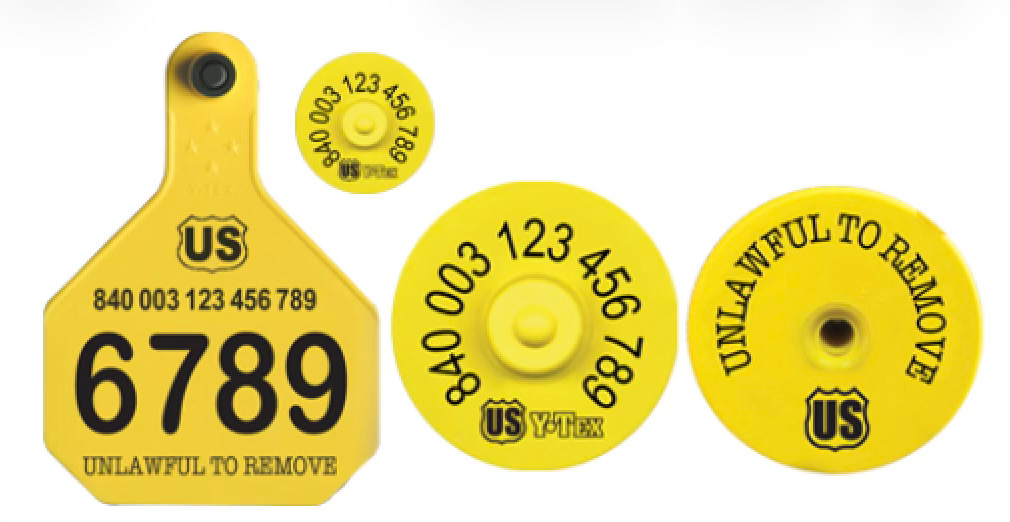
What Actually Changed — and Why It Matters
Contrary to some headlines, the USDA rule does not mandate electronic ear tags for every cow in America.
The rule applies to:
Certain classes of cattle and bison
Moving interstate
When official identification is required
Animals already bearing compliant visual tags applied before the effective date are widely described by industry guidance as remaining valid. The shift affects new official ID tags applied after November 5, 2024.
So why the backlash?
Because identification systems don’t exist in isolation. They shape:
How animals move
Who can sell where
What equipment is required
How records are generated, stored, and accessed
And who bears liability when systems fail or rules change again
For large operations already running electronic systems, the transition may be trivial.
For independent ranchers, sale barn operators, rodeo stock producers, and small breeders who operate on thin margins, the costs aren’t just the tag — they’re the infrastructure and compliance exposure that come with it.
This isn’t a debate over technology.
It’s a debate over authority.
The Lawsuit: R-CALF vs. USDA
In response to the rule, R-CALF USA filed suit, represented by the New Civil Liberties Alliance.
The core argument is not “technology bad.”
The argument is structural:
USDA exceeded its statutory authority by redefining “official identification” in a way that effectively mandates electronic tracking — without explicit authorization from Congress.
The plaintiffs argue that Congress never instructed USDA to require digital identification systems, and that the agency used regulatory interpretation to accomplish what legislation did not.
That distinction matters far more today than it did five years ago.
Why the Timing Matters: Life After Chevron
For decades, federal agencies benefited from judicial deference under the Chevron doctrine, which instructed courts to defer to agencies when statutes were ambiguous.
That framework changed in June 2024, when the Supreme Court overturned Chevron.
In a post-Chevron legal environment, courts are no longer required to defer automatically to agency interpretations. Judges now apply independent judgment when assessing whether agencies stayed within the bounds set by Congress.
This does not guarantee challengers will win.
But it does change the terrain.
And that shift is already showing up in court.
The Procedural Breakthrough (Why This Is Still a Hot Story)
In late 2025, USDA attempted to dismiss the R-CALF lawsuit at an early stage.
The court declined.
While not every claim survived, the judge allowed the case to proceed — pushing it toward summary judgment, where the actual merits of the rule and the agency’s authority will be tested.
That procedural decision matters for two reasons:
USDA failed to end the case quietly
The legality of the rule now faces substantive judicial review
This is no longer theoretical resistance. It is an active test case in the post-Chevron era.
What This Fight Is Really About
Strip away the acronyms and the plastic tags, and the conflict reduces to a single question:
Who gets to define “official” in American agriculture?
Is it:
Congress, through clear statutory mandates?
Or federal agencies, through evolving interpretations of existing authority?
Traceability is not inherently controversial.
Producers already comply with disease control, inspection, and reporting requirements.
The concern is precedent.
If agencies can:
Redefine compliance through technical standards
Escalate requirements without new legislation
Shift costs and exposure downstream
And justify it as “modernization”
Then future rules don’t need bans to be effective — they only need definitions.
Why Independent Producers Are Paying Attention
This case isn’t about nostalgia or resistance to progress.
It’s about:
Whether regulatory power has limits
Whether modernization requires consent
Whether “voluntary” systems quietly become mandatory
And whether courts will enforce boundaries after Chevron
If R-CALF prevails, it won’t eliminate disease traceability.
It would force agencies to return to Congress for authority — where costs, scope, and tradeoffs must be debated openly.
If USDA prevails, it affirms a model where technical standards become policy, and compliance is shaped by interpretation rather than statute.
Either way, the outcome will ripple far beyond ear tags.
The Bigger Pattern We Keep Seeing
Across agriculture, the same playbook appears again and again:
Definitions change
“Best practices” harden into requirements
Voluntary systems become gatekeepers
And compliance expands without a single vote
This lawsuit doesn’t ask whether digital systems work.
It asks whether agencies can decide they are required.
That’s why the Digital Ear Tag fight isn’t small — and why it’s not going away.
Our Takeaway
This is not a culture war story.
It’s a governance story.
In a post-Chevron America, farmers and ranchers are testing something new:
Can federal power be challenged not by politics, but by structure?
The answer will shape far more than how cattle are tagged.
It will shape how agriculture is governed.