



For most of the 20th century, the American food system followed a predictable path.
Food left the farm.
It moved through processors.
Then distributors.
Then supermarkets.
At every step, regulations were designed around one assumption:
food would move through large centralized facilities.
But in recent years, something quieter has been happening across rural America.
Farm stands are multiplying.
Farmers markets are expanding.
Neighbors are buying eggs, milk, meat, and produce directly from local farms.
And increasingly, state legislatures are rewriting laws to catch up with that reality.
From the Midwest to the Mountain West, a growing number of states are passing or debating food freedom legislation — laws designed to allow farmers and home producers to sell food directly to consumers with fewer regulatory barriers.
It is not a single movement with one leader or one national bill.
Instead, it is a patchwork of state-level changes that, taken together, are beginning to reshape the local food economy.

A Quiet Policy Shift
The phrase “food freedom” has become shorthand for a category of laws that expand the ability of individuals to sell homemade or farm-produced food directly to consumers.
These laws typically focus on direct transactions.
Farmer to neighbor.
Homesteader to local customer.
Producer to consumer at a farmers market or roadside stand.
Unlike large commercial food facilities, these small transactions often involve modest volumes and personal relationships between buyer and seller.
Food freedom legislation attempts to recognize that difference.
Rather than requiring every small producer to meet the same regulatory standards as industrial food processors, the laws typically rely on transparency and disclosure.
Consumers are informed that the food was produced in a home or farm setting rather than a state-inspected commercial facility.
The buyer then decides whether to purchase.
Supporters see the model as a return to a more traditional food marketplace.
The States Leading the Wave
Several states have already passed versions of food freedom legislation.
One of the most widely cited examples is the Wyoming Food Freedom Act, which dramatically expanded the types of homemade and farm-produced foods that can be sold directly to consumers.
Other states have followed with their own versions of the concept.
In places like Utah, North Dakota, Maine, and Montana, lawmakers have passed laws allowing broader direct sales of certain foods produced outside conventional commercial facilities.
Each state’s approach is slightly different.
Some laws limit which foods qualify.
Others cap the annual revenue a producer can earn.
Some require labeling disclosures explaining that products were not produced in inspected facilities.
But the underlying philosophy is consistent:
small local food transactions should not always be regulated the same way as industrial food production.
Why Farmers Are Interested
For many farmers, food freedom laws open doors that traditional food regulations often close.
Small farms frequently struggle to compete in commodity markets dominated by large processors and distributors.
Direct-to-consumer sales offer an alternative.
A farm selling eggs, baked goods, produce, or dairy products locally can capture far more of the retail value of food than a farm selling raw commodities into global supply chains.
But under traditional regulations, even small-scale food production often requires:
• licensed commercial kitchens
• specialized processing equipment
• regulatory inspections
• complex compliance paperwork
Those requirements can make it nearly impossible for small producers to enter the market.
Food freedom laws attempt to reduce those barriers for local sales.
For many small farms, that difference can determine whether a direct-sales enterprise is viable.
Why Consumers Are Paying Attention
The growth of food freedom legislation has also been driven by consumer demand.
Over the past decade, many Americans have become increasingly interested in:
• locally produced food
• shorter supply chains
• transparency about how food is produced
Farmers markets have expanded rapidly across the country as consumers look for alternatives to industrial food distribution.
Direct relationships with farmers allow buyers to ask questions about production practices, animal welfare, and environmental stewardship.
For many consumers, that connection is as important as the food itself.
Food freedom laws make those relationships easier to sustain.
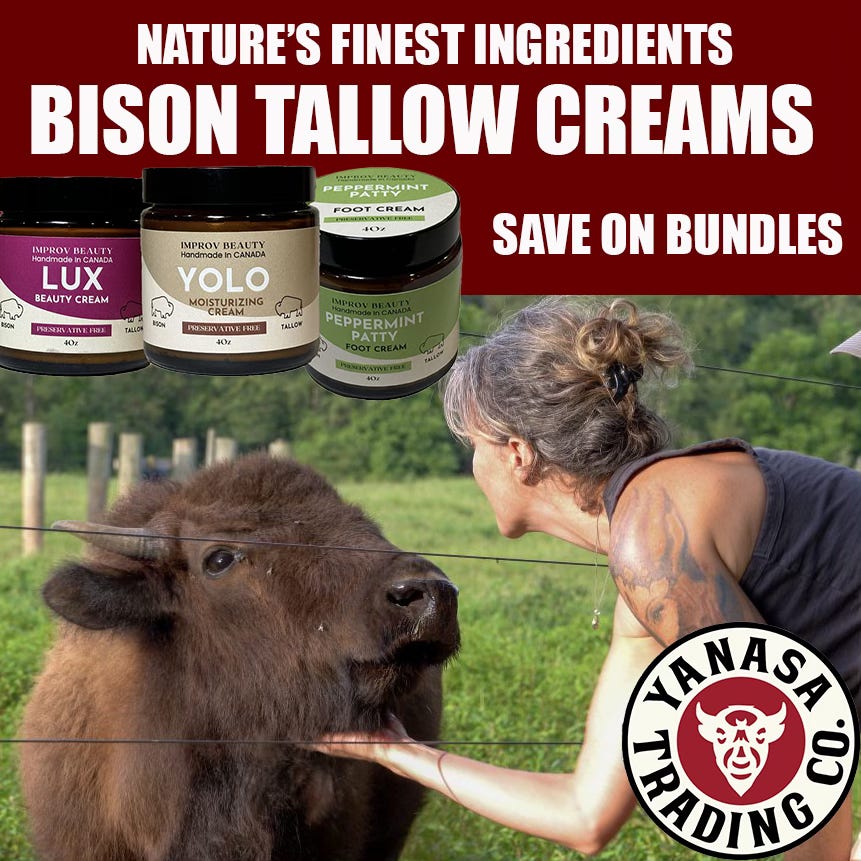
We’ve searched high and low for the best bison tallow products. Guess what? We found them. https://yanasatradingco.com/collections/personal-care
The Food Safety Debate
Not everyone supports the expansion of food freedom legislation.
Public health officials have historically emphasized the importance of inspection systems designed to ensure food safety.
Those systems were created after decades of outbreaks linked to contaminated food products.
From that perspective, relaxing regulatory oversight raises concerns about potential health risks.
Advocates of food freedom counter that direct sales between producers and informed consumers operate differently from anonymous mass-market food distribution.
When buyers know the farmer producing their food, they argue, accountability works through relationships as well as regulation.
The debate ultimately centers on where the balance should fall between safety oversight and consumer choice.
A Patchwork Food System
Because food regulation in the United States operates partly at the state level, food freedom laws are emerging unevenly across the country.
Some states are expanding direct-sales opportunities rapidly.
Others maintain more restrictive regulatory systems.
That patchwork means the ability to sell certain foods directly from a farm may depend heavily on geography.
For farmers operating near state borders, the difference can be striking.
A product that is legal to sell across a fence line in one state may be restricted just a few miles away in another.
Over time, these policy differences may influence how local food economies develop in different regions.
The Next Wave
Several additional states are now considering their own versions of food freedom legislation.
As lawmakers watch how earlier adopters implement their laws, new proposals are appearing in statehouses across the country.
Many of these bills attempt to refine earlier models by:
• clarifying which foods qualify
• setting revenue thresholds
• defining labeling requirements
• establishing limited regulatory oversight
The goal is to create legal frameworks that allow small producers to participate in the food economy without imposing industrial-scale compliance burdens.
Whether those frameworks expand further will depend on how lawmakers, regulators, and consumers evaluate the early results.
A Changing Food Landscape
The rise of food freedom legislation reflects a broader shift in how Americans think about food production.
For decades, efficiency and scale dominated the design of the food system.
Today, a parallel movement is emerging that prioritizes something else:
proximity.
Food produced closer to home.
Food sold directly by the people who raised it.
Food systems that operate at the scale of communities rather than continents.
Food freedom laws do not replace the national food system.
But they create space for smaller systems to grow alongside it.
And as more states consider similar legislation, that space may continue expanding.
Across rural America, farmers and consumers are quietly testing a simple idea:
what happens when the distance between producer and buyer gets shorter — and the rules begin to reflect that change?