



They Don’t Argue Forever. They File
The Project: Boardman-to-Hemingway (B2H) Transmission Line
The Developer: Idaho Power (with partners)
What’s at Stake and Who Loses: Private farmland, ranchland, and homesteads across Idaho and Oregon
The Status is Urgent: Active litigation; landowners are fighting access, surveys, and condemnation
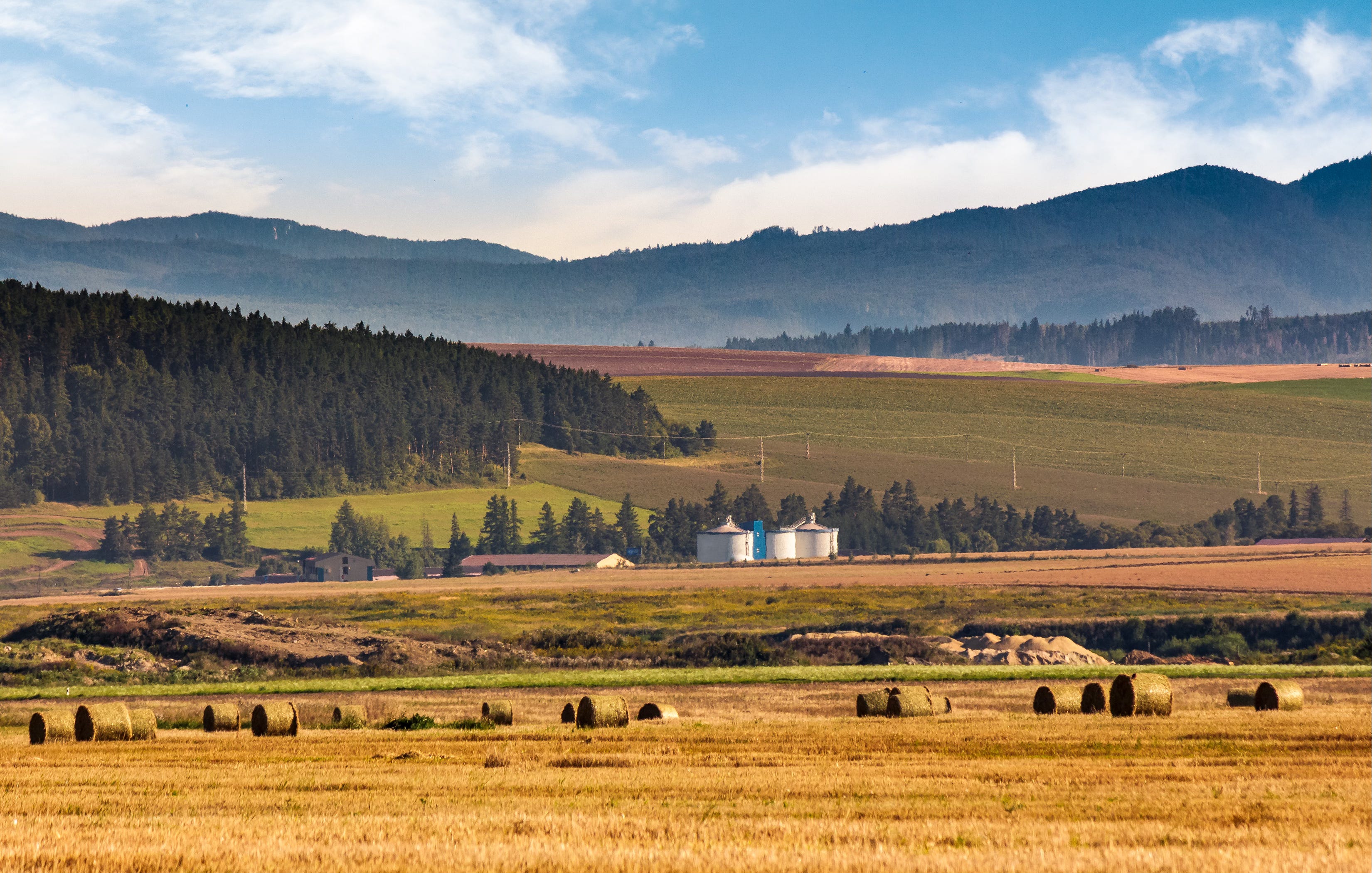
The Knock at the Gate
It doesn’t start with a bulldozer. It starts with a letter.
Survey crews. Access requests. A map with a thick red line drawn straight through someone else’s livelihood. Landowners along the proposed Boardman-to-Hemingway route describe the same sequence: polite paperwork first, pressure second, and—if you don’t comply—eminent domain as the final act.
This isn’t theory. It’s happening now.
There’s a word doing a lot of work in these cases. Critical. Once a project is labeled critical: Timelines speed up, Review narrows, Objections are framed as obstruction
What Is B2H?
The Boardman-to-Hemingway (B2H) project is a 500-kV high-voltage transmission line designed to move electricity across the Pacific Northwest—linking power markets and feeding growing demand tied to data centers, urban growth, and renewable integration.
The public pitch is familiar:
Reliability
Grid resilience
Clean energy integration
The private reality for landowners is simpler:
Towers
Easements
Permanent restrictions on how land can be used—forever
The Legal Lever: Eminent Domain
Here’s the part rarely explained to the public.
Transmission developers don’t need to buy your land outright. They need easements—legal rights to cross, build, maintain, and restrict. If negotiations stall, condemnation becomes the “solution.”
In plain English:
If your land is the most efficient route, your consent is optional.
Landowners fighting B2H argue that:
Routing decisions prioritize cost and convenience, not community impact
Alternatives exist but are dismissed as “less efficient”
Once surveys are allowed, the process snowballs toward condemnation
This is why so many fights happen before a single pole goes in the ground.
Why Farmers and Ranchers Are the Shortcut
Transmission lines don’t like obstacles:
Dense cities = expensive
Suburbs = politically messy
Industrial zones = already crowded
Working land, on the other hand, is:
Open
Linear
Politically diffuse
Which means farms and ranches become the default corridors—not because they’re empty, but because they’re easier to override.
And once an easement is recorded:
Building is restricted
Financing can change
Property value can drop
Generational plans are altered permanently
“Critical Infrastructure” as a Magic Phrase
B2H is not unique. It’s part of a nationwide surge in transmission expansion driven by:
Grid interconnection backlogs
Renewable mandates
Data-center load growth
Federal and state decarbonization targets
Label a project “critical,” and the rules bend.
Environmental review narrows. Timelines accelerate. Land becomes a variable, not a constant.
For landowners, the question isn’t whether electricity matters. It’s whether their property rights matter just as much.
The Courtroom Phase
Right now, B2H landowners are doing the only thing left: going to court.
They’re challenging:
Survey access without consent
Condemnation authority before final approvals
Whether public necessity outweighs private harm
These cases don’t usually make national headlines—but they quietly shape the future of rural America.
Because when one corridor is approved this way, it becomes the template for the next one.
Why This Case Matters Beyond Idaho
This case is a warning flare.
If B2H succeeds with minimal resistance:
Similar projects will follow the same playbook
Eminent domain becomes the default, not the last resort
Farms become infrastructure buffers for everyone else’s growth
Today it’s a power line.
Tomorrow it’s CO₂ pipelines.
Next it’s water conveyance or hydrogen corridors.
Different projects. Same mechanism.
Property Rights Are Aging Out Fast
The grid may be modernizing—but property rights are aging fast.
When planners see land as “least-cost routing,” they stop seeing the people who steward it. And when courts treat farms like empty space, rural America becomes a sacrifice zone dressed up as progress.
The question isn’t whether we need electricity.
The question is who pays for it—and who gets to say no.