



North of Amarillo, an 18-million-square-foot AI campus known as “Project Matador” is being planned on 6,000 acres leased from Texas Tech University. The project has secured a 20-year agreement with the City of Amarillo for up to 2.5 million gallons of water per day.
That equals:
912.5 million gallons per year
Roughly 2,800 acre-feet annually
Approximately 56,000 acre-feet over 20 years
That water ultimately draws from a region overlying the Ogallala Aquifer.
Meanwhile, parts of western Kansas — sitting on the same aquifer system — have implemented roughly 20% irrigation reductions under Local Enhanced Management Areas (LEMAs) to slow depletion.
Same aquifer.
Different rules.
And this collision between digital infrastructure and groundwater scarcity is not just a Texas story — it is a preview of how AI’s physical footprint will test environmental governance across the country.
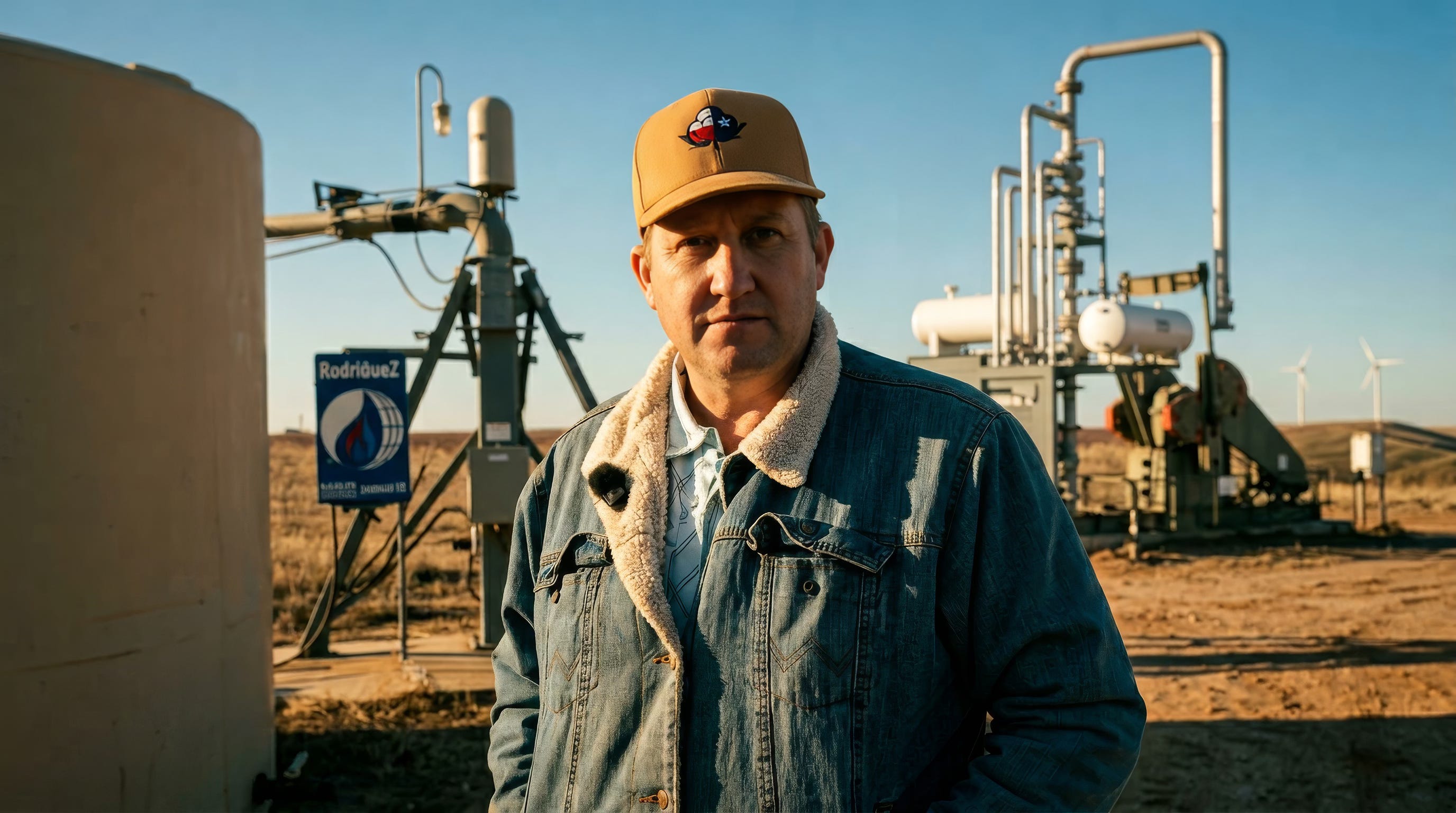
Why AI Is So Thirsty
Artificial intelligence infrastructure is not abstract.
It runs on physical servers that generate enormous heat. Many data centers rely on evaporative cooling systems that consume water rather than simply circulate it. When scaled to hyperscale levels — gigawatt-scale campuses — cooling demand becomes a central engineering constraint.
AI does not float in the cloud.
It sits on concrete.
And it sweats.
The Cotton Economy at Stake
The Texas Panhandle is routinely cited as the largest cotton-producing region in the United States, often supplying around 40% of U.S. upland cotton in strong years.
Cotton here anchors:
Local gins
Equipment dealers
Seed and chemical suppliers
Rural banks
Trucking networks
Export infrastructure
Much of that production relies on irrigation from the Ogallala.
Farmers aren’t arguing that 2.5 million gallons per day drains the aquifer overnight.
They’re asking a different question:
If agriculture is being pressured to conserve in parts of the High Plains, why is new long-term industrial demand being locked in elsewhere?
Kansas Chose Contraction
In western Kansas, LEMAs were designed as locally driven mechanisms to extend aquifer life.
In certain zones, irrigators accepted multi-year allocations amounting to roughly 20% reductions compared to historical pumping.
Kansas’ water management culture evolved in response to earlier depletion crises. Water districts embraced collective restriction as a survival strategy.
The message is blunt:
“If we don’t cut back, we run dry.”
Against that backdrop of managed contraction, Amarillo’s 20-year industrial agreement looks less like a standard municipal utility contract and more like a sharply different philosophy.
Texas Chose Allocation
Texas groundwater law is rooted in the historic Rule of Capture, a doctrine dating back to 1904 that allows landowners to pump groundwater beneath their land, even if it impacts neighbors.
To be clear: Texas is not a regulatory free-for-all. Groundwater Conservation Districts regulate well spacing, permitting, and production in many regions.
But philosophically, Texas water governance has long leaned toward extraction rights and economic growth rather than coordinated contraction.
Kansas prioritizes shared depletion management.
Texas prioritizes contractual certainty.
Same aquifer.
Different values.
Let’s Make the Math Human
2.5 million gallons per day is not intuitive.
It is roughly:
The daily water use of a city of 15,000–25,000 people
Enough annual irrigation for approximately 1,000–1,800 acres of cotton
About 56,000 acre-feet over the life of the 20-year agreement
On a regional scale, officials note this is a small fraction of total groundwater pumping.
That may be true.
But aquifers decline locally.
If pumping is geographically concentrated, even modest additional withdrawals can deepen local drawdown cones.
Domestic wells are typically shallower than irrigation wells.
An additional several feet of decline over two decades can mean:
Pump lowering
Higher electricity bills
Well deepening
Or well failure
Those costs fall on homeowners, not corporations.
The Precedent Question
The agreement caps use at 2.5 MGD.
But large infrastructure projects rarely remain static. Discussions of potential future expansion have circulated publicly, though characterized as non-binding.
Even without expansion, the question is not whether this single project collapses the Ogallala.
It won’t.
The question is cumulative trajectory.
If agriculture must reduce to preserve aquifer life, will industry ever be asked to?
Or does industrial development become politically insulated once established?
That is the allocation tension quietly unfolding across the High Plains.
A National Test Case
This is not about being anti-AI.
It is not anti-development.
It is about governance consistency.
Across Arizona, Nevada, Georgia, and Texas, hyperscale data centers are moving into rural regions with cheap land, transmission access, and political incentives.
Water scarcity is increasingly colliding with digital expansion.
The Ogallala is simply one of the first major aquifer systems where that tension is visible.
Kansas chose rationing.
Texas chose long-term allocation.
Both claim sustainability.
Only one can define the depletion curve.
What Comes Next
Amarillo’s agreement may become a case study in how the United States reconciles AI-driven economic growth with finite groundwater reserves.
Will Texas revisit its extraction philosophy as depletion accelerates?
Will Kansas maintain contraction while neighbors monetize?
Or will both states eventually confront the same arithmetic reality?
Aquifers do not negotiate.
They decline.
And the communities above them inherit the consequences.
The Core Question
If farmers must conserve to save the Ogallala…
Should industrial water use expand?
That is not a rhetorical question.
It is the defining rural policy debate of the AI era.