



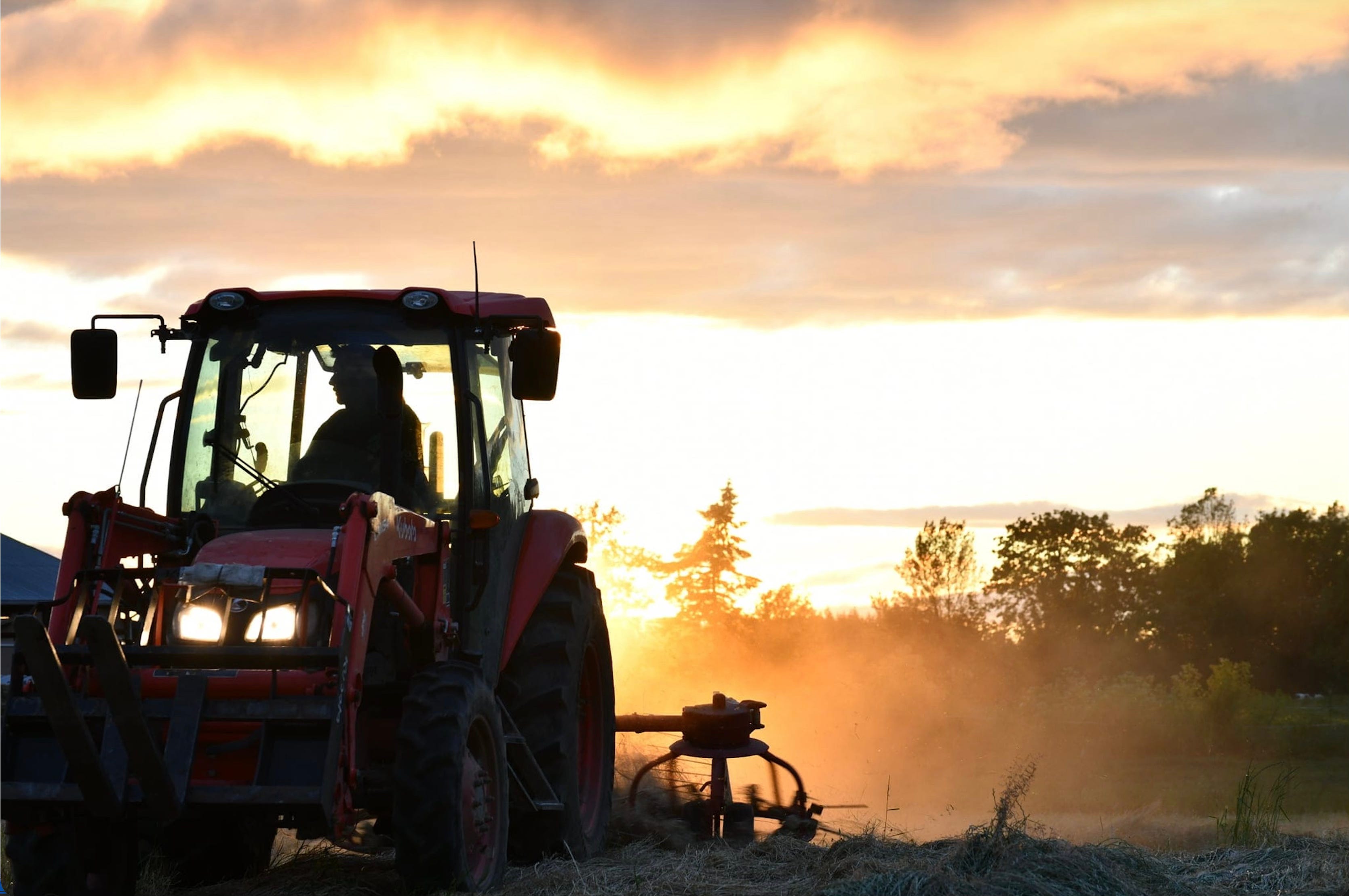
Chuck Rogers looks straight into the camera on his own farm and says what thousands of American farmers now fear in silence:
“This whole lawsuit is just a way to try to shut a farm down… without actually coming out and saying, ‘We don’t want farming.’
This is our family farm.”
In this video, we reveal:
The Smoking Gun: Internal emails where inspectors admitted their case was weak.
The Rainy Day Inspection: How 2 inches of rain was used to justify a six-figure fine.
The Cover-Up: Why Ecology withheld critical data forms until the very last second.
In July 2025, the Washington Department of Ecology slapped Chuck and Austin Rogers with a $204,000 penalty. The agency’s press release painted a damning picture: illegal shoreline clearing along the Deschutes River near Yelm, fill material dumped in protected waters, and “dozens of unauthorized structures” supporting what Ecology called an “RV park” and “commercial hauling business.” They also declared large portions of the working farm protected wetlands.
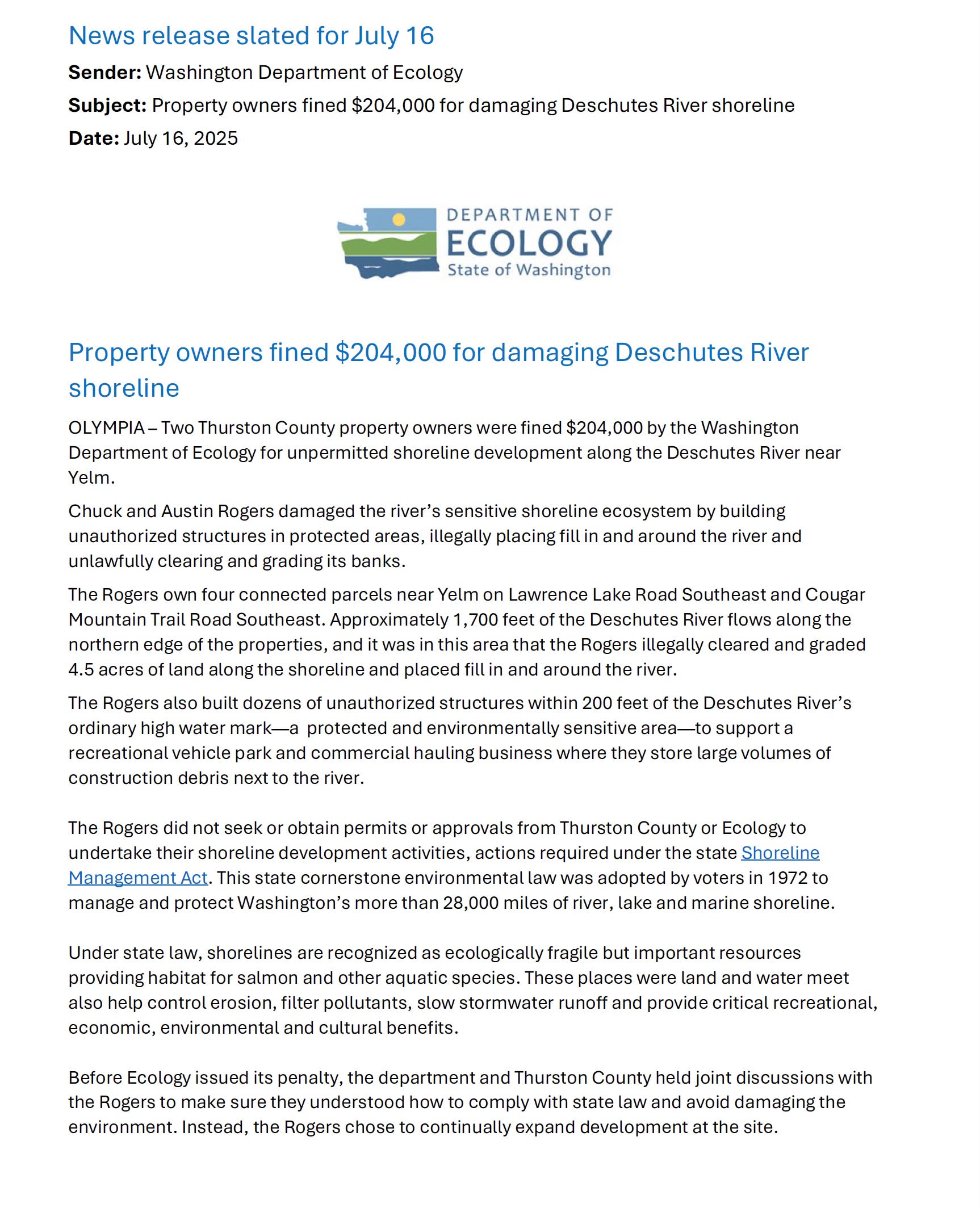
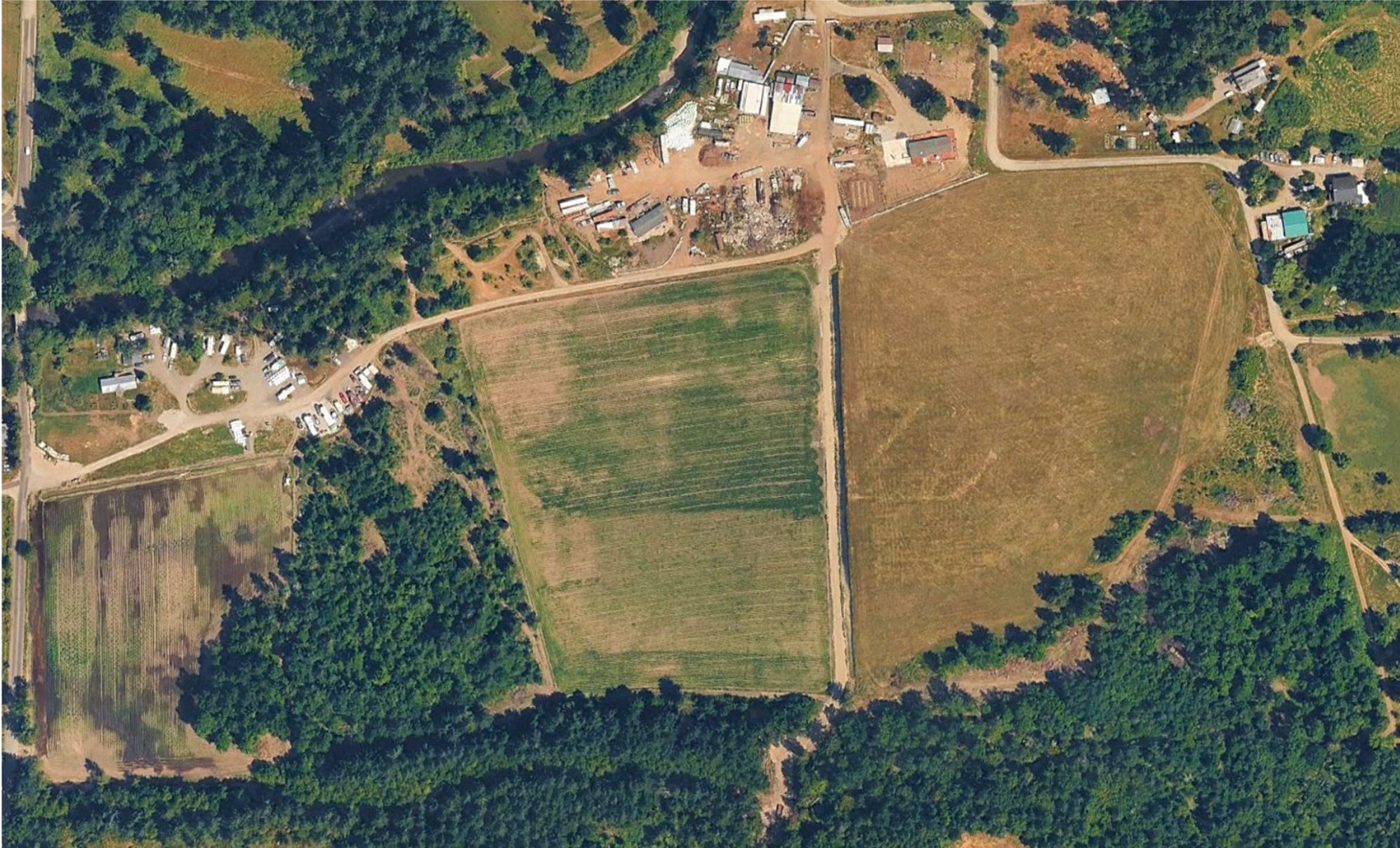
It was the perfect headline-grabbing enforcement story — until you look at the actual evidence.
What Ecology described as a commercial development was, in reality, a historic family farm with seasonal agritourism. Aerial photos from peak tourist season show a white barn, crop rows, dirt roads, and a handful of movable RVs and trailers used only during pumpkin patches, corn mazes, tractor rides, and mud drags — the exact kind of events small farms have hosted for decades to stay afloat. Everything sits hundreds of feet from the river. No permanent utilities. No paved pads. Just real, working agriculture on land that has been farmed continuously since the 1880s — the old Reichel place, where the original owners’ grandchildren still live next door.
The Rogers bought the neglected property in 2021 and poured their savings into restoring it. They followed DNR permits, installed voluntary bioreactors to filter runoff, and maintained standard agricultural practices.
Then came February 2, 2026.
The Rainy-Day “Wetland” That Wasn’t
Ecology’s entire wetland case rests on one single inspection day during a pouring winter rainstorm — nearly two inches of rain had already fallen. Inspector Lizzie Carp and her team are captured on video struggling in the mud.
Her own words, recorded on site, destroy the agency’s narrative:
“Well, you know, it’s been disturbed… There’s probably a compacted layer.”
“Recent tillage.”
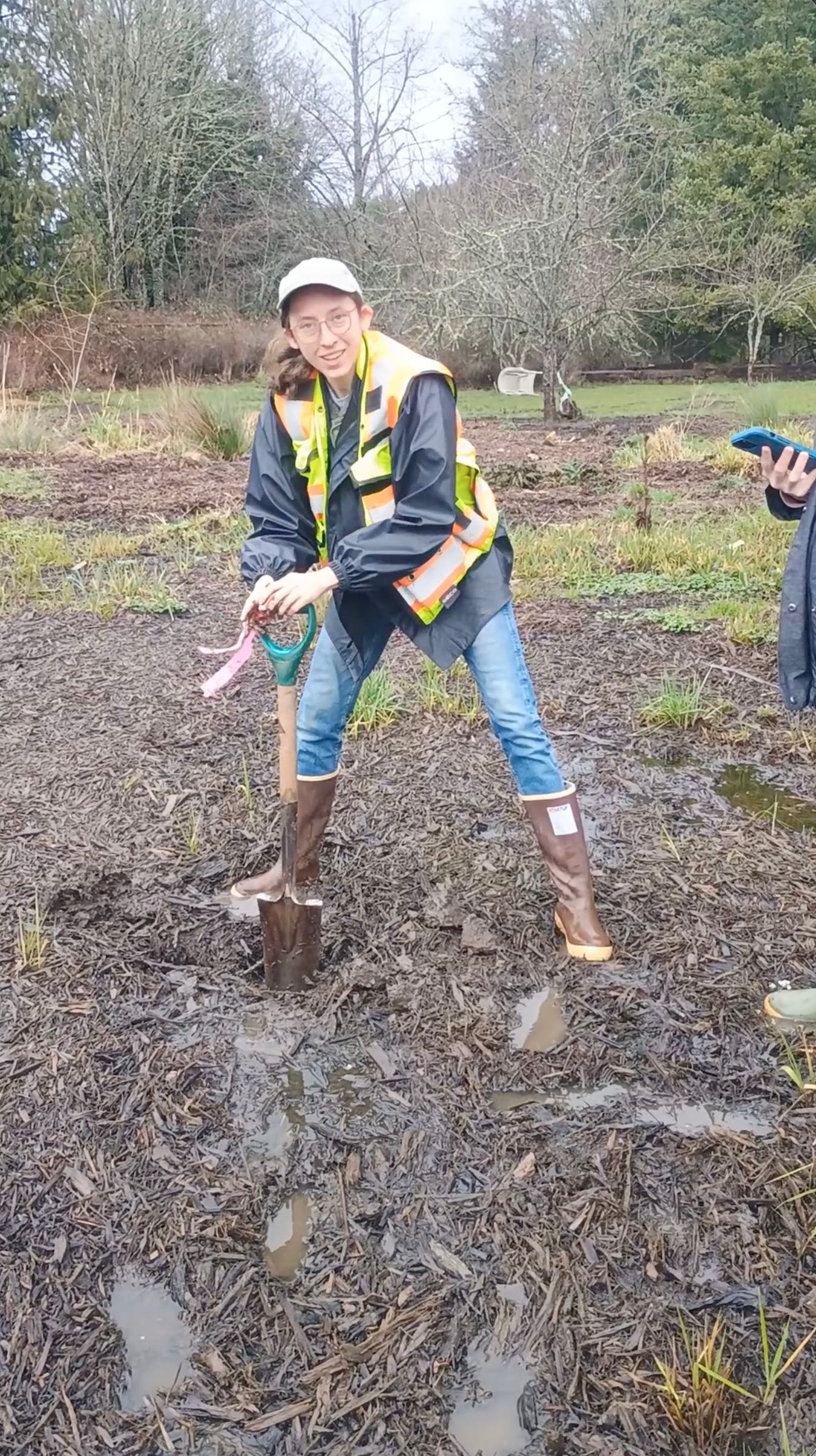
Emily Davis the Department of Ecology Nonpoint Agent even jokes about the conditions while trying to take notes: “Lizzie… I’m just going to use your right-in-the-rain notebook, because trying to write on this piece of paper right now is… not happening.”
Forty-eight hours later, her test holes were dry.
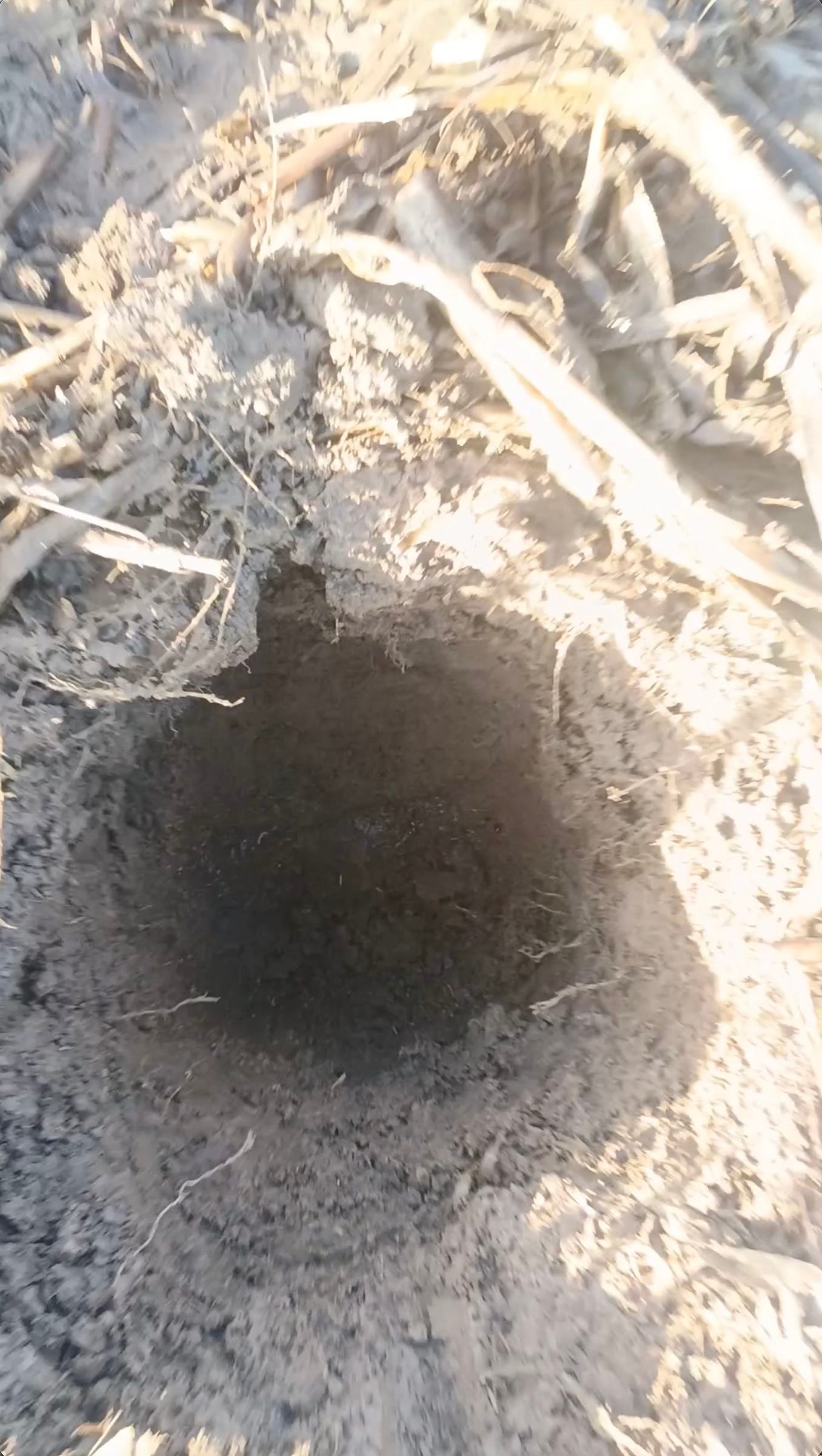
Yet Ecology still declared the area protected wetland.
Every Other Agency Said “No”
Independent expert Ray Kagel of Kagel Environmental — a highly credentialed wetland scientist who has worked on major Corps of Engineers cases — conducted a full delineation under normal conditions. He dug multiple test pits. Every single one returned “Not Wetland.”
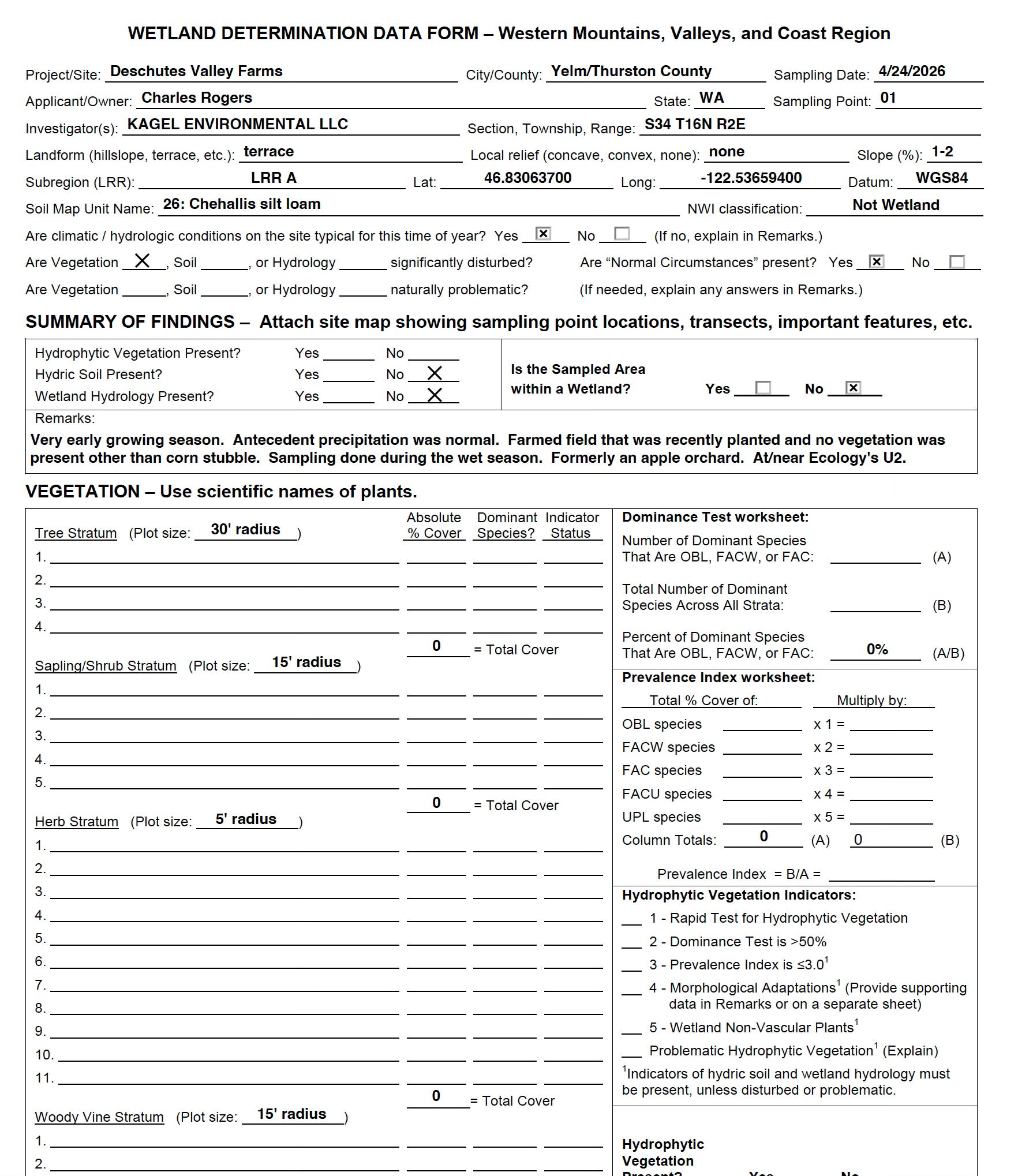
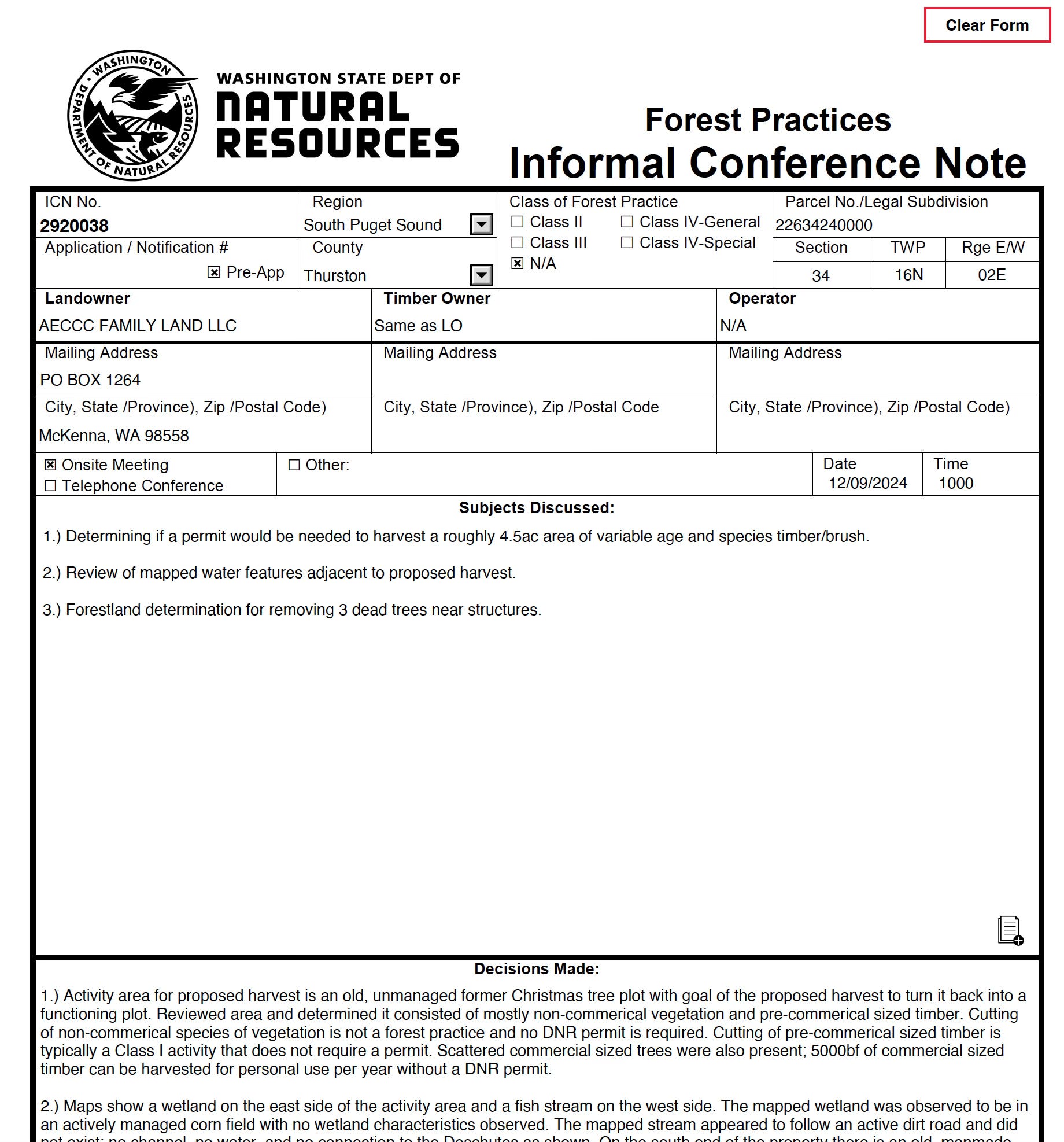
The Department of Natural Resources reviewed the site and found “old manmade agricultural ditch… does not meet criteria.” Harvests were approved with no violations.
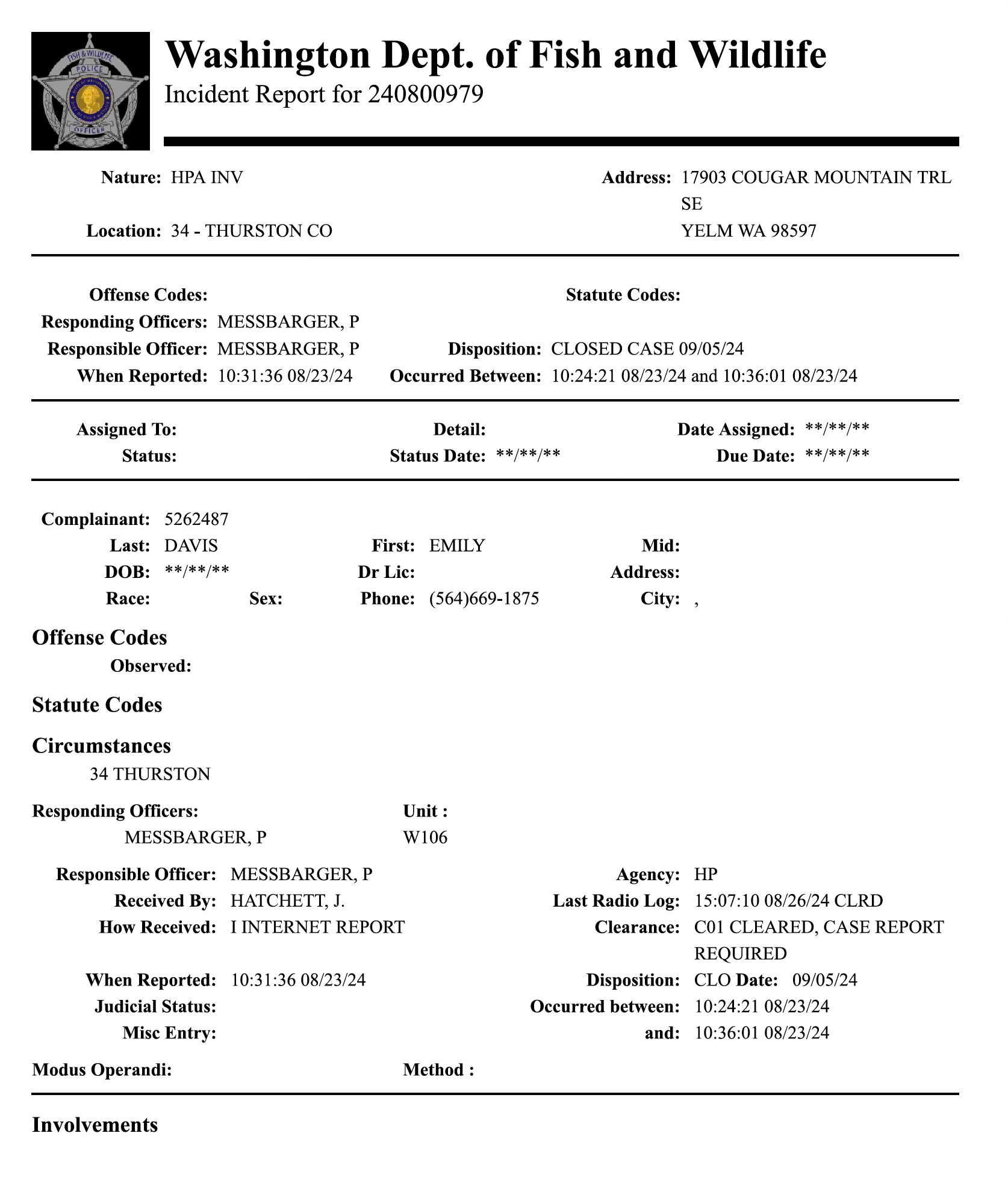
The Department of Fish and Wildlife, after Ecology’s own Emily Davis filed a complaint, closed the case: “Fully manmade feature… outside the scope of the state hydraulic code.” No violations.
Even the Washington Department of Agriculture reviewed the Rogers’ manure practices and told Ecology they were “not a big worry” compared to other farms — the nutrient release from separated dairy solids is slow, not the immediate pollution threat Ecology implied.
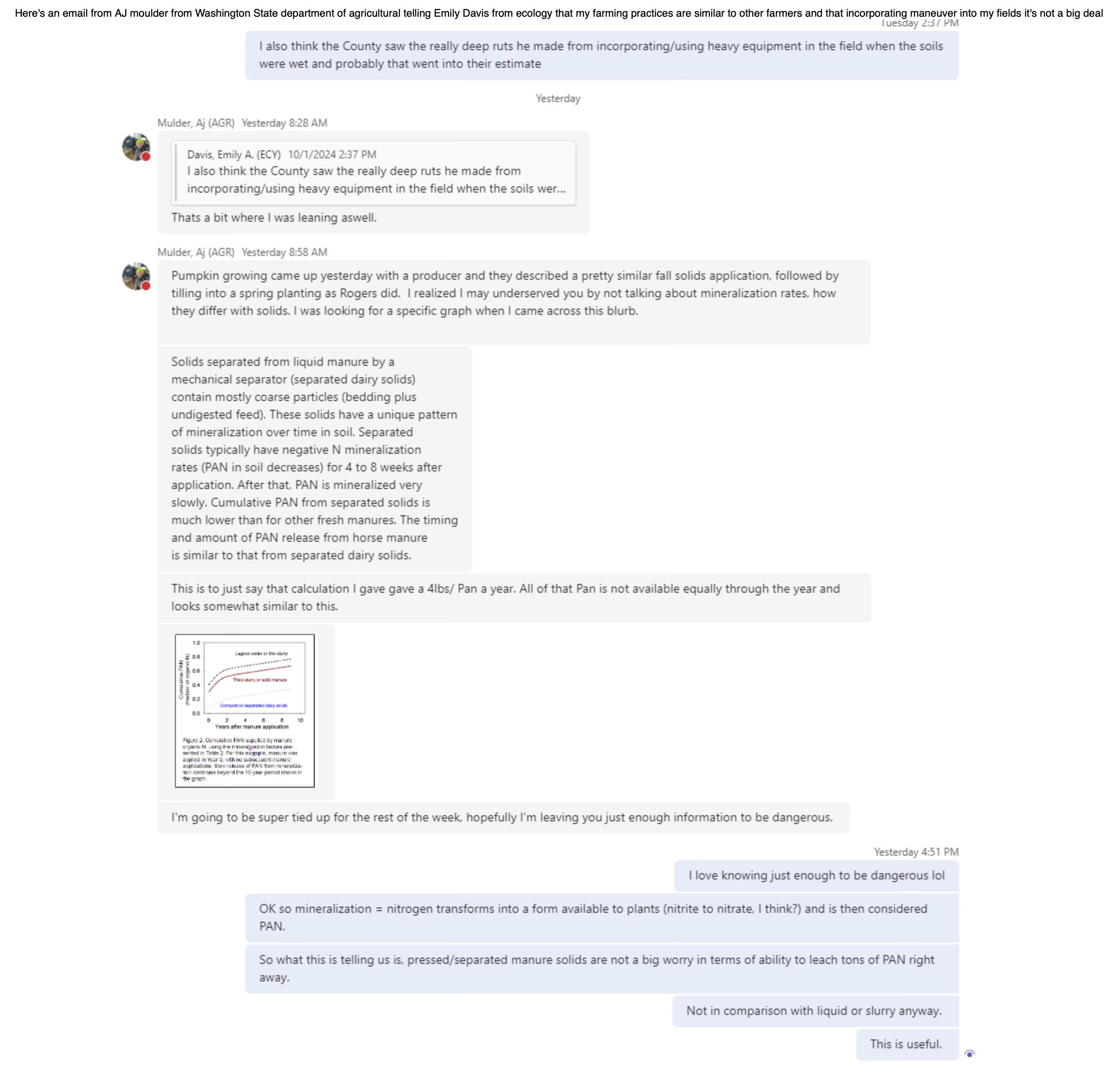
“I love knowing just enough to be dangerous lol”
When the county zoning department found no violations the nonpoint agent pressed for “anything that could be construed” and suggested off the record correspondence.
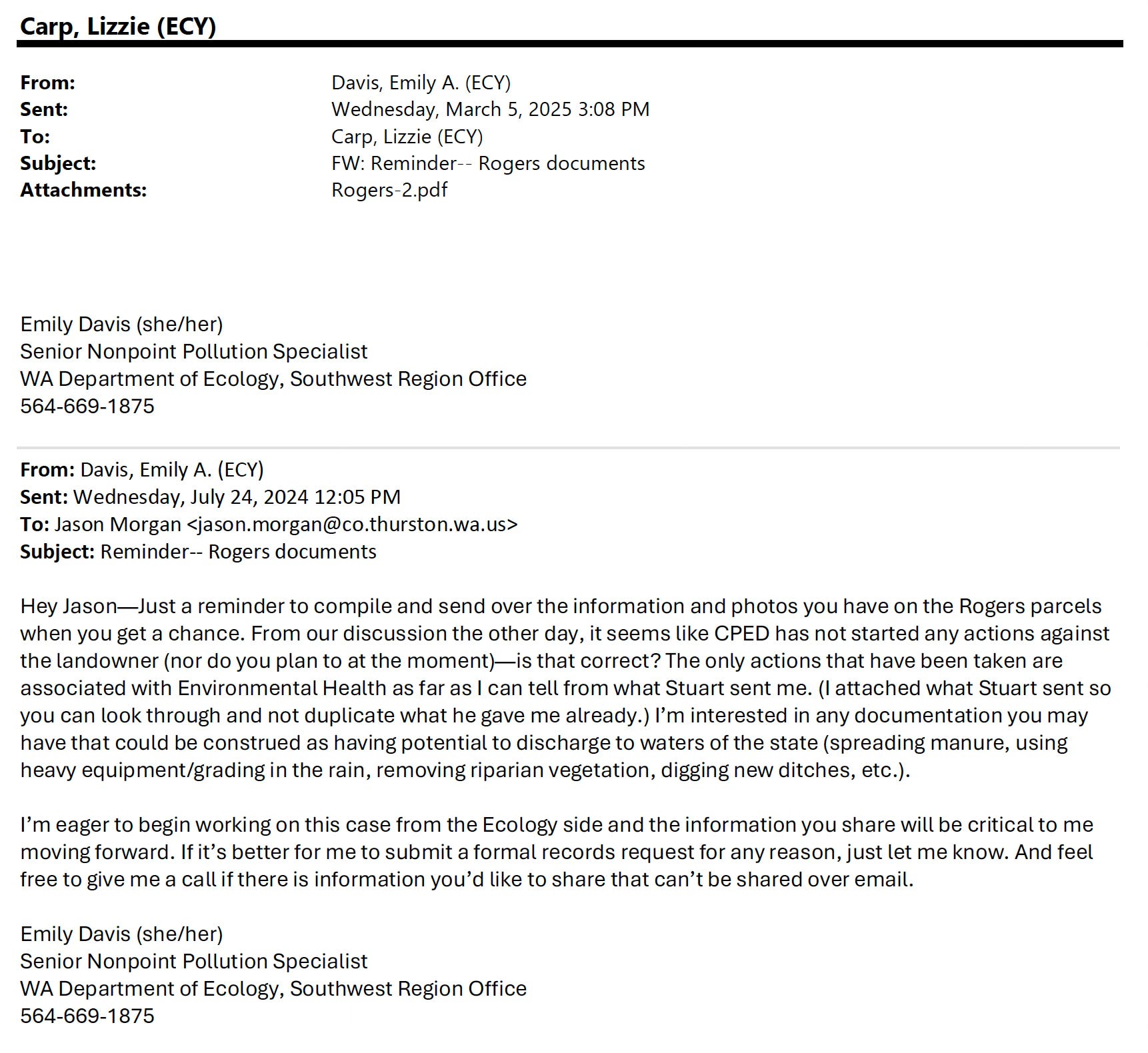
This is not normal enforcement.
Internal Ecology emails further undermine the case. Lizzie Carp herself wrote that parts of the wetland violation theory were “not as strong as I thought because they’re part of his agricultural operation” and questioned whether a formal delineation was even justified. Staff were actively trying to stitch together two separate laws (Shoreline Management Act and Water Pollution Control Act) because the wetland angle alone was weak.
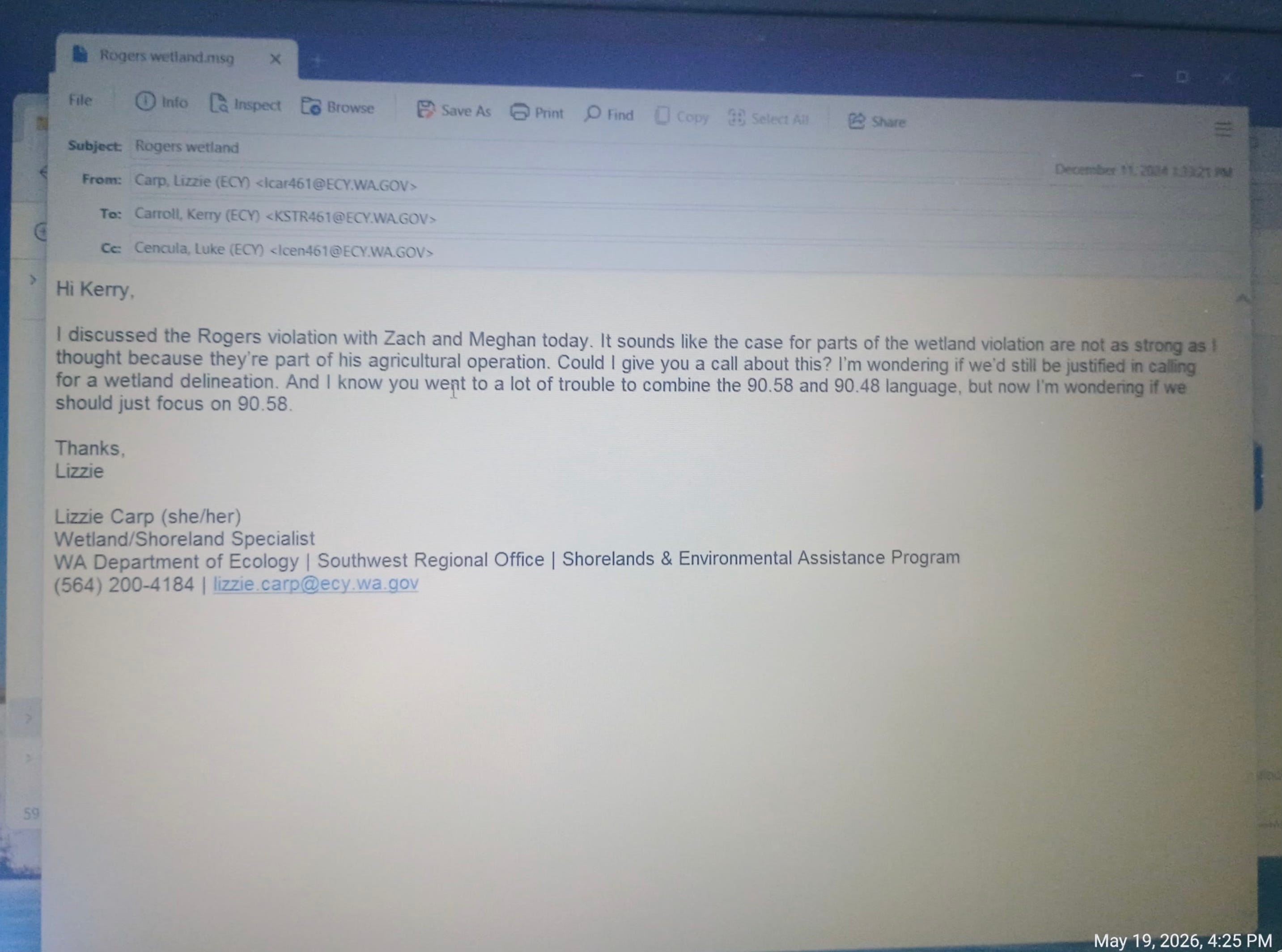
The Discovery Bombshell
On May 20, 2026, the Rogers’ legal team filed a devastating reply in the Pollution Control Hearings Board case. They proved Ecology had intentionally withheld Lizzie Carp’s actual wetland data form — the foundational document supporting the entire determination — during two major discovery productions.
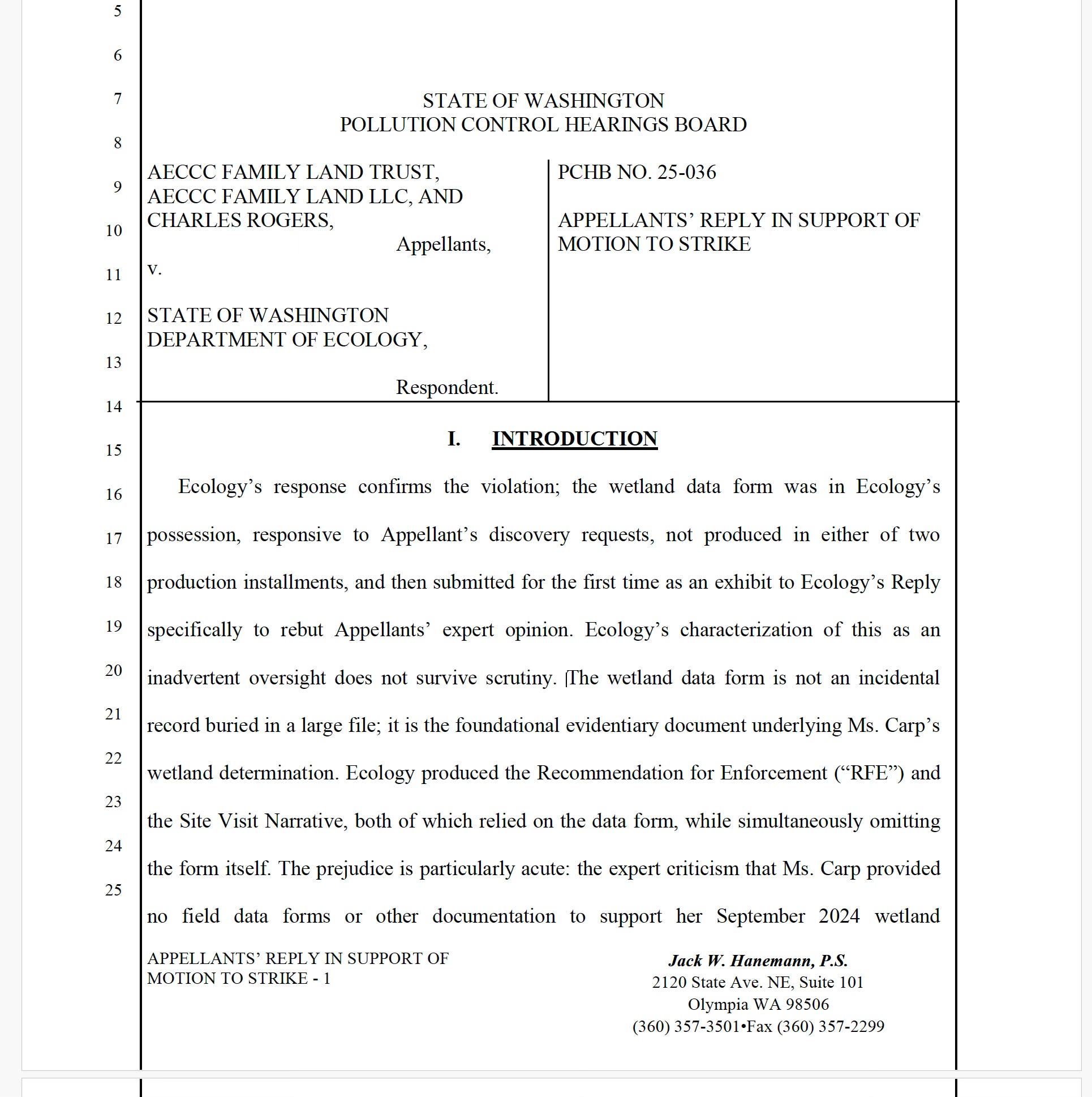
Ecology produced summaries and narratives that relied on the form, but never turned over the raw document itself. Only after the Rogers’ experts criticized the lack of supporting field data did Ecology try to slip the withheld form into their reply brief.
The Rogers are demanding the Board strike the form entirely as a discovery sanction. The legal filing applies the Burnet factors and argues the violation was willful and caused substantial prejudice.
Not Environmental Protection — Regulatory Overreach
A $204,000 fine isn’t paperwork. For a working family farm, it is existential. Every extra dollar now goes to lawyers, experts, engineers, and appeals instead of animals, equipment, or next season’s events.
The Rogers have done everything right: voluntary water-quality improvements, cooperation with DNR, standard agricultural practices on historically farmed land. Yet Ecology treated a muddy February field like a pristine wetland and a seasonal pumpkin patch like a commercial campground.
This case is bigger than one farm in Yelm. It is a warning to every American farmer: your land can be declared off-limits based on a single rainy-day inspection, disputed science, and an agency willing to bend the rules when the facts don’t fit the narrative.
The Pollution Control Hearings Board has already denied Ecology’s request for a temporary restraining order. The full record — including the raw inspection videos, Kagel report, inter-agency clearances, internal emails, and the May 20 discovery filing — is now public.
Read it. Watch Chuck’s videos. Share this story.
Because if they can do this to the Rogers family — a multi-generational farm simply trying to survive and share the land with their community — they can do it to any farm in America.
This is no longer about water quality.
This is about who gets to decide what a family farm looks like — the people who work it with sweat and hope, or the bureaucrats who inspected it once in the rain and decided it wasn’t pretty enough.
The fight continues before the Pollution Control Hearings Board.
The Rogers aren’t backing down.
Neither Should the Rest Of Us

Watch the “wetland inspections” yourself. Government employees even appear to try to intimidate the farmer over video taping.