



A bill moving through South Dakota’s legislature isn’t trying to regulate lab-grown meat.
It’s trying to erase it from the market before it exists.
House Bill 1077, sponsored by Julie Auch, doesn’t impose labeling rules, funding limits, or consumer disclosures. Instead, it takes a far more aggressive route: it classifies cell-cultured protein food products as “adulterated” in other words filthy and putrid.
Under South Dakota law, “adulterated” food is defined as containing filthy, decomposed, or putrid animal or vegetable substances.
Once something is legally adulterated, it is not eligible for sale.
That distinction matters — because it’s not regulation. It’s a market kill switch.
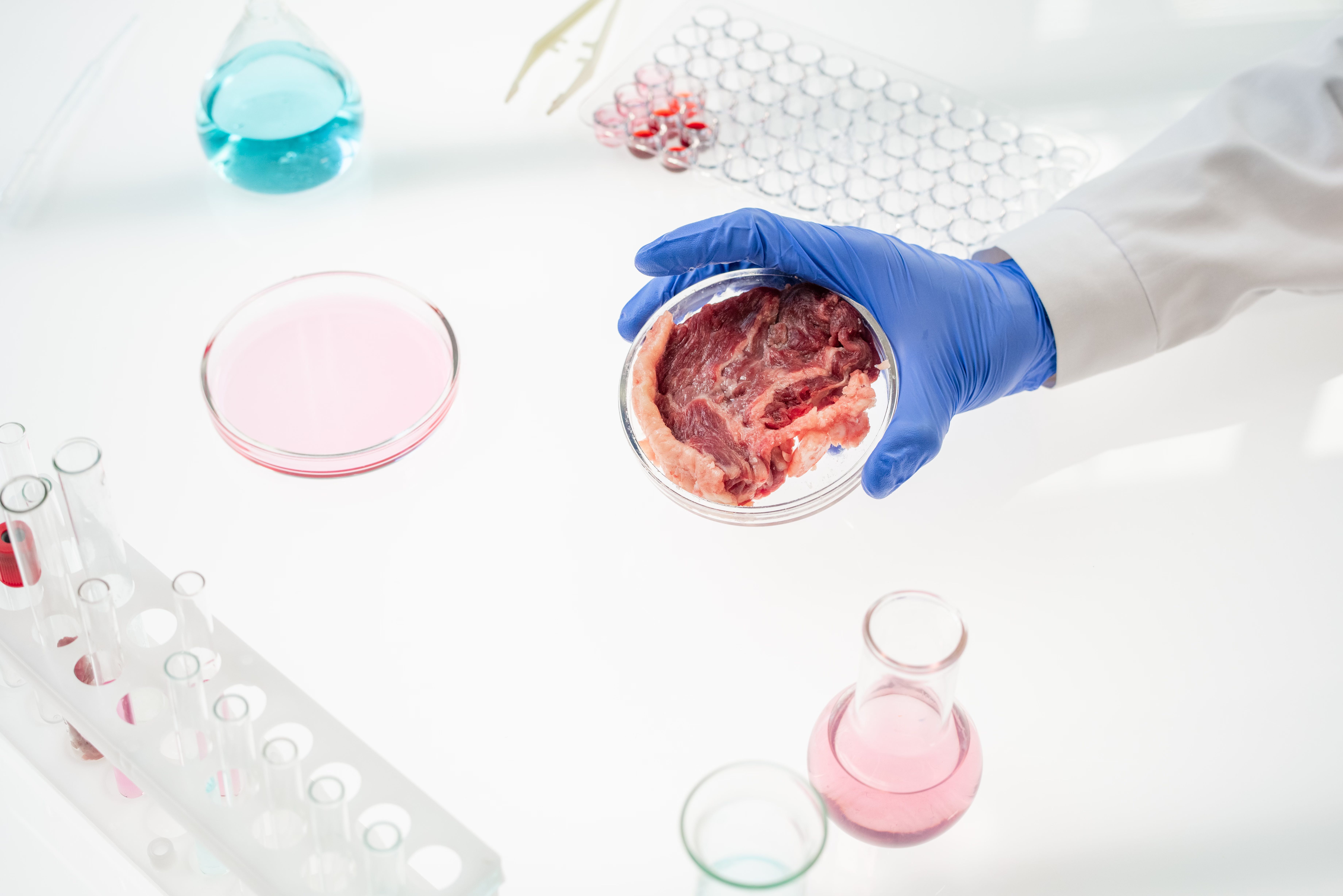
What the bill actually does
HB 1077 amends South Dakota’s food safety statutes to place cell-cultured protein into the same category as spoiled or contaminated food. There is no requirement to prove contamination. No testing threshold. No inspection pathway.
The classification alone is enough.
In practical terms, this means:
Cell-cultured meat could not be sold in the state
Retailers would face enforcement risk
Producers would have no regulatory pathway to compliance
This isn’t about oversight. It’s about preemption — stopping a product category by redefining it out of existence.
Why supporters say it’s necessary
The South Dakota Stockgrowers Association supports the bill.
Its executive director, Doris Lauing, has framed lab-grown meat as inauthentic, chemically complex, and lacking long-term safety assurances. From that perspective, HB 1077 is positioned as a defense of “real food” and traditional livestock producers.
Supporters also argue that legal challenges are unlikely to succeed — and that even if they do, the state has resources to defend the statute.
To them, this is a line-drawing exercise: South Dakota choosing what it recognizes as food.
Why some cattle producers oppose it
The opposition is quieter — and more revealing.
The South Dakota Cattlemen’s Association does not endorse lab-grown meat. But it opposes HB 1077 anyway.
Their concern isn’t the product — it’s the precedent.
By redefining “adulterated” to mean “we don’t like this category,” the state risks blurring the meaning of food safety itself. If consumers are told one inspected protein product is “putrid” by definition, what does that imply about the regulatory system that governs all meat?
Their argument is structural: weaken trust in food inspection for one product, and you may weaken it for all.
Why this approach is different from other states
Most states experimenting with lab-grown meat policy have taken incremental steps:
Restricting public funding
Requiring disclosure or labeling
Limiting procurement in public institutions
South Dakota has already done some of that.
HB 1077 goes further.
It doesn’t wait for federal approval, consumer adoption, or market demand. It doesn’t attempt to regulate production standards. It simply declares the category unfit — regardless of how it’s made or regulated elsewhere.
That’s what makes this bill notable beyond South Dakota.
The federal collision ahead
At the federal level, cell-cultured meat sits under a shared regulatory framework between the FDA and USDA. That system is still evolving, but it exists.
If South Dakota declares federally overseen products “adulterated” by statute, the state isn’t just making a cultural statement. It’s setting up a direct conflict between state authority and federal food regulation.
That’s where litigation risk enters — not necessarily from producers, but from questions of preemption, interstate commerce, and uniformity in food safety law.
Even supporters acknowledge the bill is designed to be decisive.
Why this matters even if you’d never eat lab meat
This story isn’t really about lab-grown meat.
It’s about how governments shut down emerging markets:
Not by banning them outright
But by redefining them into regulatory impossibility
Today it’s cell-cultured protein.
Tomorrow it could be another category — novel feed additives, processing technologies, or alternative inputs that don’t fit neatly into existing definitions.
The method matters.
When “adulterated” stops meaning unsafe and starts meaning unwanted, food law becomes something else entirely.
What happens next
HB 1077 has already passed the South Dakota House and cleared committee hurdles in the Senate. A floor vote is expected soon. If it passes, the decision moves to Larry Rhoden, whose position has not yet been publicly committed.
Whether the bill becomes law or not, it signals something important:
The next phase of food policy fights won’t just be about labeling or subsidies. They’ll be about who controls the definition of “food” itself — and how far states are willing to go to draw that line.