



When a Wisconsin dairy farmer opened a letter from her milk processor earlier this year, it didn’t look like a government notice. There was no statute cited, no agency seal, no enforcement deadline.
Instead, the letter framed itself as an industry-led sustainability update—voluntary, collaborative, and meant to “recognize the sustainable practices you’re already doing every day.”
But the message, according to the farmer who received it, was unambiguous:
participate—or risk losing the ability to sell milk.
This investigation examines what that letter represents, how the dairy industry itself has designed the system behind it, and why a growing number of farmers say “voluntary” sustainability programs now function as a condition of market access.
The Farmer’s Account
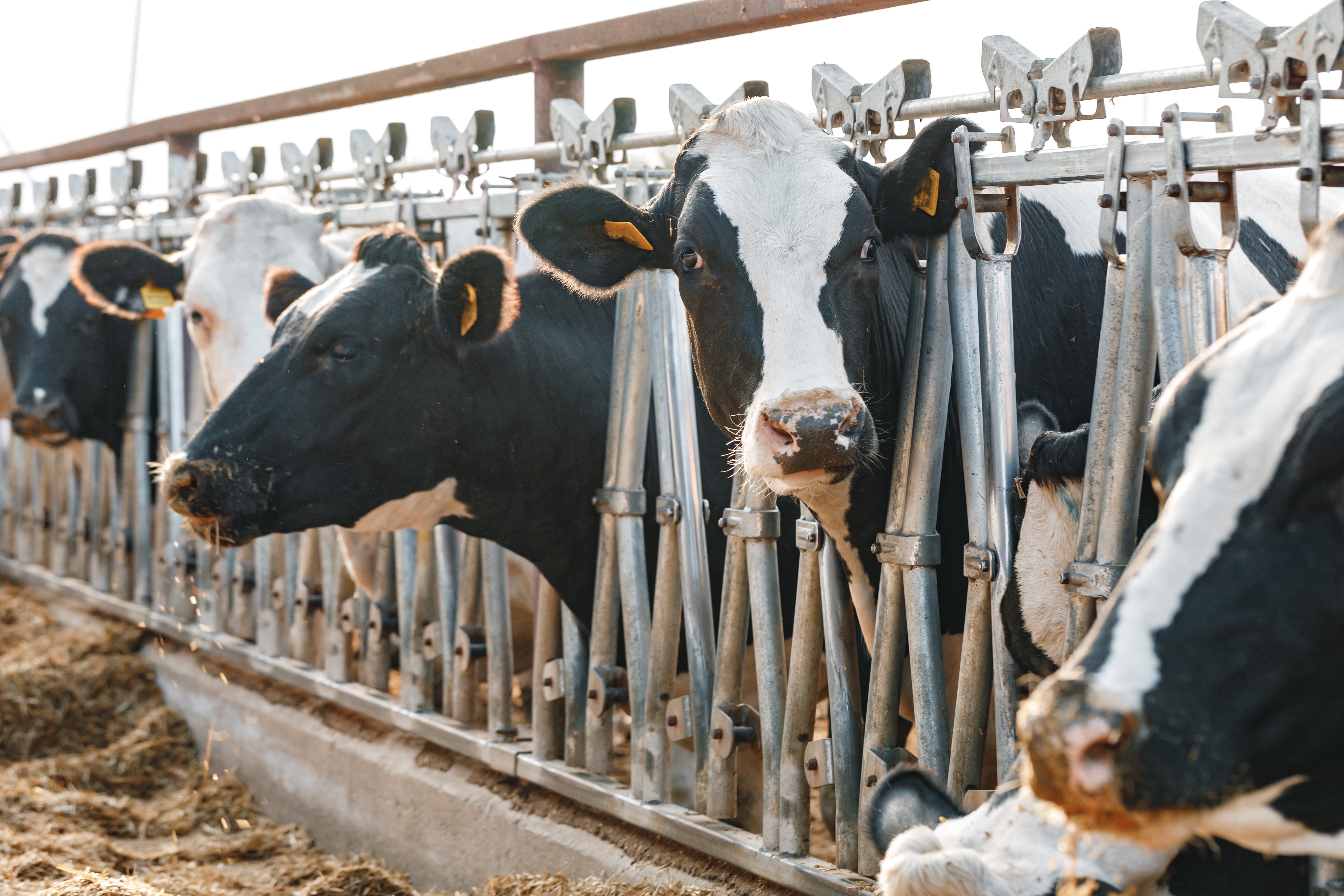
The farmer, Abby Swan, operates a family dairy in central Wisconsin. In a publicly shared explanation, Swan said her processor informed her that participation in a new sustainable agriculture data-collection effort was technically optional—but practically unavoidable.
According to Swan, the processor requested a full year of farm-level data, including:
herd size and production data
ration and nutrition information
12 months of energy and fuel use:
natural gas
diesel
propane
biodiesel
electricity (kilowatt-hours)
The data, she said, would be collected by a third party following an update to the processor’s sustainability policy.
Swan was told the program was industry-led—not a regulation. But she said processor representatives also made clear that upstream buyers would not accept milk unless the processor could demonstrate compliance with sustainability reporting expectations.
In short: the choice existed on paper. The consequence existed in practice.
Not a Regulation—Something New
To understand what Swan encountered, it’s critical to be precise.
This is not a federal or state mandate.
No law requires Wisconsin dairy farms to submit annual emissions data.
What Swan described instead fits a different model entirely: private governance enforced through supply chains, where access to markets depends on compliance with standards written into contracts and procurement policies rather than statutes.
That model is not accidental. It is explicitly described in the dairy industry’s own documentation.
The Industry Framework Behind the Letter
At the center of U.S. dairy sustainability reporting is the National Dairy FARM Program, an industry-created framework overseen by the National Milk Producers Federation.
One module of that program—Environmental Stewardship (FARM ES)—was built to estimate farm-level greenhouse gas emissions using standardized inputs such as herd size, feed rations, manure management, and energy use.
Crucially, FARM ES documentation states that:
Farm-level data can be aggregated by dairy cooperatives and processors for reporting emissions to dairy buyers.
That sentence explains the entire chain Swan described.
The program is not primarily designed to regulate individual farms. It is designed to allow processors and cooperatives to aggregate supplier data to meet reporting demands from customers further up the supply chain.
Why Buyers Drive the System
Large food companies increasingly report Scope 3 emissions—a corporate accounting category covering upstream suppliers. For dairy processors, that means the majority of their reported emissions originate on farms, not in plants.
Industry guidance documents for processors explicitly identify FARM ES as a mechanism to quantify those upstream emissions.
In other words:
Buyers want emissions numbers.
Processors need standardized farm data to produce them.
Farms become the data source—whether or not they sell directly to the buyer.
Swan named companies like Nestlé and Danone as examples of large downstream buyers whose sustainability commitments influence processor requirements. Yanasa TV has not independently verified which buyers apply to her specific processor—but the structure she described mirrors the system outlined in industry materials.
How “Voluntary” Becomes Mandatory
On paper, FARM ES participation is voluntary. The program itself emphasizes collaboration and continuous improvement.
In practice, however, participation becomes difficult to refuse when processors integrate sustainability reporting into procurement requirements.
The leverage is indirect but powerful:
A processor must demonstrate sustainability metrics to retain contracts.
The processor cannot produce those metrics without farm data.
The processor updates its supply policy.
Farmers who do not participate risk becoming non-compliant suppliers.
No enforcement agency is required. The consequence is economic rather than legal—but no less real.
Industry leaders themselves have described sustainability participation as a “license to operate.” That phrase does not imply a law; it implies a market expectation.
What the Data Is—and What It Can Become
Today, the requested data is used to calculate emissions intensity and energy efficiency. FARM ES materials emphasize benchmarking and improvement rather than punishment.
But farmers and analysts note that measurement systems rarely remain neutral.
Historically, data collection tends to precede:
benchmarking across suppliers
preferred-supplier classifications
incentive or penalty structures
procurement eligibility thresholds
None of those steps require legislation. They require only contract language.
For smaller and mid-size farms, the burden is asymmetric. Larger operations can amortize reporting costs across scale and staff. Smaller farms must absorb them directly.
Why Farmers Are Reacting Now
What made Swan’s account resonate is not novelty—it’s visibility.
Many farmers have quietly participated in audits, certifications, and reporting programs for years. What has changed is the breadth of data being requested and the explicit linkage to market access.
For farmers accustomed to government regulation being debated publicly and enforced uniformly, private sustainability standards can feel opaque and non-negotiable.
There is no rulemaking docket. No public comment period. No appeal beyond finding a different buyer—if one exists.
What We Still Don’t Know
Yanasa TV has not yet obtained the letter Swan received, nor identified the specific processor or platform administering the data collection. Without that document, it would be irresponsible to name an entity.
That absence, however, does not weaken the structural finding.
The mechanism Swan describes is explicitly documented, publicly acknowledged, and industry-designed.
A Shift in How Policy Operates
This story is not about climate ideology. It is about how governance now functions in agricultural markets.
The dairy sector offers a clear case study in four emerging realities:
Privatized regulation – standards enforced by buyers, not governments
Market access conditionality – compliance tied to the ability to sell
ESG without legislation – policy outcomes achieved without laws
Policy by contract – enforcement through procurement agreements
For farmers, the result feels the same regardless of the source: adapt—or exit.
Yanasa TV continues to investigate how sustainability frameworks reshape agriculture—not through regulation, but through markets.