



Two years after the 2024 curtailment that threatened more than half a million acres, Idaho farmers are back in the fields — planting under the shadow of the same unfinished system.
As of mid-April 2026, the state has declared a drought emergency for all 44 counties following extremely low snowpack levels, with record-low readings at dozens of monitoring sites, and one of the warmest winters on record. Snow melted weeks early, and forecasts point to mounting shortages this irrigation season.
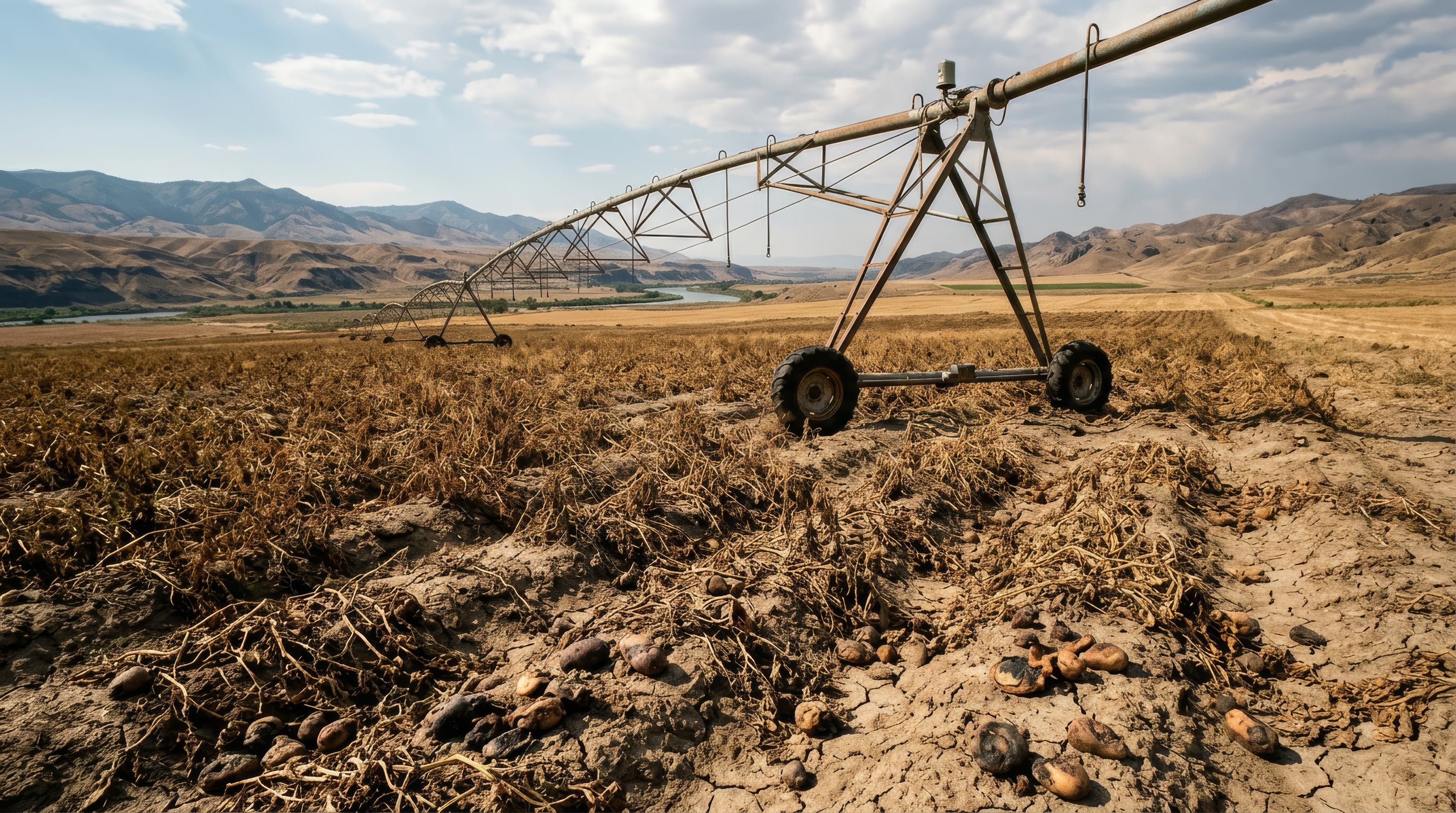
In newly expanded areas like Butte County and portions of the Big and Little Lost River basins, groundwater users are beginning to confront enforcement pressure. Reports indicate Idaho Department of Water Resources agents are checking compliance in the field, with red-tagging and curtailment possible for those not covered by an approved mitigation plan.
This is the “plant first, risk everything” reality we highlighted in earlier Yanasa TV coverage. Nothing has actually been fixed — the same legal mechanism that shut off water in 2024 remains in place today.
Generations on the Line
Fifth-generation Snake River Valley farmer Trevor Bellnap captured the stakes during the 2024 crisis in words that still hit hard:
“The situation which we find ourselves is about as bad as it gets. Not only will we be out of business, many other businesses will be highly impacted... If the economy in eastern Idaho fails, which it surely will if this curtailment order remains in place, it will dry up and blow away just like it did back in the dust bowl of the 30s.”
An acre of potatoes can cost upward of $4,000 to grow. Families invest that money, their land, and their legacy — only to face the possibility that pumps could go silent mid-season when crops need water most.
Disproportionate Impacts and an Unresolved System
In 2024, a calculated downstream shortfall of roughly 72,000 acre-feet triggered orders that threatened well over a million acre-feet upstream. Observers described the Eastern Snake Plain Aquifer as “a big leaky bathtub” — water not used upstream eventually influences the Snake River, but the timing, efficiency, and modeling create painful trade-offs that many groundwater farmers view as deeply unfair.
The 2015 mitigation agreement was intended to protect junior users, but key safeguards existed largely in the preamble rather than binding terms. Averaging of good and bad water years ended, and negotiations have often left junior rights holders feeling they negotiate with a “gun to their head” under the state’s prior appropriation doctrine.
A 2024 settlement brought some relief through conservation and recharge commitments. It has shown progress for participating districts, yet the core priority framework is unchanged — and this year’s drought conditions are putting it under severe strain.
The Widening Net
The state continues expanding the Eastern Snake Plain Aquifer “area of common groundwater supply” to include additional tributary basins. Many farmers in these areas had no role in earlier negotiations but now face the Surface Water Coalition delivery call.
In Butte County, roughly 840 groundwater rights holders are now part of the process. Local farmers have publicly alleged “extortion,” claiming surface water interests are demanding extra concessions before approving mitigation plan addendums they signed in March. Surface water users and state officials maintain that compliance with approved plans is the required path forward under longstanding Western water law.
What’s at Stake Far Beyond the Fields
Idaho agriculture feeds the nation with potatoes, dairy, alfalfa, and more. When farms struggle, ripple effects hit equipment dealers, processors, rural schools, hospitals, and tax bases. Land values tied to reliable water can drop sharply.
Competing demands — including hydropower generation for senior surface water users like Idaho Power, which can benefit from stronger river flows through increased hydropower generation, as well as data centers and critical minerals development — add layers of pressure to an already stressed system. These raise legitimate public questions about balancing food security with energy, technology, and economic priorities.
Some progress has been made. The legislature approved $30 million in ongoing annual funding for water infrastructure in 2025 to support mitigation and recharge. Yet implementation challenges and long-term certainty remain pressing issues as this drought year unfolds.
A Test for Idaho — and American Agriculture
Idaho’s farmers are resilient innovators. But they cannot solve hydrology, modeling disputes, or systemic gaps on their own.
The choice before policymakers is clear: Deliver meaningful investments in storage, recharge, transparent modeling, and balanced processes that respect senior rights while giving junior users workable certainty — or watch the cycle of mid-season fear and economic threat repeat.
Thousands of Idaho families made the decision to plant anyway in 2026.
Because what’s happening here isn’t just a drought story.
It’s a test of how far water enforcement can be pushed before the people who produce our food decide whether planting is even worth the risk.
When Idaho’s fields face uncertainty, the consequences don’t stay in Idaho.
They show up in supply chains, grocery bills, and the long-term future of American agriculture.
If you believe generational family farms, rural communities, and American food security matter, share this. Contact your Idaho legislators. Support right-to-farm efforts and practical water policies that protect both tradition and the future.