



California agriculture officials say they are acting to protect the state’s citrus industry from a devastating disease.
A San Diego County nursery owner says the state destroyed his business without proof of infection and without compensation.
Both things could be true.
What’s missing — and what now matters most — is transparency.
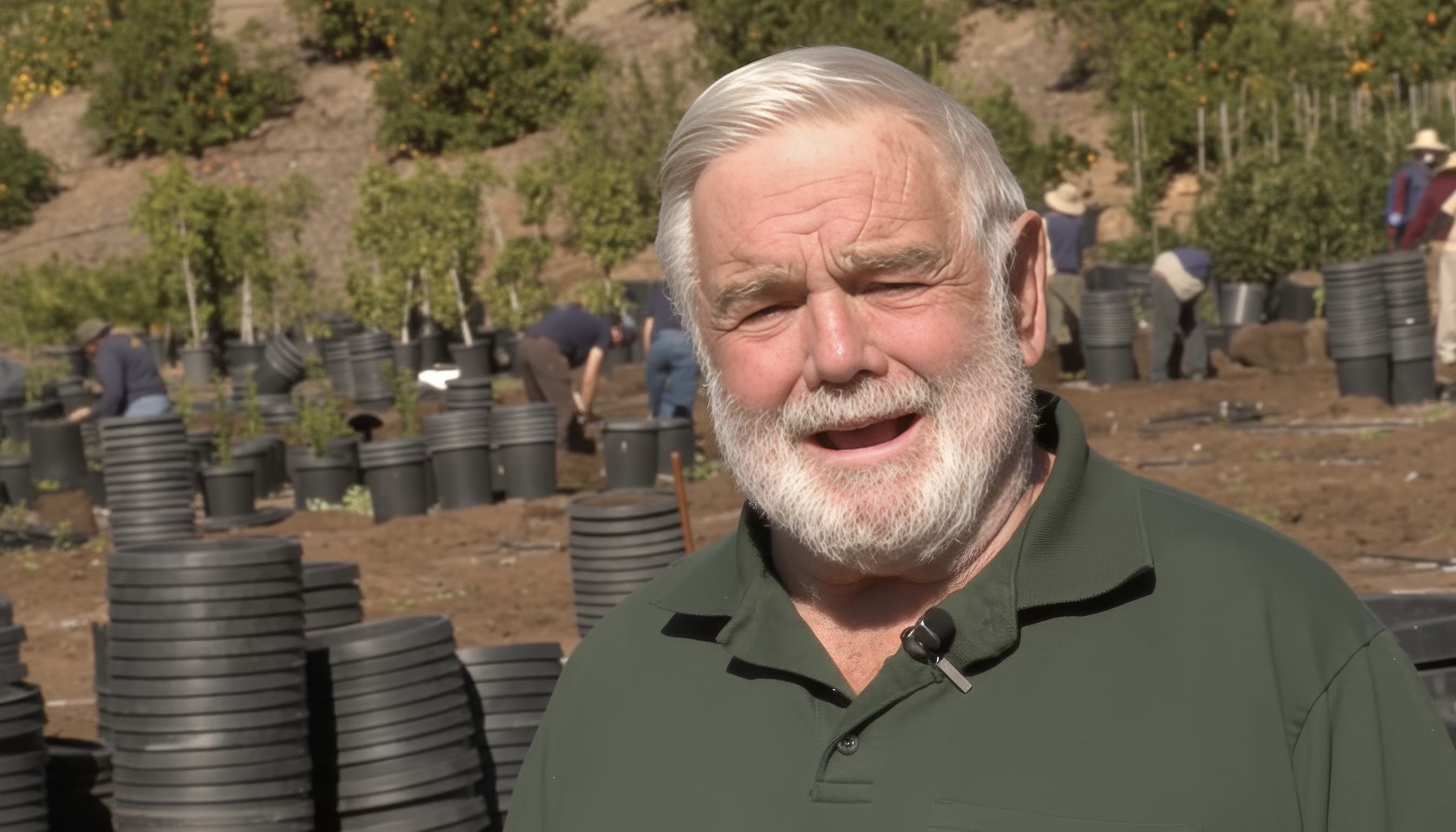
In recent weeks, NBC 7 San Diego reported that California destroyed approximately 32,000 citrus plants at an Escondido-area nursery after determining the plants were subject to abatement under citrus quarantine rules. The nursery owner, Mark Collins of Evergreen Wholesale, is now suing the state.
This article does not dispute that Huanglongbing (HLB) — also known as citrus greening — is a legitimate and serious plant disease. Nor does it argue that California lacks authority to enforce quarantine rules.
Instead, this investigation focuses on a narrower, more consequential question:
When the state destroys private agricultural property in the name of biosecurity, what standard of proof, process, and transparency is owed to the public?
So far, the answers are incomplete.
What We Know (and What We Don’t)
According to NBC 7, California officials say the destruction followed a multi-day administrative hearing, after which the state concluded that the nursery “opted not to comply with the requirements applicable to all citrus nursery stock in the quarantine zone.”
The nursery owner disputes that claim, saying he complied with state protocols, sprayed for pests, and never had a psyllid or infected tree detected on his property.
Notably, NBC 7 does not specify:
Which regulation Evergreen allegedly violated
Which requirement was refused or unmet
Whether alternatives to destruction were formally offered
Why compensation was denied
These are not minor details. They are the entire case.
The “Five Miles Away” Question
NBC 7 reports that the state’s action was triggered by detection of the Asian citrus psyllid and/or HLB approximately five miles away from the nursery — a distance repeatedly cited in California’s citrus quarantine framework.
The owner further stated that:
The positive detections occurred roughly two years earlier
The plants now destroyed were not even in existence at the time
Those statements matter — not because they automatically invalidate the quarantine, but because time and proximity are central to risk modeling.
California’s citrus program does use five-mile quarantine radii, and those quarantines can persist or expand over time. However, NBC 7 also reports the state claiming that additional infected trees were subsequently found in the area, without specifying when or where.
That lack of specificity creates a credibility gap.
If detections are ongoing, the state should be able to say so plainly — with dates, locations, and boundaries.
Why Only Plants in Pots?
One of the most striking facts in this case is also one of the least explained:
Only citrus plants in pots were destroyed. Trees planted in the ground at the same site were not.
There is a plausible regulatory rationale here: potted nursery stock is considered movable commercial material, while in-ground trees are not typically sold or transported.
But the state has not publicly articulated that reasoning in this case.
When enforcement actions appear selective — even when legally justified — silence invites speculation.
Compliance vs. “Compliance”
Much of this dispute appears to hinge on a single word: compliance.
The nursery owner describes compliance in practical terms:
Following spray protocols
Submitting to inspections
No pests detected on site
The state appears to be using a regulatory definition:
Compliance agreements
Structural or handling requirements
Movement restrictions tied to quarantine status
If the state believes Evergreen failed to meet a specific regulatory condition, the public deserves to know which one.
Without that clarity, “non-compliance” becomes an assertion rather than a finding.
The Compensation Question
NBC 7 reports that the state declined to reimburse the nursery owner for the destroyed plants.
That raises a broader issue with implications far beyond citrus:
If compliance is technically possible but economically infeasible, is destruction still regulation — or is it uncompensated taking?
California’s agricultural enforcement programs rely on cooperation. That cooperation erodes when producers believe they bear all downside risk, even absent confirmed infection.
Why Transparency Matters Here
This case does not require demonizing regulators to raise serious concerns.
In fact, the opposite is true.
Strong biosecurity programs depend on trust, and trust depends on transparency:
Clear rules
Clear violations
Clear justification
Clear compensation standards
When those elements are missing from public explanation, agencies create their own reputational damage — regardless of intent.
The Questions That Still Need Answers
Yanasa TV is formally requesting clarity on the following:
Where exactly were the confirmed HLB-positive trees located, and when were they detected?
Was Evergreen Wholesale inside an active HLB quarantine zone at the time of destruction, and since what date?
Which specific regulatory requirement did the state determine Evergreen failed to comply with?
What alternatives to destruction were offered, and why were they deemed insufficient?
What is the state’s compensation or indemnity standard in cases of precautionary destruction without confirmed infection?
Why were potted plants destroyed while in-ground trees at the same location were left intact?
None of these questions undermine biosecurity.
All of them strengthen public confidence — if answered.
Final Thought
Agriculture depends on both science and property rights. When one eclipses the other without explanation, everyone loses — including the agencies tasked with protecting our food system.
This case will not be decided in headlines. It will be decided in documents.
And until those documents are made clear, asking questions isn’t adversarial — it’s responsible journalism.