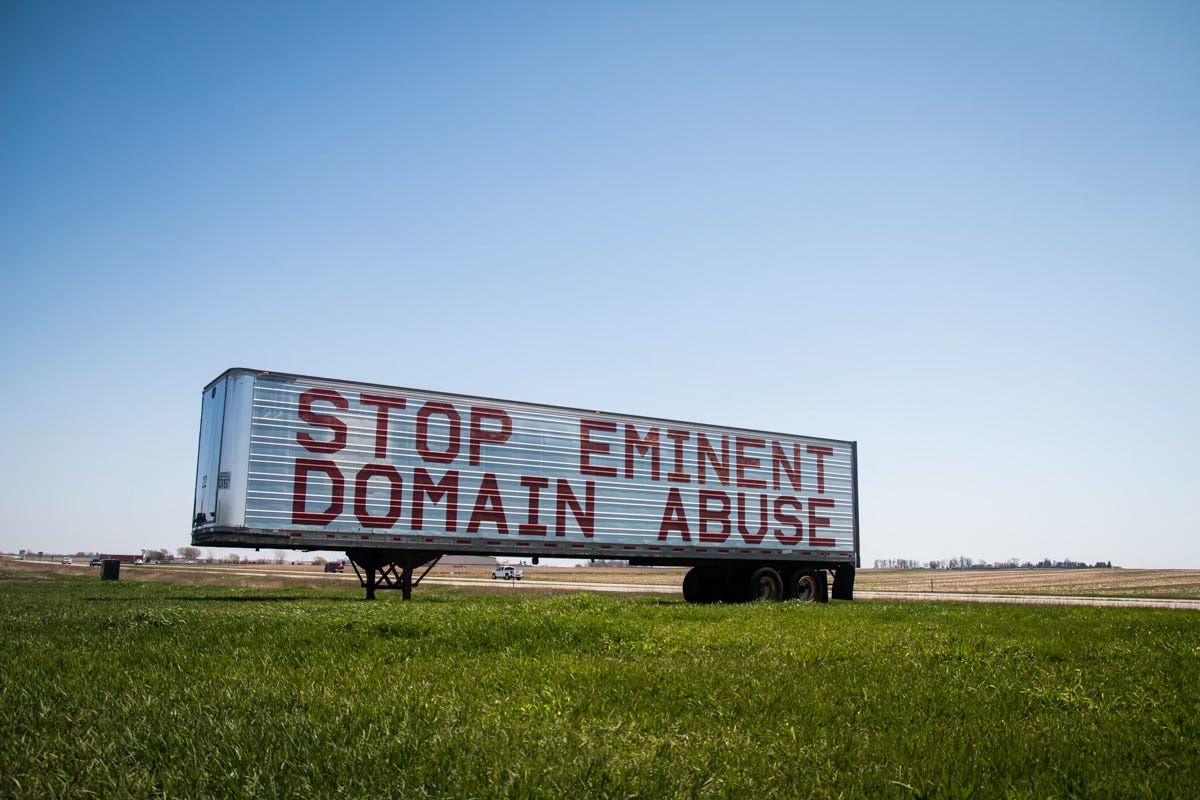


Across rural Iowa, a familiar conflict is resurfacing with a sharper edge.
A pipeline proposal—marketed as essential infrastructure—has collided with landowners who say the state is invoking one of its most powerful tools, eminent domain, to advance what looks and feels like a private commercial project. The clash has all the surface elements of a classic American standoff: farmers versus corporations, property rights versus development, tradition versus progress.
But the real story isn’t emotional. It’s constitutional.
At issue is not whether pipelines should exist. It’s whether the legal meaning of public use is being quietly stretched into something far broader—and far more dangerous for private property.