



For more than two years, the King Ranch case in Washington State looked like a familiar environmental enforcement dispute: a state agency, a family ranch, and a disagreement over wetlands.
That framing no longer holds.
What changed in January isn’t just new filings or new evidence. The case itself has shifted — away from arguments over maps, mitigation ratios, and aerial imagery, and toward a far more fundamental question:
If the State is going to punish someone like this, does it have the right to do so without a jury — and in a forum that was never designed to impose punishment at all?
That question now sits at the center of the King Ranch case. And it matters far beyond one ranch.
SUPPORT THEIR FIGHT LEARN MORE
A Case That Started Quietly
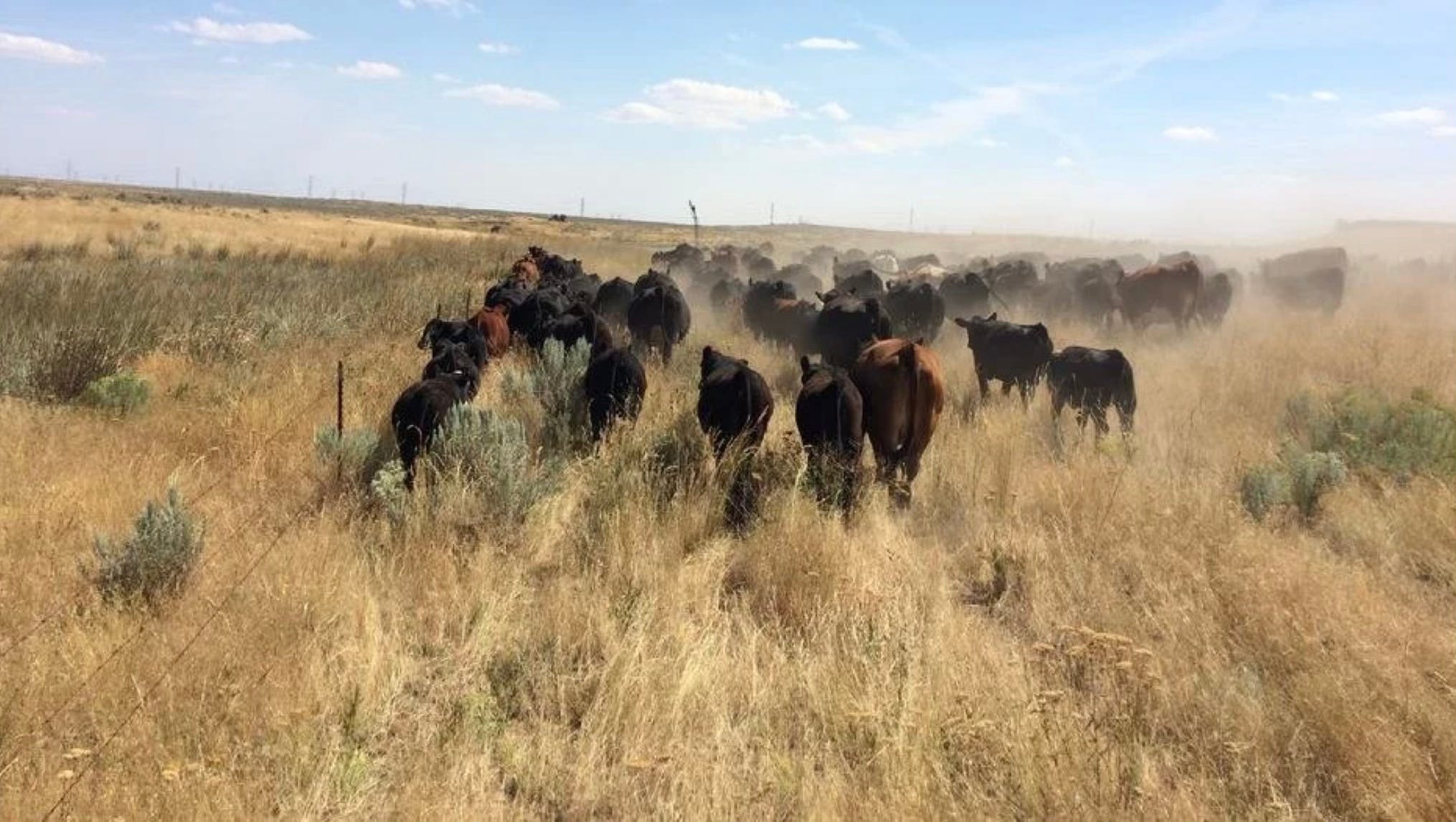
Wade and Teresa King operate King Ranch in eastern Washington, a dry and remote landscape where ranching has depended on scarce water sources for generations. Stockwater ponds are not optional infrastructure in that environment — they are essential.
In 2021, a tip forwarded through the Washington Department of Fish and Wildlife eventually landed with the Department of Ecology. Rather than conducting full wetland determinations on the ground, Ecology relied largely on aerial imagery and Google Earth to conclude that certain long-maintained stockwater ponds were actually “alkali wetlands,” a rare and highly protected wetland type.
That classification changed everything.
What had long been treated as routine ranch infrastructure was suddenly framed as unlawful disturbance of protected wetlands. Penalty orders and compliance demands followed, and the case escalated quickly.
From Compliance to Consequences
For a time, this case appeared to be about whether Ecology’s wetland classification was correct.
But the latest filings force a different lens.
The State is not simply asking King Ranch to tweak a practice or restore a small area. It is seeking:
a civil penalty exceeding a quarter-million dollars
mitigation and restoration obligations that could reach into the millions
long-term monitoring and reporting requirements
land-use restrictions with no clear endpoint
At this scale, the label “administrative enforcement” begins to break down.
This is not a fix-it notice.
This is not routine compliance.
This is punishment-level exposure, and the law treats punishment differently.
The Silence Is Over
Earlier in the case, the Kings were constrained by the risk of parallel criminal exposure. Speaking freely — publicly or even procedurally — carried Fifth Amendment consequences. That reality shaped both their defense and the public understanding of the dispute.
That constraint has now eased.
In their January filings, the Kings make clear that they can finally tell their full story. What emerges isn’t a dramatic reversal of facts, but a clearer picture of how this case developed: assumptions hardened into conclusions, enforcement escalated before foundational questions were resolved, and internal disagreement inside state government was sidelined.
Silence was defensive.
Speaking now is offensive.
When “Compliance” Starts to Look Like Punishment
One of the most important changes in the case is how clearly the financial consequences are now laid out.
Ecology’s own internal estimates acknowledge mitigation costs exceeding six figures per acre. Independent expert analysis submitted under oath estimates that full restoration and compliance — assuming Ecology’s wetland theory holds — could exceed $3.7 million.
That number isn’t abstract. It reflects helicopter transport of equipment and water, remote irrigation systems, years of monitoring, and reporting obligations across dozens of isolated sites.
At that point, semantics stop working.
Courts have long recognized that when the State seeks consequences this severe — even in civil form — constitutional protections attach. Agencies do not get to avoid those protections simply by calling penalties “compliance.”
“You Can’t Punish Us Here”
This is where the case fundamentally changes.
The Kings are not asking the Washington Pollution Control Hearings Board to give them a jury trial. The Board can’t do that. Everyone involved knows it.
Instead, the Kings are making a sharper argument:
If a jury is constitutionally required, then this forum is constitutionally wrong.
That is the pivot.
Either the State is seeking modest, remedial relief — in which case the penalties must be drastically reduced — or it is seeking legal, punitive relief — in which case the Constitution requires a jury and a real court.
There is no lawful middle ground where the State gets punishment without process.
This is no longer just a wetlands dispute. It is a challenge to whether administrative boards can stand in for juries when the consequences are severe enough to end a livelihood.
Authority, Not Just Evidence
Alongside the jury-trial challenge, the Kings are pressing a second argument that cuts to the heart of agency power.
Washington law explicitly protects permit-exempt stockwater use. That protection was enacted by the Legislature, not left to agency discretion.
The Kings argue that Ecology attempted to regulate around that protection by reclassifying long-standing stockwater ponds as wetlands — and then punishing them for failing to obtain permits that did not exist at the time.
That isn’t enforcement. It’s retroactive rulemaking.
If there was no lawful pathway to comply, then the question becomes unavoidable:
What exactly is being punished?
When the Accuser and the Tribunal Sit in the Same Branch
There is another layer to this case that deserves more attention — and it goes directly to the structure of government itself.
The Department of Ecology is part of the executive branch. The Pollution Control Hearings Board is not part of the judicial branch. It is an executive-branch tribunal. Its decision-makers are not elected judges, and they do not enjoy the independence traditionally associated with courts.
They are appointed.
They operate within the same branch of government as the agencies whose enforcement actions they review.
They ultimately answer to the same governor who oversees those agencies.
This is not an accusation of bias. It is a structural fact.
And it raises a question that goes well beyond King Ranch:
What does due process mean when the accuser and the adjudicator sit within the same branch of government?
Separation of Powers Wasn’t a Suggestion
The American constitutional system rests on a simple idea: no single branch of government should be allowed to accuse, prosecute, judge, and punish — all on its own.
That is why courts are independent.
That is why judges are insulated from agencies.
That is why juries exist at all.
Administrative tribunals were created to resolve narrow, technical disputes efficiently — not to impose punishment that can erase livelihoods.
Cases like King Ranch expose how far that system has drifted.
When an executive-branch agency brings a case seeking massive penalties and coercive compliance, and that case is decided entirely within the executive branch — without a jury, without an independent judge — the constitutional balance begins to tilt.
That is precisely why the Kings are saying: you can’t punish us here.
The State Isn’t Even Unified
The record now before the Board shows that this enforcement push was not universally shared within state government.
Documents show that the Department of Natural Resources — which leases grazing land to King Ranch — was aware of the stockwater ponds, understood their purpose, and did not view the activity as a violation. DNR officials acknowledged water scarcity, recognized the ranching need, and leaned toward allowing self-restoration rather than escalation.
Ecology chose a different path.
That doesn’t just weaken claims of willful misconduct. It reveals a deeper problem: policy by enforcement, rather than policy by law or consensus.
Why This Matters Beyond King Ranch
If the State prevails here, the precedent is unsettling.
It would mean agencies can:
impose life-altering penalties without juries
rely on assumptions instead of determinations
retroactively reclassify routine land use
convert permit exemptions into enforcement traps
decide high-stakes cases in forums designed for minor disputes
That logic does not stop at wetlands. It reaches water rights, grazing, fire mitigation, soil movement, and land stewardship across the West.
If the Kings prevail, the opposite message is sent:
that constitutional protections still matter,
that agencies must prove their authority,
and that punishment cannot be smuggled in under the label of “compliance.”
The Question Now Before the Board
This case no longer asks whether a rancher disturbed a wetland.
It asks something far more consequential:
When regulation becomes punishment, who decides — and what rights survive?
That is why the King Ranch case is now stronger than it has ever been.
And that is why it matters far beyond one ranch in Washington State.